Start accepting payments at just
Applicable on all transactions
*
*
18% GST applicableIs your monthly revenue more than ₹5Lakh?


Is your monthly revenue more than ₹5Lakh?
Debit & Credit Cards


+ other international cards, Corporate (Business) Credit Cards
UPI



Cardless EMI





EMI (Credit Card and Debit Card)


Netbanking



Wallets



Pay Later



Credit Card on UPI
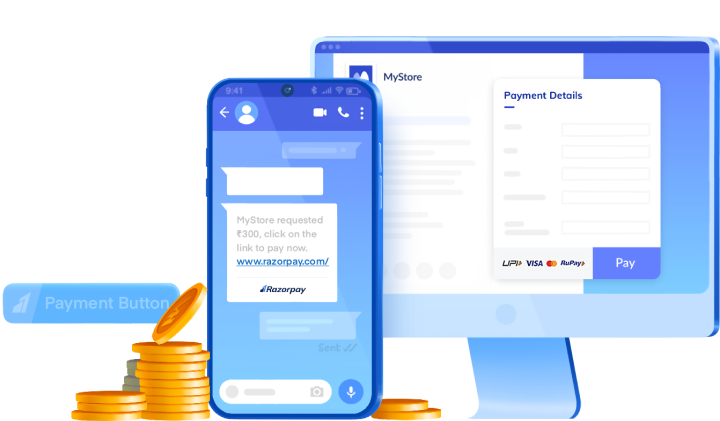


Use the entire suite of Razorpay products at the same cost to accept payments efficiently:
Start accepting payments from your customers today
Enterprise Plan
Is your monthly revenue more than ₹5,00,000?
Are you an enterprise collecting large volumes of payments? Contact us for a customised pricing for your business needs.

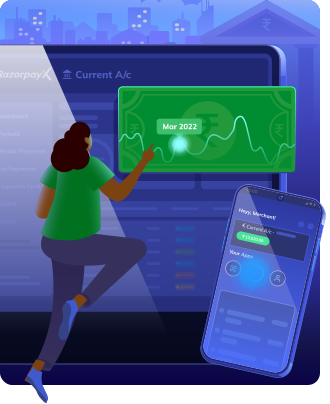
Banking made awesome for business
Banking that helps save time and money.


Get the best banking experience and Automate your banking now!
Trusted by 40,000+ Startups and Businesses:



Trusted by 40,000+ Startups and Businesses:



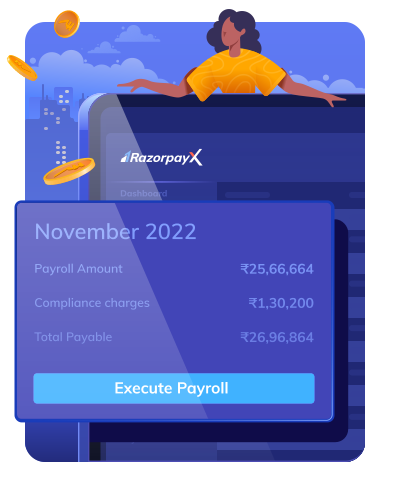
3 Clicks. Payroll Fixed.
Payroll management, salary transfers, and automated payment and filing of compliances like TDS, PF, ESI, PT. Also get integrated employee benefits, insurance, salary accounts and more!
with Business Banking+
Subscriptions start at ₹2499
happy to help
Speak to us & choose RazorpayX Account that's best for you.
Learn more about Current Accounts, Payroll, Vendor Payments, RazorpayX Experience, Discuss custom pricing, request a demo and get started.

•
An experience people love to talk about•

Ankur Warikoo
Founder, Nearbuy

Aravind S
Founder, QED Corporation

Prateek Sharma
Co-founder at Heelium

Tarun Mehta
Co-founder Ather Energy

Shameek Chakravarty
Founder Farmizen

Ankit Agarwal
Co-founder of Phool
FAQs
What are payment processing charges?
Payment gateway charges are calculated as a percentage of an online payment amount and vary according to the type of online payment methods used by the customer.
How much Razorpay charges per transaction?
What does Razorpay's 2% + GST pricing include?
The 2% fee includes:
• High payment reliability built for scale, with industry leading success rates
• Intelligent routing and retries to reduce failed transactions
• Strong uptime and platform stability
• No setup fees, annual maintenance charges, or hidden costs
Rather than optimising for a lower headline rate, Razorpay focuses on helping businesses complete more payments successfully and operate without unexpected fees as volumes grow.
Does Razorpay charge Annual Maintenance Charges (AMC) or setup fees?
Are there any hidden charges with Razorpay Payment Gateway?
• Setup: ₹0
• Maintenance: ₹0
• Integration Support: ₹0
Optional value-added services, such as Instant Settlements, have clearly defined pricing that applies only when enabled.
Are the payment gateway charges deducted on a per transaction basis?
Is there a transaction fee for standard UPI payments on Razorpay Payment Gateway?
Will I be charged if my customer uses a RuPay Debit Card?
How does Razorpay's total cost compare to gateways that appear cheaper upfront?
Payment gateways with lower headline pricing often add annual maintenance or setup charges that increase total spend as volumes grow. Razorpay keeps pricing simple and predictable, so businesses only pay for what they process—nothing extra to unlock scale.
Example: ₹3 lakh in monthly payment volume (annual comparison)
Razorpay (@ 2% transaction fee)
₹3,00,000 × 2% = ₹6,000 per month
₹6,000 × 12 = ₹72,000 per year
No annual maintenance or setup fees
Total annual cost: ₹72,000
Gateway with lower headline pricing (@ 1.8% transaction fee + annual charges)
₹3,00,000 × 1.8% = ₹5,400 per month
₹5,400 × 12 = ₹64,800
₹7,500 annual maintenance charge
₹2,000 set up fee
Total annual cost: ₹74,300
Even with a lower transaction rate, fixed annual fees make the total cost higher over time.
Beyond pricing, realised revenue matters. Reliable payment processing ensures fewer failed transactions, so more customer payments are successfully completed. As volumes grow, this impact compounds and becomes a larger driver of total cost than small differences in headline pricing.
A gateway can look cheaper upfront and still cost more in the long run. Predictability, reliability, and realised revenue define true cost—not just the rate on paper.
How should I compare payment gateway pricing? Should I look only at platform fee or also at success rate and realized revenue?
When evaluating payment gateway pricing, businesses should look beyond the transaction rate and assess:
• Transaction fees/Platform fees
• Annual maintenance and setup charges
• Refund and chargeback fees
• Reliability and uptime
• Payment success rates, which directly impact realised revenue
Razorpay is built to deliver industry-leading payment success rates, ensuring more customer payments are completed successfully and more revenue is realised as volumes scale.
Hypothetical example: why success rate matters
Assume a business attempts ₹1 crore in customer payments per month.
• Gateway with lower reliability
Success rate: 70%
Revenue realised: ₹70 lakh
• Gateway with higher reliability
Success rate: 80%
Revenue realised: ₹80 lakh
A 10% difference in success rate results in ₹10 lakh more revenue realised every month, without any change in demand or marketing spend.
Over time, this additional realised revenue outweighs small differences in transaction fees and becomes a much larger driver of total cost.
This is why headline pricing alone is misleading. Predictability, reliability, and realised revenue define true cost—not just the TDR on paper.
For small businesses processing around ₹1 lakh per month, how should pricing be evaluated?
Hypothetical Example: ₹1 lakh in monthly payment volume
Annual comparison:
• Razorpay @ 2% + ₹0 AMC: ₹2,000/month × 12 = ₹24,000/year
• Gateway at 1.6% + ₹4,999 AMC: (₹1,600/month × 12) + ₹4,999 = ₹24,199/year
• Gateway at 1.6% + ₹9,999 AMC: (₹1,600/month × 12) + ₹9,999 = ₹29,199/year
Even at small volumes, fixed annual fees can eliminate any apparent savings from a lower transaction rate.
Razorpay is designed to deliver industry-leading payment success rates, helping small businesses realise more revenue by reducing failed transactions. When every payment matters, higher reliability directly impacts cash flow and customer experience.
A gateway can look cheaper upfront and still cost more in practice.
As a SaaS startup, how do I calculate the lifetime value impact of payment gateway choice?
A simple way to assess this is:
Effective CAC = Customer Acquisition Cost ÷ Payment Success Rate
Hypothetical example
CAC: ₹5,000 per customer
• Gateway with lower reliability
₹5,000 ÷ 70% Success Rate = ₹7,143 effective CAC
• Gateway with higher reliability
₹5,000 ÷ 80% Success Rate = ₹6,250 effective CAC
That's ₹893 extra spent per customer due to failed payments.
For a SaaS with ₹50,000 annual LTV acquiring 100 customers per month, this improvement in acquisition efficiency compounds to over ₹10 lakh in annual savings—often outweighing small differences in transaction pricing.
Razorpay is built to deliver industry-leading payment success rates, helping SaaS businesses realise more value from every customer they acquire.
What additional charges do other gateways typically have that Razorpay doesn't?
• Setup Fees: (₹5,000 - ₹20,000 upfront)
• AMCs: (Annual charges regardless of usage)
• Minimum Monthly Fees: (Penalties if you don't transact enough)
• Integration Audit Fees: (Charges for checking your website code)
Razorpay charges none of these.
Is there any free payment gateway that I can choose for my business?
• Transaction fees (TDR/MDR)
• Annual maintenance charges (AMC)
• Setup and activation fees
• Or a combination of these
Gateways advertising "free" or "0% fees" typically:
• Apply only to specific payment modes (e.g., UPI only)
• Have high fixed monthly/annual charges
• Limit transaction volumes before fees apply
• Add hidden costs later
For high-volume merchants, does Razorpay offer custom pricing?
Are you a developer?
Find comprehensive guides and documentation to start with Razorpay as quickly as possible.
View Docs