Private Limited Company (Pvt Ltd): Definition, Meaning, How to Register & Documents Required

Dec 1, 2025
Private Limited Company vs. Limited Liability Partnerships

What is the meaning of a Private Limited Company?

A Private Limited Company (Pvt Ltd) is a business entity where ownership is confined to a limited number of shareholders, and its shares are not available for public trading on stock exchanges. This structure ensures that control remains within a close-knit group of individuals or entities.

Private limited company meaning as per Section 2 (68) of the Companies Act, 2013 is A Company having a minimum paid-up share capital as may be prescribed and which, by its articles

1. Restricts the right to transfer its shares

2. Except in case of One Person Company, limits the number of its members to two hundred

3. Prohibits any invitation to the public to subscribe for any securities of the company.

With the startup ecosystem booming across the country and more and more people looking to do something on their own, there is a need to be well-acquainted with different business registration types, i.e. sole proprietorship, limited liability company, and private limited company.

Table of Contents

Private Limited Company Examples

Here are some examples of private limited companies in India

  • Google India Pvt. Ltd. A subsidiary of Google LLC
  • Amazon Retail India Private Limited: An online shopping platform
  • Microsoft Corporation (India) Private Limited: An information technology company with its registered office in Delhi.

Types of Private Limited Company

There are three types of Pvt. Ltd. Company registration, and entrepreneurs can choose the one that best suits the needs of their business.

1. Company Limited by Shares

  • Ownership: The ownership of the company is divided into shares.
  • Liability: The liability of the shareholders is limited to the amount of shares they have subscribed to.
  • Capital Structure: The company raises capital by issuing shares to shareholders.
  • Common Use: This is the most common type of company, suitable for businesses of all sizes.

2. Company Limited by Guarantee

  • Ownership: Ownership is not based on shares but on membership.
  • Liability: The liability of the members is limited to the amount they guarantee to contribute to the company in the event of winding up.
  • Capital Structure: The company doesn’t raise capital through shares but relies on donations, grants, or membership fees.
  • Common Use: Often used for non-profit organizations, clubs, or societies.

3. Unlimited Company

  • Ownership: The ownership structure can vary.
  • Liability: The liability of the members is unlimited, meaning their personal assets can be used to settle the company’s debts.
  • Capital Structure: The company can raise capital through various means, including issuing shares.
  • Common Use: This type of company is less common and is usually used for specific purposes, such as family businesses or holding companies.

Characteristics of a Private Limited Company

Following are some of the main advantages of a private limited company:

1. Members

The act mandates that a minimum of two shareholders are required to start such a company, while the limit for maximum number of members is fixed at 200.

2. Directors

The Act specifies the number of directors in a private limited company, requiring a minimum of two directors, while allowing a maximum of up to 15 directors.

3. Limited Liability Structure

In a private limited company, the liability of each member or shareholder is limited. Therefore, even in the case of loss under any circumstances, the shareholders are liable to sell their assets for repayment. However, the personal and individual assets of the shareholders are not at risk.

4. Separate Legal Entity

This is a separate legal entity and continues in perpetual succession. This means that even if all the members die, or the company becomes insolvent or bankrupt, the company still exists in the eyes of the law. The life of the company will be perpetual, not affected by the lives of its shareholders or members unless dissolved by way of resolution.

5. Minimum Paid-Up Capital

A private limited company is required to have and maintain a minimum paid-up capital of ₹1 lakh. It could go higher, as prescribed by MCA from time to time.

Requirements to Start a Private Limited Company

Every business type has its own set of requirements before it is incorporated.

The requirements for registering this are as stated below:

1. Members and Directors

As mentioned above, to get itself legally registered, a private limited company means it must show a minimum number of two and a maximum number of 200 members. This is a statutory requirement as mandated by the Companies Act 2013.

The directors should meet the following conditions:

  • Each of the directors should have a DIN i.e. director identification number, which is given by the Ministry of Corporate Affairs
  • One of the directors must be a resident of India, which means he/she should have stayed in India for not less than 182 days in the previous calendar year.

2. Name of the Company

Choosing the name of the company is often a technical task. A private limited company is required to cover three aspects while deciding a name for itself:

  1. Main name
  2. Activity to be carried out
  3. Mention of ‘Private Limited Company’ at the end.

Pro tip: It is not always necessary that the name the business owner is looking for will be available, as no two companies can have the same name. Therefore, it is a requirement that at the time of registration, every company has to send 5-6 names for approval to the Registrar of Company (ROC). Moreover, the submitted names should not have a close resemblance with any other company’s name.

3. Registered Office Address

After the company has been registered, the permanent address of its registered office must be filed with the registrar of the company. The registered office of the company is where the company’s main affairs are being conducted and where all the documents are placed.

4. Obtaining Other Documents

For electronic submission of documents, every company must obtain a digital signature certificate that is used to verify the authenticity of the documents. Moreover, in a company employing professionals (secretaries, chartered accountants, cost accountants, etc.) for varied activities, certifications by these professionals are necessary.

List of Documents Required for Private Limited Company

The documents required to incorporate a Pvt Ltd company include:

1. Identity Proof

Document verifying the identity of individuals such as PAN card and passport of Indian and foreign directors, respectively.

2. Address Proof

Document confirming the residential address of individuals such as utility bills or rental agreements.

3. Director Identification Number (DIN)

Unique identification number allotted to directors by the Ministry of Corporate Affairs.

4. Digital Signature Certificate (DSC)

Electronic signature ensuring the authenticity of documents filed electronically.

5. Memorandum of Association (MoA)

Legal document defining the company’s objectives and scope of operations.

6. Articles of Association (AoA)

Document outlining the rules and regulations governing the internal management of the company.

7. Declaration by Directors and Subscribers

Formal statement by directors and subscribers confirming compliance with legal requirements for company incorporation.

8. No Objection Certificate (NOC) from the landlord

Consent from the landlord permitting the use of premises as the company’s registered office.

9. Shareholding Pattern of the Proposed Company

Overview of the distribution of shares among shareholders in the company.

10. Proof of Registered Office Address

Documentation confirming the address where the company is registered and operates from.

How to Register Pvt Ltd Company? A Step-by-Step Guide

To register a private limited company in India the following steps are mandatory:

STEP 1: Choose a Unique Name for Your Business

  • Choose a unique name that reflects your business’s identity and vision and is not in use by another company or trademarked by someone else.
  • You can check for name availability on the Ministry of Corporate Affairs (MCA) official company registration website or the relevant regulatory authority in your state or union territory.

STEP 2: Obtain Digital Signatures from Authorised Agency

  • Obtain Digital Signature Certificates (DSC) for your company’s proposed directors and shareholders from any authorised agency or vendor registered with the MCA or the Certifying Authority (CA) under the Information Technology Act, 2000.
  • Digital signatures are essential for filing online documents with government authorities and verifying your identity and authenticity.

STEP 3: Obtain Director Identification Number (DIN) from MCA Portal

  • Apply for a Director Identification Number (DIN) online through the MCA portal by filling out the form DIR-3 and uploading the required documents, such as identity proof, address proof, and photographs for each of the directors of your company.
  • The MCA assigns a unique identification number to every individual who intends to be a company director.

STEP 4: Prepare Memorandum and Articles of Association

  • The MOA is a document that defines your company’s main objectives, scope, and activities whereas AOA lays down the rules and regulations for the management and administration of your company.
  • You can prepare the MOA and AOA online through the MCA portal by using the SPICe+ form and the templates provided by the MCA.

STEP 5: Get Consent and Declarations

  • The directors must consent to act as directors by filling out the form DIR-2 and attaching their DSC.
  • The shareholders must provide their declarations of compliance with the Companies Act, 2013 and the rules made thereunder by filling out the form INC-9 and attaching their DSC.

STEP 6: Apply for Company Name Approval

  • Submit the name approval application with the required documents to the Registrar of Companies (RoC) of the state or union territory where your company will be registered.
  • You can apply for name approval online through the MCA portal using the SPICe+ form and paying the prescribed fees.

STEP 7: File Incorporation Documents

  • You can file the incorporation documents for LLC online through the MCA portal using the SPICe+ form and pay the prescribed fees.
  • You need to attach documents, including the MOA, AOA and a few more, like AGILE-PRO, INC-14, 1NC-15, etc., along with the SPICe+ form.

STEP 8: Pay Registration Fees

  • The registration fees vary depending on the amount of authorised share capital and the state or union territory where your company is registered.
  • You can pay the fees online through the MCA portal using the SPICe+ form and the payment gateway.

STEP 9: Verification and Approval

  • The RoC will carefully assess the documents, and if they meet all requirements, they will issue the Certificate of Incorporation which can be downloaded from the MCA portal.
  • It is a legal document that confirms the existence and registration of your company.

STEP 10: Obtain PAN and TAN

  • Apply for Permanent Account Number (PAN) and Tax Deduction and Collection Account Number (TAN) online through the MCA portal using the AGILE-PRO form and the payment gateway.
  • PAN is a 10-digit alphanumeric code used to identify your company for tax purposes.
  • TAN is a 10-digit code used to deduct and collect tax at source from payments made by your company.

STEP 11: Open a Bank Account in a Company’s Name

  • Open a bank account in your company’s name and deposit the minimum capital required. The minimum capital for a pvt. ltd. company is ₹1 lakh.

STEP 12: Obtain Business Licenses

Licencing and permit requirements can differ depending on the nature of your business.

You may need to obtain them from various authorities, such as:

  • Trade licence from Municipal Corporation or Panchayat
  • Environmental clearance from the Pollution Control Board
  • Industrial licence from the Department of Industrial Policy and Promotion (DIPP)
  • Quality certification from the Bureau of Indian Standards (BIS)
  • Trademark, patent, or design registration from the Intellectual Property Office (IPO)

STEP 13: Register Your Business Under GST

  • Register for GST and comply with other tax obligations. You must register for GST if your annual turnover exceeds ₹40 lakh (₹20 lakh for special category states).

STEP 14: Commence Business Operations

  • After diligently completing the above procedure, your Private Limited Company is ready to commence its operations.

Read More About: How to register a Private Limited Company online in India?

What Are the Registration Costs for a Private Limited (Pvt Ltd) Company?

The registration charges for a Private Ltd. Company depend on share capital, number of directors, stamp duty of the state where you want to register the company and other fees.

Particulars Amount (in ₹)
Name Reservation ₹1000
DIN Application Fee ₹500 per DIN
DSC Fee ₹1,500 per DSC
Memorandum of Association Fees ₹200 per lakh of authorised share capital or part thereof
Articles of Association Fee ₹300 per lakh of authorised share capital or part thereof
PAN Application Fee ₹66
TAN Application Fee ₹65
Stamp Duty Varies from state to state
Professional Tax Registration Fee Varies from state to state

What Is the Registration Timeline for a Private Limited Company?

The answer is not very simple, as it depends on various factors such as the availability of the company name, the documents required, and the workload of the government authorities. Therefore, the overall timeline for registering a private limited company in India can take around 12-18 days, depending on the time taken to complete each step and the workload of the government office processing the application.

Advantages of Private Limited Companies

1. Limited liability

In a private limited company, there is a limited liability, which means the company’s members are not at risk of losing their private assets. If a company fails, the shareholders are liable to sell their assets for payment.

2. Less number of shareholders

Unlike a public company that requires seven shareholders, a private limited company can be started with just two shareholders.

3. Ownership

As the company’s shares are owned by investors, founders, and management, the owners are at the liberty of transferring and selling their shares to others

4. Uninterrupted existence

As mentioned earlier, the company stays a legal entity until it is legally shut down, the company runs even after the death or departure of any member.

Disadvantages of Private Limited Companies

Now that you know what is Pvt Ltd company, its benefits, and how to register a company in India, let’s understand the disadvantages.

One of the disadvantages it gets with Pvt limited company is the compliance formalities for shutting it down. It often ends up getting too complicated and time-consuming.

FAQs

rize image

Register your Business at just 1,499 + Govt. Fee

Register your business
rize image

Register your Private Limited Company in just 1,499 + Govt. Fee

Register your business
rize image

Register your One Person Company in just 1,499 + Govt. Fee

Register your business
rize image

Register your Business starting at just 1,499 + Govt. Fee

Register your business
rize image

Register your Limited Liability Partnership in just 1,499 + Govt. Fee

Register your business

Private Limited Company
(Pvt. Ltd.)

1,499 + Govt. Fee
BEST SUITED FOR
  • Service-based businesses
  • Businesses looking to issue shares
  • Businesses seeking investment through equity-based funding


Limited Liability Partnership
(LLP)

1,499 + Govt. Fee
BEST SUITED FOR
  • Professional services 
  • Firms seeking any capital contribution from Partners
  • Firms sharing resources with limited liability 

One Person Company
(OPC)

1,499 + Govt. Fee
BEST SUITED FOR
  • Freelancers, Small-scale businesses
  • Businesses looking for minimal compliance
  • Businesses looking for single-ownership

Private Limited Company
(Pvt. Ltd.)

1,499 + Govt. Fee
BEST SUITED FOR
  • Service-based businesses
  • Businesses looking to issue shares
  • Businesses seeking investment through equity-based funding


One Person Company
(OPC)

1,499 + Govt. Fee
BEST SUITED FOR
  • Freelancers, Small-scale businesses
  • Businesses looking for minimal compliance
  • Businesses looking for single-ownership

Private Limited Company
(Pvt. Ltd.)

1,499 + Govt. Fee
BEST SUITED FOR
  • Service-based businesses
  • Businesses looking to issue shares
  • Businesses seeking investment through equity-based funding


Limited Liability Partnership
(LLP)

1,499 + Govt. Fee
BEST SUITED FOR
  • Professional services 
  • Firms seeking any capital contribution from Partners
  • Firms sharing resources with limited liability 

Frequently Asked Questions

Is a private company better than a public?

Private companies have the upper hand over public companies concerning investment in long-term strategies, keeping the values of their shares and financial figures discreet, freedom, and flexibility of operations.

What are the minimum and maximum numbers of members in a private company?

The minimum number of members in a private company is 2 directors and 2 members are required. All these members have limited liability, and the maximum number of members has increased from 50 to 200.

How much does it cost to form a private limited company?

The cost of establishing/registering a Pvt Ltd Company generally varies from INR 6,000 to INR 30,000, depending upon the number of Directors, members, the authorized share capital, and professional fees.

What is compulsory for a private limited company?

Under Section 134, all private companies must hold an annual general meeting. These companies are required to hold their meetings within six months of closing their Financial year.

What is the difference between LLP and Pvt Ltd?

LLP is a partnership where the partners have restricted liability and are not liable for the actions of other partners, whereas, in a Pvt Ltd company, the shareholders have limited liability and can transfer their shares to others. LLP has less compliance and tax burden than Pvt Ltd and less scope for raising funds from external sources.

What is the minimum turnover for a Pvt Ltd company?

There is no minimum turnover prerequisite for a Pvt Ltd company in India. However, certain threshold limits under the Companies Act 2013 trigger different compliances for Pvt Ltd companies, such as certification of annual return, corporate social responsibility, internal audit, appointment of auditor, etc. These threshold limits are based on the paid-up share capital, turnover, net worth, net profit, loans, borrowings, deposits, etc., of the Pvt Ltd company.

Sarthak Goyal

Sarthak Goyal is a Chartered Accountant with 10+ years of experience in business process consulting, internal audits, risk management, and Virtual CFO services. He cleared his CA at 21, began his career in a PSU, and went on to establish a successful ₹8 Cr+ e-commerce venture.

He has since advised ₹200–1000 Cr+ companies on streamlining operations, setting up audit frameworks, and financial monitoring. A community builder for finance professionals and an amateur writer, Sarthak blends deep finance expertise with an entrepreneurial spirit and a passion for continuous learning.

Read More

Related Posts

Capital Redemption Reserve: Definition, Uses, Tax Benefits & More

Capital Redemption Reserve: Definition, Uses, Tax Benefits & More

The Capital Redemption Reserve (CRR) is a statutory reserve that companies create when redeeming preference shares. It ensures financial stability by retaining an equivalent amount of capital in the business, safeguarding creditor interests and maintaining compliance with regulatory requirements.

This blog explores the definition, usage, tax benefits, and legal framework surrounding the Capital Redemption Reserve.

Table of Contents

What Is Capital Redemption Reserve?

The Capital Redemption Reserve (CRR) is a special reserve that a company must create when it redeems (buys back) its preference shares using its profits. As per corporate law, companies must transfer an amount equal to the nominal value of redeemed preference shares to the CRR to prevent capital reduction and maintain financial integrity.

When Is Capital Redemption Reserve Used?

CRR is utilised in various financial scenarios to maintain corporate stability, including:

  • Issuing bonus shares: CRR can be used to issue fully paid bonus shares to shareholders.
  • Funding share redemption: Ensures funds are available for preference share redemption.
  • Capital reconstruction: Helps restructure a company’s capital without impacting free reserves.
  • Balancing capital losses: Used in cases where capital losses need adjustment.
  • Source for share buybacks: Required when companies buy back shares using free reserves.

Redemption Of Preference Capital

The redemption of preference shares is subject to the following regulations:

  • Must be permitted in the Articles of Association.
  • Redeemable within 20 years of issue.
  • Methods of redemption:
    • Using Distributable Profits: Requires CRR creation.
    • Issuing Fresh Shares: CRR creation is not required if new capital is issued.
  • Shareholder Approval (75%): Required for further preference share issues.
  • Premium Payment: This can be funded from company profits or the securities premium account.

Modes of Redemption

The three primary modes of redemption are:

  1. Using Distributable Profits: CRR creation is mandatory, equal to the nominal value of redeemed shares.
  2. Issuing Fresh Capital: If a company issues fresh capital equal to the redemption amount, CRR creation is not required.
  3. Combination of Both: CRR is required only for the portion funded through distributable profits.

Modes of Redemption of Preference Shares

Companies can redeem (buy back) preference shares using one of the following methods:

  1. Using Distributable Profits
    The company uses its retained earnings or other profits to redeem the shares. In this case, it must create a Capital Redemption Reserve (CRR) equal to the nominal value of the redeemed shares to maintain financial stability.
  2. Issuing Fresh Capital
    The company raises funds by issuing new shares to replace the redeemed preference shares. Since this method does not reduce capital, creating a CRR is not required.
  3. Combination of Both
    A company may use both profits and fresh capital for redemption. CRR is required only for the portion funded through distributable profits, while the part covered by fresh capital does not require CRR.

{{company-reg-cta}}

Calculation and Accounting Entries For Capital Redemption Reserve

Calculation of CRR

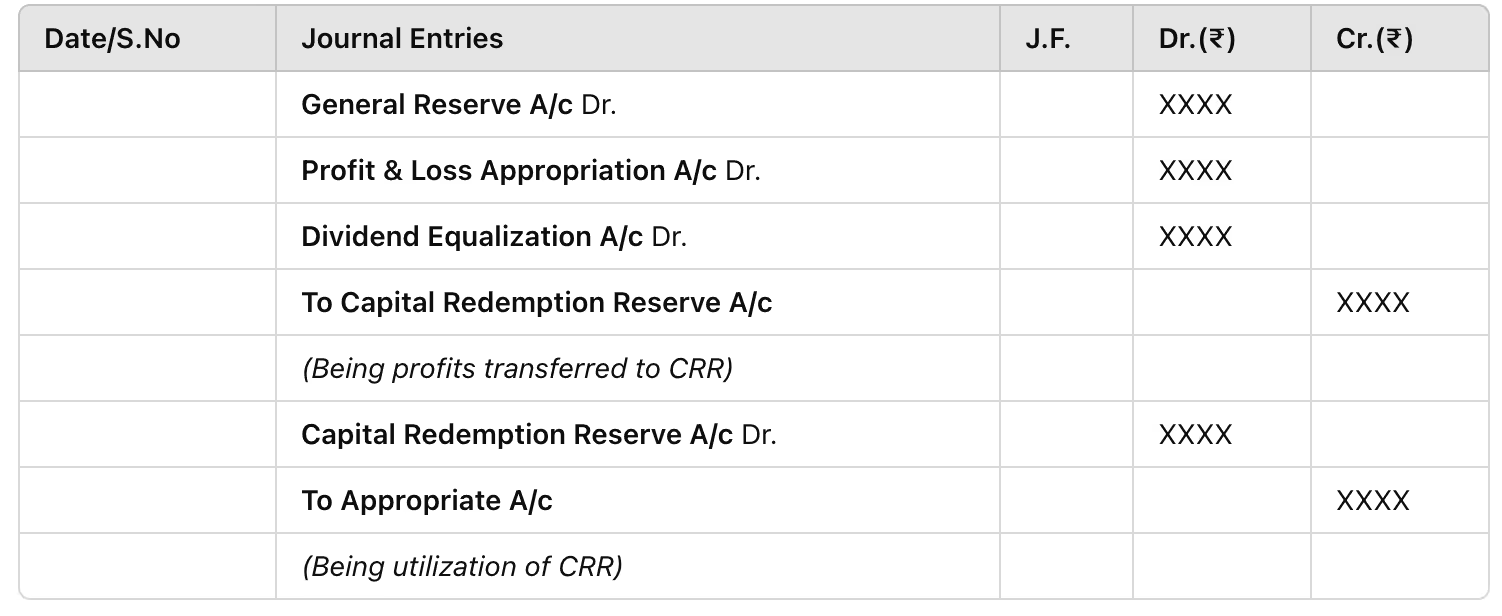
CRR = Nominal Value of Redeemed Preference Shares (if using distributable profits)

Journal Entries

Application of Capital Redemption Reserve

  • CRR can only be used for issuing fully paid bonus shares.
  • CRR cannot be used for dividend distribution.
  • CRR must exclude unrealised gains and self-generated intangible assets before determining free reserves.
  • Classified as a statutory reserve, separate from revenue reserves.

Companies Act and Capital Redemption Reserve

  • Section 55: Companies redeeming preference shares from profits must transfer an equivalent amount to CRR.
  • Section 69: Companies buying back shares using free reserves or securities premiums must transfer an amount equal to the face value of bought-back shares to CRR.

Difference Between Capital Redemption Reserve and Other Reserves

Feature Capital Redemption Reserve General Reserve Revenue Reserve Revenue Reserve
Purpose Preference share redemption Financial stability Operational expenses Long-term capital gains
Mandatory creation Yes No No No
Usable for dividend No Yes Yes No
Usable for bonus shares Yes Yes No No

Tax Benefits For Capital Redemption Reserve

Under Section 36(1)(viii) of the Income Tax Act, 1961, specified entities can claim a tax deduction on contributions to a Special Reserve, reducing their taxable income. The deduction is capped at 20% of profits from eligible business activities before applying this clause. However, any future withdrawal from the reserve is treated as taxable income in the year of withdrawal.

Importance Of Capital Redemption Reserve

  • Maintains Financial Stability: Prevents a reduction in share capital.
  • Protects Shareholders’ Interests: Ensures capital is available for redemption.
  • Supports Capital Restructuring: Used in financial restructuring strategies.
  • Ensures Legal Compliance: Meets regulatory requirements under the Companies Act.
  • Enhances Investor Confidence: Used for issuing bonus shares, benefiting shareholders.

Final Thoughts

The Capital Redemption Reserve (CRR) plays a vital role in corporate finance by ensuring companies retain sufficient funds while redeeming preference shares. As a statutory reserve, it helps maintain financial stability, protects creditors' interests, and complies with legal requirements.

While it cannot be used freely like other reserves, its role in issuing fully paid bonus shares makes it a strategic asset for companies looking to optimise their financial position.

Frequently Asked Questions

rize image

Register your Business at just 1,499 + Govt. Fee

Register your business
rize image

Register your Private Limited Company in just 1,499 + Govt. Fee

Register your business
rize image

Register your One Person Company in just 1,499 + Govt. Fee

Register your business
rize image

Register your Business starting at just 1,499 + Govt. Fee

Register your business
rize image

Register your Limited Liability Partnership in just 1,499 + Govt. Fee

Register your business

Private Limited Company
(Pvt. Ltd.)

1,499 + Govt. Fee
BEST SUITED FOR
  • Service-based businesses
  • Businesses looking to issue shares
  • Businesses seeking investment through equity-based funding


Limited Liability Partnership
(LLP)

1,499 + Govt. Fee
BEST SUITED FOR
  • Professional services 
  • Firms seeking any capital contribution from Partners
  • Firms sharing resources with limited liability 

One Person Company
(OPC)

1,499 + Govt. Fee
BEST SUITED FOR
  • Freelancers, Small-scale businesses
  • Businesses looking for minimal compliance
  • Businesses looking for single-ownership

Private Limited Company
(Pvt. Ltd.)

1,499 + Govt. Fee
BEST SUITED FOR
  • Service-based businesses
  • Businesses looking to issue shares
  • Businesses seeking investment through equity-based funding


One Person Company
(OPC)

1,499 + Govt. Fee
BEST SUITED FOR
  • Freelancers, Small-scale businesses
  • Businesses looking for minimal compliance
  • Businesses looking for single-ownership

Private Limited Company
(Pvt. Ltd.)

1,499 + Govt. Fee
BEST SUITED FOR
  • Service-based businesses
  • Businesses looking to issue shares
  • Businesses seeking investment through equity-based funding


Limited Liability Partnership
(LLP)

1,499 + Govt. Fee
BEST SUITED FOR
  • Professional services 
  • Firms seeking any capital contribution from Partners
  • Firms sharing resources with limited liability 

Frequently Asked Questions

What is the source of the Capital Redemption Reserve?

The Capital Redemption Reserve (CRR) is created from a company's distributable profits (such as retained earnings or general reserves) when it redeems preference shares. If shares are redeemed using fresh capital issuance, CRR is not required.

What is the difference between a Capital Redemption Reserve and a Debenture Redemption Reserve?

  • Capital Redemption Reserve (CRR): Created when a company redeems preference shares using distributable profits. It ensures financial stability and protects creditors.
  • Debenture Redemption Reserve (DRR): Created to ensure funds are available to repay debentures upon maturity. Unlike CRR, DRR is specific to debenture repayment obligations.

What is CRR in Preference Shares?

CRR is a statutory reserve that a company must create when redeeming preference shares using distributable profits. It ensures the company maintains its financial strength and does not reduce its capital base.

How is CRR created?

CRR is created by transferring an amount equal to the nominal value of redeemed preference shares from distributable profits (like retained earnings or general reserves) to a separate Capital Redemption Reserve account.

Which amount is transferred to the Capital Redemption Reserve?

An amount equal to the face (nominal) value of the redeemed preference shares is transferred to CRR when redemption is done using distributable profits. If redemption is done using fresh issue proceeds, no CRR transfer is needed.

Is Capital Redemption Reserve a distributable reserve?

No, CRR is not a distributable reserve. It cannot be used for dividend distribution or general business expenses. It can only be utilised to issue fully paid bonus shares to shareholders.

Is Capital Redemption Reserve a free reserve?

No, CRR is not a free reserve. Free reserves can be used for dividends or other business purposes, whereas CRR is restricted to bonus share issuance and cannot be utilised for any other purpose.

What are the conditions for the redemption of preference shares?

No, CRR is not a free reserve. Free reserves can be used for dividends or other business purposes, whereas CRR is restricted to bonus share issuance and cannot be utilised for any other purpose.

  1. Authorisation in Articles of Association (AOA): The company must have permission in its AOA to redeem preference shares.
  2. Redemption within 20 Years: Except for certain cases (like infrastructure companies), preference shares must be redeemed within 20 years of issuance.
  3. Fully Paid Shares: Only fully paid-up preference shares can be redeemed.
  4. Redemption Sources: Shares can be redeemed using distributable profits (requiring CRR creation) or by issuing fresh capital (no CRR required).
  5. Shareholder Approval: If a company wants to issue new preference shares post-redemption, it needs 75% shareholder approval.
  6. Premium Payment: If shares are redeemed at a premium, the premium must be paid from profits or the securities premium account.

Akash Goel

Akash Goel is an experienced Company Secretary specializing in startup compliance and advisory across India. He has worked with numerous early and growth-stage startups, supporting them through critical funding rounds involving top VCs like Matrix Partners, India Quotient, Shunwei, KStart, VH Capital, SAIF Partners, and Pravega Ventures.

His expertise spans Secretarial compliance, IPR, FEMA, valuation, and due diligence, helping founders understand how startups operate and the complexities of legal regulations.

Read more
Conversion of OPC to a Private Limited Company: Process & Requirements

Conversion of OPC to a Private Limited Company: Process & Requirements

As your business grows, the structure of a One Person Company (OPC) may start to limit your ability to scale—particularly when raising capital, adding co-founders, or expanding operations. Converting an OPC into a Private Limited Company provides a clear pathway for growth, enabling the inclusion of up to 200 shareholders, access to greater funding opportunities, and stronger credibility among investors, lenders, and corporate clients.

However, this transition must be approached with legal precision. The conversion process involves several compliance steps under the Companies Act, 2013, and must be aligned with your business objectives. Ensuring a smooth, legally compliant shift is essential to avoid disruptions and secure long-term success. This guide outlines the requirements, procedures, and insights needed to convert your OPC into a Private Limited Company effectively and confidently.

Table of Contents

Conversion of OPC to Private Company

Section 18 of the Companies Act, 2013, along with Rule 6 of the Companies (Incorporation) Rules, 2014, lays down the legal provisions for converting an OPC to a Private Limited Company. It is important to note that following the 2021 amendment, the conversion of an OPC to a Private Company is now voluntary and no longer linked to capital or turnover thresholds. This change provides flexibility for OPCs to decide on their conversion based on business needs rather than mandatory financial criteria.

To initiate the OPC to Private Limited conversion process, the OPC must pass a special resolution and obtain a written no-objection certificate (NOC) from its creditors. Additionally, the company must increase its members and directors to a minimum of two. It is crucial to ensure compliance with these legal requirements to avoid any challenges during the transition.

Legal Framework Governing the Conversion of OPC into a Private Company

The legal basis for converting an OPC to a Private Limited Company is outlined in Section 18 of the Companies Act, 2013. This provision allows an OPC to transform its structure and expand its shareholder base while continuing its existing obligations and contracts. By leveraging this legal framework, entrepreneurs can unlock new growth opportunities and enhance their company's operational flexibility.

Converting an OPC to a Private Limited Company offers several benefits for businesses looking to scale. It enables the company to attract investments, bring in additional expertise through new directors, and establish a more robust corporate governance structure. The legal framework governing this conversion ensures a seamless transition that aligns with the Companies Act's provisions and protects the interests of all stakeholders involved.

Types of Conversion of a One Person Company

There are two types of OPC conversion: voluntary and previously mandatory. Understanding the distinctions is crucial for making informed decisions.

  1. Voluntary Conversion:
    • Can be initiated at any time based on the OPC's growth plans and business requirements
    • No longer linked to financial thresholds (paid-up capital or turnover)
    • Offers strategic flexibility to bring in new members and access additional resources
  2. Previously Mandatory Conversion:
    • Prior to the 2021 amendment, OPCs were required to convert if they exceeded certain financial limits
    • Thresholds were set at a paid-up share capital exceeding ₹50 lakhs or an average annual turnover surpassing ₹2 crores in three consecutive financial years
    • Compulsory conversion rules have been removed, allowing OPCs to continue operating without mandated transition

The current regulatory landscape prioritises voluntary conversion, empowering OPCs to align their transition with their unique business goals and timelines.

Current Requirements for OPC Conversion into a Private Company

To successfully convert an OPC to a Private Limited Company, several legal and procedural requirements must be fulfilled under the Companies Act, 2013. These include:

  1. Alteration of MOA and AOA:
    • Amending the MOA to reflect the change in company type and name
    • Modifying the AOA to incorporate provisions specific to a Private Limited Company
  2. Minimum Members and Directors:
    • Increasing the number of members from one to a minimum of two
    • Appointing at least two directors, including the existing director of the OPC
  3. Filing of Form INC-6:
    • Submitting the application for conversion to the Ministry of Corporate Affairs (MCA)
    • Attaching required documents such as altered MOA/AOA, special resolution, and NOCs

Ensuring compliance with these mandatory steps is essential for a valid and legally recognised conversion.

Ready to scale your business? Get expert help with OPC to Private Limited Company conversion and complete company registration with Razorpay Rize.

Process for Conversion of a One Person Company

To initiate the OPC to private limited conversion process, follow these step-by-step legal procedures:

  1. Conduct a Board Meeting:
    • Pass a resolution approving the conversion proposal
    • Authorise the alteration of MOA/AOA and the appointment of new directors
  2. Convene an Extraordinary General Meeting (EOGM):
    • Obtain shareholder approval for the conversion through a special resolution
    • Pass resolutions for MOA/AOA changes and director appointments
  3. File Necessary Forms:
    • Submit Form MGT-14 for the special resolution within 30 days of passing
    • File Form INC-6 for the conversion application, along with supporting documents
  4. Obtain Approvals:
    • Receive the new Certificate of Incorporation from the Registrar of Companies (ROC)
    • Ensure the company name reflects the change from OPC to Private Limited
  5. Complete Post-Conversion Compliance:
    • Update all official records, documents, and signage to reflect the new company status
    • Notify relevant stakeholders, including banks and statutory authorities

By following these procedural steps and maintaining accurate documentation, OPCs can ensure a compliant and efficient conversion process.

Related Reads:

Post-Conversion Compliance for OPC to Private Limited Company

Once the conversion of OPC into a private company is complete, several post-conversion compliance requirements must be fulfilled to align with the Companies Act, 2013. These include:

  1. Updating MOA and AOA:
    • Ensuring the altered MOA and AOA reflect the changes in company type and structure
    • Printing and maintaining updated copies of these documents
  2. Displaying New Certificate of Incorporation:
    • Prominently displaying the new certificate at the registered office
    • Updating official company documents with the revised incorporation details
  3. Changing Signage and Stationery:
    • Replacing all signage, seals, and stamps to reflect the new company name and status
    • Updating letterheads, invoices, and other official stationery accordingly
  4. Notifying Stakeholders:
    • Informing banks, financial institutions, and statutory authorities about the conversion
    • Updating registration and licensing documents as required
  5. Filing Amendments:
    • Submitting necessary amendments to returns and filings under applicable laws
    • Ensuring compliance with revised reporting and disclosure requirements

By diligently adhering to these post-conversion compliance measures, the newly converted Private Limited Company can operate smoothly and avoid legal complications.

Frequently Asked Questions

rize image

Register your Business at just 1,499 + Govt. Fee

Register your business
rize image

Register your Private Limited Company in just 1,499 + Govt. Fee

Register your business
rize image

Register your One Person Company in just 1,499 + Govt. Fee

Register your business
rize image

Register your Business starting at just 1,499 + Govt. Fee

Register your business
rize image

Register your Limited Liability Partnership in just 1,499 + Govt. Fee

Register your business

Private Limited Company
(Pvt. Ltd.)

1,499 + Govt. Fee
BEST SUITED FOR
  • Service-based businesses
  • Businesses looking to issue shares
  • Businesses seeking investment through equity-based funding


Limited Liability Partnership
(LLP)

1,499 + Govt. Fee
BEST SUITED FOR
  • Professional services 
  • Firms seeking any capital contribution from Partners
  • Firms sharing resources with limited liability 

One Person Company
(OPC)

1,499 + Govt. Fee
BEST SUITED FOR
  • Freelancers, Small-scale businesses
  • Businesses looking for minimal compliance
  • Businesses looking for single-ownership

Private Limited Company
(Pvt. Ltd.)

1,499 + Govt. Fee
BEST SUITED FOR
  • Service-based businesses
  • Businesses looking to issue shares
  • Businesses seeking investment through equity-based funding


One Person Company
(OPC)

1,499 + Govt. Fee
BEST SUITED FOR
  • Freelancers, Small-scale businesses
  • Businesses looking for minimal compliance
  • Businesses looking for single-ownership

Private Limited Company
(Pvt. Ltd.)

1,499 + Govt. Fee
BEST SUITED FOR
  • Service-based businesses
  • Businesses looking to issue shares
  • Businesses seeking investment through equity-based funding


Limited Liability Partnership
(LLP)

1,499 + Govt. Fee
BEST SUITED FOR
  • Professional services 
  • Firms seeking any capital contribution from Partners
  • Firms sharing resources with limited liability 

Frequently Asked Questions

How to convert OPC into a private limited company?

To convert an OPC to a Private Limited Company, follow these steps: pass a special resolution, alter the MOA and AOA, appoint additional directors, file Form MGT-14 and INC-6 with the MCA, and obtain a new Certificate of Incorporation.

What is the cost of converting OPC to Pvt Ltd?

The cost of converting an OPC to a Private Limited Company includes fees for filing Form INC-6, stamp duty on the altered MOA and AOA, and professional charges for legal and compliance services. The exact cost may vary depending on the state and the company's authorized capital.

What is the board resolution for the conversion of OPC to a private company?

The board resolution for OPC to Private Limited conversion should cover the following points: approval for conversion, alteration of MOA and AOA, appointment of additional directors, fixing the date for EOGM, and authorizing a director to sign and file necessary forms and documents.

Sarthak Goyal

Sarthak Goyal is a Chartered Accountant with 10+ years of experience in business process consulting, internal audits, risk management, and Virtual CFO services. He cleared his CA at 21, began his career in a PSU, and went on to establish a successful ₹8 Cr+ e-commerce venture.

He has since advised ₹200–1000 Cr+ companies on streamlining operations, setting up audit frameworks, and financial monitoring. A community builder for finance professionals and an amateur writer, Sarthak blends deep finance expertise with an entrepreneurial spirit and a passion for continuous learning.

Read more
KYC of Directors: Form DIR-3 Requirements, Fees, Penalty & How to Apply

KYC of Directors: Form DIR-3 Requirements, Fees, Penalty & How to Apply

In the corporate landscape, transparency and compliance are not just good practices but mandatory. One of the key compliance steps every company director needs to follow is KYC (Know Your Customer) for directors.

Introduced by the Ministry of Corporate Affairs (MCA), this process ensures that accurate and up-to-date details of directors are maintained in official records. This is important not only for good governance but also for maintaining trust and accountability in the ecosystem.

In this blog, we’ll explain everything you need to know about Director KYC- its purpose, who needs to file it, the steps involved, fees, penalties, and how to apply online with ease.

Table of Contents

DIR-3 KYC

Form DIR-3 KYC is an important annual compliance step that every person holding a Director Identification Number (DIN) must complete. Whether you're currently a director in a company or not, if you have a DIN, you must file this form each year.

The Ministry of Corporate Affairs (MCA) mandates filing this form every year to ensure that directors’ records are current and accurate.

Failing to file this form within the deadline will lead to the DIN being marked as “Deactivated due to non-filing of DIR-3 KYC,” restricting a director from participating in company matters until compliance is restored.

Purpose of the Form DIR-3 KYC

The purpose of DIR-3 KYC is to keep director information in sync with official records and maintain a transparent and compliant corporate ecosystem. It ensures that directors update their information annually with the MCA.

Who Has to File e-Form DIR-3 KYC?

Every individual who holds a DIN, regardless of whether they are currently serving as a director, must file the e-Form DIR-3 KYC with the MCA each year. This includes:

There are no exemptions, so it's essential to comply regardless of your status or position.

Applicable Fee For Form DIR-3 KYC

  • Filing Fee: Free if filed on or before September 30
  • Penalty: ₹5,000 if filed after the due date, and the DIN will be deactivated until payment is made

Due Date for Filing DIR 3 KYC Form

The KYC form must be submitted by September 30 every year. There are two formats:

  • DIR-3 KYC: For first-time filers or those updating details
  • DIR-3 KYC Web: For those who have filed previously and have no changes

Penalties for Late Filing of the Form DIR-3 KYC

Missing the September 30 deadline results in:

  • DIN Deactivation
  • A penalty of ₹5,000 to reactivate the DIN

Documents Required to File DIR-3 KYC Form

Directors need the following documents:

  • Self-attested PAN card
  • Self-attested Aadhaar card
  • Passport (if available)
  • Valid mobile number and email ID
  • Digital Signature Certificate (DSC)

Key Verification Steps for Filing the Form DIR-3 KYC

Filing the DIR-3 KYC form may seem straightforward, but following the steps carefully is important to ensure successful submission and avoid any delays or penalties. Here's a detailed breakdown of the process:

Step 1: Collect Personal Documents

Before starting the filing process, gather all the required documents.

Step 2: Ensure Accuracy of Details

Ensure that all the information you enter in the form matches the details mentioned in your official documents (especially PAN and Aadhaar). Any mismatch can lead to rejection or delays in processing.

Step 3: Verify with OTP

Once you enter your email ID and mobile number, an OTP (One-Time Password) will be sent for verification. This is an essential part of the KYC process and ensures that your contact information is valid and belongs to you.

Step 4: Sign with a Digital Signature Certificate (DSC)

The DIR-3 KYC form must be digitally signed by the director using a valid DSC (Class 2 or Class 3). This step certifies the authenticity of the information being submitted.

Step 5: Get it attested by a Professional

After signing the form with your DSC, the form must be certified by a practising professional like a Chartered Accountant (CA) or a Company Secretary (CS). The professional must verify the form’s contents and affix their own digital signature. Their membership number, certificate of practice number, and contact details must also be provided.

Step 6: Upload the Form to the MCA Portal

Once the form is digitally signed and attested, upload it on the Ministry of Corporate Affairs (MCA) portal.

Process After Submitting the DIR-3 KYC Form

Once the DIR-3 KYC form is successfully submitted on the MCA portal, the following steps take place:

  • SRN Generation: An SRN (Service Request Number) is instantly generated upon submission. This SRN is important for tracking your application and for any future correspondence with the Ministry of Corporate Affairs (MCA).
  • Email Acknowledgement: The director receives an acknowledgment email at their registered email address. This email confirms the receipt and approval of the DIR-3 KYC form and usually includes a receipt of the submission. It is advisable to save this receipt for your records.
  • MCA Verification: The MCA system verifies the details provided in the form. If all information is correct, the status of the Director Identification Number (DIN) is updated to reflect successful KYC completion.
  • Error Handling: If there are any errors or discrepancies in the submitted information, the form may be rejected, and the director will be required to correct the errors and resubmit the form.
  • Late Filing Consequences: If the DIR-3 KYC form is filed after the due date (generally 30th September), a late fee of Rs. 5,000 is applicable. In such cases, the DIN remains deactivated due to non-filing until the form is submitted and the late fee is paid.

Key Points to Remember:

  • Save the SRN and acknowledgment receipt for future reference.
  • Check your email for approval or any further instructions from MCA.
  • If filed late, ensure payment of the prescribed penalty to reactivate your DIN.

Conclusion

Filing your DIR-3 KYC might feel like just another task, but it plays a big role in keeping things smooth and compliant for you as a company director. It helps the government maintain updated records, ensures transparency, and keeps your Director Identification Number (DIN) active.

If you miss the September 30 deadline, your DIN can be deactivated, which means you won’t be able to sign documents or carry out official duties as a director. So, take a few minutes each year to check your details, fill out the form, and stay compliant.

Frequently Asked Questions

rize image

Register your Business at just 1,499 + Govt. Fee

Register your business
rize image

Register your Private Limited Company in just 1,499 + Govt. Fee

Register your business
rize image

Register your One Person Company in just 1,499 + Govt. Fee

Register your business
rize image

Register your Business starting at just 1,499 + Govt. Fee

Register your business
rize image

Register your Limited Liability Partnership in just 1,499 + Govt. Fee

Register your business

Private Limited Company
(Pvt. Ltd.)

1,499 + Govt. Fee
BEST SUITED FOR
  • Service-based businesses
  • Businesses looking to issue shares
  • Businesses seeking investment through equity-based funding


Limited Liability Partnership
(LLP)

1,499 + Govt. Fee
BEST SUITED FOR
  • Professional services 
  • Firms seeking any capital contribution from Partners
  • Firms sharing resources with limited liability 

One Person Company
(OPC)

1,499 + Govt. Fee
BEST SUITED FOR
  • Freelancers, Small-scale businesses
  • Businesses looking for minimal compliance
  • Businesses looking for single-ownership

Private Limited Company
(Pvt. Ltd.)

1,499 + Govt. Fee
BEST SUITED FOR
  • Service-based businesses
  • Businesses looking to issue shares
  • Businesses seeking investment through equity-based funding


One Person Company
(OPC)

1,499 + Govt. Fee
BEST SUITED FOR
  • Freelancers, Small-scale businesses
  • Businesses looking for minimal compliance
  • Businesses looking for single-ownership

Private Limited Company
(Pvt. Ltd.)

1,499 + Govt. Fee
BEST SUITED FOR
  • Service-based businesses
  • Businesses looking to issue shares
  • Businesses seeking investment through equity-based funding


Limited Liability Partnership
(LLP)

1,499 + Govt. Fee
BEST SUITED FOR
  • Professional services 
  • Firms seeking any capital contribution from Partners
  • Firms sharing resources with limited liability 

Frequently Asked Questions

What is KYC for directors?

KYC (Know Your Customer) for directors refers to the mandatory process where every director with a Director Identification Number (DIN) must submit personal details and verify identity annually by filing Form DIR-3 KYC with the Ministry of Corporate Affairs (MCA).

What is the last date for filing DIR-3 KYC?

The last date to file DIR-3 KYC is 30th September of every financial year for directors who were allotted DIN on or before 31st March of the preceding financial year.

How to check KYC status of directors?

You can check the KYC status of a director by visiting the MCA portal, navigating to the “MCA Services” section, and selecting ‘View DIN Status’. Enter the DIN to see if the KYC is marked as “KYC Verified” or “Deactivated due to non-filing”.

What happens if director KYC is not done?

If DIR-3 KYC is not filed by the due date, the DIN is deactivated, and the director cannot sign any filings with the ROC or act as a director. A penalty of ₹5,000 is imposed for delayed filing.

Sarthak Goyal

Sarthak Goyal is a Chartered Accountant with 10+ years of experience in business process consulting, internal audits, risk management, and Virtual CFO services. He cleared his CA at 21, began his career in a PSU, and went on to establish a successful ₹8 Cr+ e-commerce venture.

He has since advised ₹200–1000 Cr+ companies on streamlining operations, setting up audit frameworks, and financial monitoring. A community builder for finance professionals and an amateur writer, Sarthak blends deep finance expertise with an entrepreneurial spirit and a passion for continuous learning.

Read more

Rize.Start

Hassle free company registration through Razorpay Rize

in just 1,499 + Govt. Fee
With ₹0 hidden charges

Make your business ready to scale. Become an incorporated company through Razorpay Rize.

Made with ❤️ for founders

View our wall of love

Smooth onboarding, seamless incorporation and a wonderful community. Thanks to the #razorpayrize team! #rizeincorporation
Dhaval Trivedi
Basanth Verma
shopeg.in
Exciting news! Incorporation of our company, FoxSell, with Razorpay Rize was extremely smooth and straightforward. We highly recommend them. Thank you Razorpay Rize for making it easy to set up our business in India.
@foxsellapp
#razorpayrize #rizeincorporation
Dhaval Trivedi
Prakhar Shrivastava
foxsell.app
We would recommend Razorpay Rize incorporation services to any founder without a second doubt. The process was beyond efficient and show's razorpay founder's commitment and vision to truly help entrepreneur's and early stage startups to get them incorporated with ease. If you wanna get incorporated, pick them. Thanks for the help Razorpay.

#entrepreneur #tbsmagazine #rize #razorpay #feedback
Dhaval Trivedi
TBS Magazine
Hey, Guys!
We just got incorporated yesterday.
Thanks to Rize team for all the Support.
It was a wonderful experience.
CHEERS 🥂
#entrepreneur #tbsmagazine #rize #razorpay #feedback
Dhaval Trivedi
Nayan Mishra
https://zillout.com/
Smooth onboarding, seamless incorporation and a wonderful community. Thanks to the #razorpayrize team! #rizeincorporation
Dhaval Trivedi
Basanth Verma
shopeg.in
Exciting news! Incorporation of our company, FoxSell, with Razorpay Rize was extremely smooth and straightforward. We highly recommend them. Thank you Razorpay Rize for making it easy to set up our business in India.
@foxsellapp
#razorpayrize #rizeincorporation
Dhaval Trivedi
Prakhar Shrivastava
foxsell.app
We would recommend Razorpay Rize incorporation services to any founder without a second doubt. The process was beyond efficient and show's razorpay founder's commitment and vision to truly help entrepreneur's and early stage startups to get them incorporated with ease. If you wanna get incorporated, pick them. Thanks for the help Razorpay.

#entrepreneur #tbsmagazine #rize #razorpay #feedback
Dhaval Trivedi
TBS Magazine
Hey, Guys!
We just got incorporated yesterday.
Thanks to Rize team for all the Support.
It was a wonderful experience.
CHEERS 🥂
#entrepreneur #tbsmagazine #rize #razorpay #feedback
Dhaval Trivedi
Nayan Mishra
https://zillout.com/