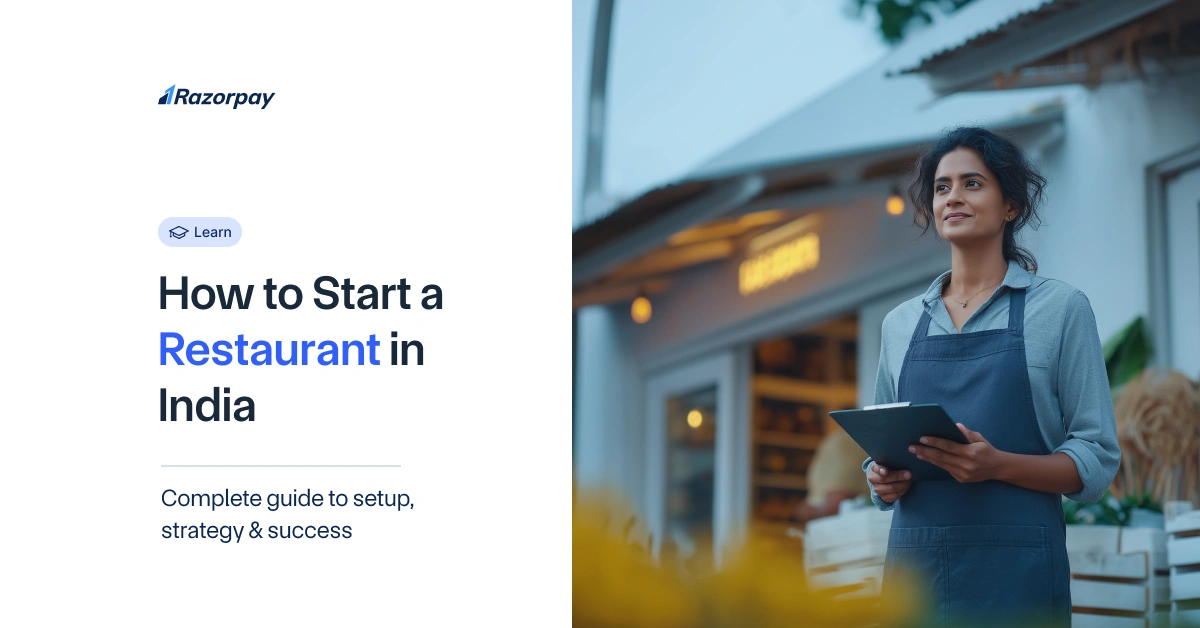
Have you always dreamed of owning a restaurant? The first step to turning that dream into reality is creating a solid restaurant business plan.
The Indian food and beverage (F&B) industry is booming, thanks to rising incomes, evolving eating habits, and the convenience of food delivery apps like Swiggy and Zomato. From fine dining and quick-service restaurants (QSRs) to cafés and cloud kitchens, opportunities are everywhere.
But here’s the truth—delicious food alone won’t guarantee success. You need a well-structured plan covering licenses, staffing, menu design, financial planning, and marketing. This guide will walk you through every element of a successful restaurant business plan in India.
Why You Need a Restaurant Business Plan
A restaurant business plan is more than just paperwork—it’s your blueprint for success.
-
Helps in Funding and Partnerships
Investors, banks, and vendors expect a detailed business plan before committing. It shows you’ve done your homework on costs, profits, and operational structure, which builds credibility and trust.
-
Reduces Risk and Predicts Breakeven
Restaurants involve high initial investment. Without proper planning, you could run out of funds before turning profitable. A plan helps forecast costs, project revenues, and calculate the breakeven point so you know when your business will start making money.
-
Brings Internal Clarity
From chefs to marketing teams, everyone needs a clear direction. A business plan sets goals, assigns responsibilities, and ensures all departments work toward the same vision.
Executive Summary
Your executive summary is like your restaurant’s elevator pitch. It’s the first thing investors, lenders, or partners will read.
-
Define Your Concept
Clearly describe your restaurant concept and what makes it unique. For example: “SpiceTrail – A modern Indian bistro blending traditional flavors with global influences for urban millennials.”
-
Mention Location and Audience
Specify where the restaurant will be located and who your target customers are. For instance, a café near an IT park caters to young professionals, while a family restaurant works best in residential areas.
-
Add Cuisine and Positioning
State whether your menu will feature vegetarian, non-vegetarian, multi-cuisine, or niche offerings like vegan or continental dishes. Also, define your pricing strategy—budget-friendly, mid-range casual dining, or fine dining.
Market Research & Competition Analysis
Market research ensures you’re not entering a saturated or low-demand market.
-
Understand Local Demand
Check whether people in your area prefer dine-in restaurants, takeaway joints, or online delivery. Use tools like Google Trends, surveys, and Zomato’s data to gauge demand.
-
Analyze Customer Behavior
Look at top-ordered cuisines, price sensitivity, and dining frequency in your target demographic. If your audience prefers affordable meals, a premium-priced fine-dining menu may fail.
-
Study Competitors
Visit nearby restaurants and note what works for them. What do their customers love? Where do they lack—maybe poor packaging or no loyalty programs? Fill these gaps in your business model.
Business Model and Format
The restaurant model you choose determines your costs and growth potential.
-
Cloud Kitchen
This is a delivery-only model that saves money on interiors and seating. All you need is a small kitchen, licenses, and tie-ups with delivery apps. Perfect for beginners on a tight budget. -
Dine-In Restaurant
This offers a full dining experience but requires higher investment in décor, space, and staff. It’s ideal for areas with heavy foot traffic like malls or corporate hubs. -
Food Truck
A food truck is a low-cost, mobile solution. It works well in high-traffic areas such as office complexes, college zones, and events. You’ll need a vehicle permit and periodic location permissions. -
Fine Dining or Franchise
Fine dining requires significant investment in interiors, chefs, and service quality. Alternatively, franchising a popular brand reduces marketing risk but requires a franchise fee and adherence to brand guidelines.
Licenses & Legal Requirements in India
To operate a restaurant in India, you must comply with legal regulations. Each license serves a specific purpose, from food safety to fire security. Here’s a detailed guide:
1. FSSAI License (Food Safety and Standards Authority of India)
Mandatory for any food business in India, this license ensures your kitchen meets hygiene and safety standards.
- Where to Apply: FSSAI official portal
- Cost: ₹2,000 to ₹7,500 per year (varies by turnover and type)
- Time Taken: 7–30 days
- Documents Required: Identity proof, address proof, kitchen layout, food category details
2. GST Registration
If your annual turnover exceeds ₹20 lakhs, GST registration is compulsory. It enables you to legally collect and pay GST on food bills.
- Where to Apply: GST portal
- Cost: Free
- Time Taken: 3–7 working days
3. Shop & Establishment License
This license allows you to legally operate a commercial outlet within city limits.
- Where to Apply: Your state’s labor department website
- Cost: ₹500–₹3,000 annually (varies by state)
- Time Taken: 5–10 working days
4. Fire NOC (No Objection Certificate)
Issued by the fire department, this ensures your restaurant follows fire safety norms like fire extinguishers and emergency exits.
- Where to Apply: Local Fire Department
- Cost: ₹1,000–₹5,000
- Time Taken: 15–30 days
5. Health / Trade License
Issued by the municipal corporation, this certifies your restaurant meets sanitation and safety standards.
- Where to Apply: Local Municipal Office
- Cost: ₹500–₹5,000 per year
- Time Taken: 7–15 days
6. Eating House License
Required for any establishment serving food and beverages to the public. Issued by the Commissioner of Police under the Delhi Police Act (or local equivalent in other states).
- Where to Apply: Local Police Licensing Department or State Home Department
- Cost: ₹300–₹3,000 annually
- Time Taken: 15–30 days
- Documents Required: FSSAI License, Fire NOC, Shop & Establishment License, Identity & Address proof
7. Music License (if applicable)
If you plan to play recorded music or live performances at your restaurant, you need a license from the Phonographic Performance Limited (PPL) and/or the Indian Performing Rights Society (IPRS).
- Where to Apply: PPL India and IPRS India
- Cost: ₹3,500–₹10,000 annually (depends on seating capacity and type of music)
- Time Taken: 5–10 days
8. Pollution Control License (if required)
Restaurants generating waste, emissions, or using generators need a Pollution Control Certificate from the State Pollution Control Board.
- Where to Apply: State Pollution Control Board portal
- Cost: ₹1,000–₹10,000 depending on scale
- Time Taken: 15–30 days
Location & Setup
Your restaurant’s location can make or break your business.
-
Pick High-Footfall Areas
Choose spaces near offices, colleges, malls, or residential complexes. A high-visibility spot ensures consistent customer flow.
-
Consider Cloud Kitchens for Budget Setup
If rent is too high, a delivery-only cloud kitchen can cut costs while reaching customers through apps like Swiggy and Zomato.
-
Plan for Parking and Delivery Access
Adequate parking and easy access for delivery riders improve convenience for both dine-in and takeaway customers.
Restaurant Menu Planning
Your menu should be appealing and profitable.
-
Keep It Short and Focused
Start with 10–15 core dishes that are easy to prepare and popular. A small menu reduces inventory waste and operational complexity.
-
Use a Pricing Strategy
Calculate food costs, add markup for profits, and compare with competitor pricing. A good rule is to keep food cost at 30–35% of the menu price.
-
Update Regularly Based on Demand
Track best-selling items and remove underperforming dishes. Seasonal menus and limited-time offers keep customers engaged.
Staffing & HR
Your staff is the backbone of your restaurant. A well-trained, motivated team can make or break customer experience. Here’s what you need to know:
-
Chefs and Kitchen Staff
Hiring skilled chefs should be your first priority because the quality and taste of your food determine repeat business. For small restaurants, start with one head chef and two to three assistants. Consider specialized cooks if you plan to serve diverse cuisines.
-
Front-of-House Staff (Waiters, Cashiers)
Waiters, hosts, and cashiers represent your brand to customers. Train them to be polite, maintain hygiene, and handle customer complaints professionally. A good rule is one waiter per five tables to ensure quick service.
-
Delivery Staff
If you plan on offering deliveries, hire dedicated delivery personnel or partner with third-party aggregators like Swiggy and Zomato. Make sure they follow proper food handling practices and wear branded uniforms for professionalism.
-
Training Protocols & Hygiene Standards
Every staff member should be trained in food safety, personal hygiene, and emergency handling. Invest in short courses from FSSAI-certified trainers or online programs to ensure compliance.
-
Salaries and Uniform Budget
The average monthly salary for a chef in India ranges from ₹20,000 to ₹50,000 depending on experience. Waitstaff usually earn ₹10,000–₹15,000 plus tips. Allocate ₹1,000–₹2,000 per person for uniforms, which should be neat and branded.
Restaurant Marketing Strategy
Even the best food needs visibility. A strong marketing plan can ensure your restaurant gets noticed in a competitive market.
-
Launch Campaigns
Start with a soft opening for friends, influencers, and local food bloggers. Invite them for a free tasting in exchange for social media posts and reviews. Register your restaurant on Google My Business for location-based searches.
-
Social Media & Online Reviews
Instagram and Facebook are your best friends for food marketing. Post high-quality photos, behind-the-scenes videos, and customer testimonials. Encourage happy customers to leave reviews on Zomato, Swiggy, and Google Reviews to boost your credibility.
-
Food Delivery Partnerships
Tie up with delivery apps like Swiggy and Zomato to expand your reach. Optimize your menu and pricing for online orders and invest in paid promotions during festive seasons to increase visibility.
-
Loyalty Programs and Mobile Marketing
Implement digital loyalty programs where customers earn points for every purchase. You can also use SMS and WhatsApp marketing for offers, especially for regular customers or during off-peak hours.
Tech Stack for Restaurants
A robust tech setup can save you time, reduce errors, and enhance customer experience.
-
POS (Point of Sale) Software
Choose a POS system like Petpooja, Posist, or DotPe that integrates billing, inventory management, and analytics. This reduces manual errors and provides real-time insights into sales.
-
Order Management System
If you’re handling both dine-in and delivery, an integrated system that syncs with Swiggy/Zomato ensures no order gets missed. This system also helps with managing peak-hour loads efficiently.
-
QR-Based Digital Menus
Post-pandemic, contactless ordering has become standard. Use QR codes for menus so customers can browse and order from their phones without waiting for a waiter.
-
Payment Gateway Integration
Use Razorpay to accept all payment modes, including UPI, credit/debit cards, and net banking. This ensures seamless checkouts for dine-in customers, online orders, and even pre-bookings.
Financial Plan (with Estimated Cost Table)
Before launching, map out your expenses to avoid financial surprises. Here’s an estimated cost breakdown for a mid-sized restaurant:
| Expense | Estimated Cost (₹) |
| Rent & Interiors | ₹3,00,000 |
| Kitchen Equipment | ₹2,50,000 |
| Licensing & Permits | ₹75,000 |
| Staff Salaries | ₹1,00,000/month |
| Inventory (Initial) | ₹1,50,000 |
| Marketing (Launch) | ₹50,000 |
| Razorpay Setup | ₹0 (Free Onboarding) |
Tip: Always maintain a contingency fund of at least 10–15% of your total budget for unexpected costs like repairs or seasonal dips.
How to Integrate Razorpay in Your Restaurant Business
Payments and payroll can get messy without the right tools. Razorpay offers solutions for every payment touchpoint.
- For Online Orders
If you have a website or app, integrate Razorpay Payment Gateway to accept UPI, cards, and net banking. There are zero setup fees, and settlements are instant. - For In-Store Payments
Use Razorpay POS machines to collect card and UPI payments at the counter. The system provides detailed transaction reports for easy reconciliation. - For Home Deliveries & Pre-Orders
Send Razorpay Payment Links via WhatsApp or SMS for advance payments. This is great for pre-booked parties, catering, or special menu items. - For Staff Salary & Vendor Payments
Use RazorpayX Payroll to automate salary disbursements, manage compliance (PF, TDS), and avoid manual errors. You can also schedule vendor payments directly from the dashboard.
Sample Business Plan Format
A structured business plan keeps everything in one place. Here’s a sample format:
| Section | Description |
| Executive Summary | Overview, name, concept, and cuisine |
| Business Concept | Model (dine-in, cloud kitchen), target market |
| Operations Plan | Staff, vendors, standard processes |
| Marketing Plan | Launch campaigns and growth strategies |
| Financial Projection | Budget allocation, breakeven analysis |
| Legal & Tech Stack | Licenses, Razorpay integration, POS tools |
Conclusion
Starting a restaurant is exciting, but without a plan, it can quickly turn into a financial nightmare. From choosing the right location to managing staff, marketing, and technology, every step requires careful planning. A detailed restaurant business plan gives you a clear roadmap for success.
Want to make payment handling easy? Integrate Razorpay for POS, online payments, and automated vendor payouts, so you can focus on what matters most—serving great food and creating amazing customer experiences.
FAQs
Q1. What licenses are required for a restaurant in India?
You need FSSAI License, GST Registration, Fire NOC, Health/Trade License, Shop & Establishment License, and if applicable, Music and Pollution Control licenses.
Q2. How much does it cost to open a small restaurant?
On average, ₹8–10 lakhs depending on location, concept, and size. A cloud kitchen model can start from ₹2–3 lakhs.
Q3. What is a cloud kitchen business model?
A cloud kitchen is a delivery-only setup without dine-in facilities. It reduces costs like rent and interiors, making it a popular choice for new restaurateurs.
Q4. How to accept online payments in a restaurant?
You can use Razorpay Payment Gateway for online orders, Razorpay POS for in-store payments, and Payment Links for advance bookings.
Q5. Can I run a restaurant from home legally?
Yes, provided you have an FSSAI license and comply with local municipal and zoning regulations.