Payment Gateway Support for Low-Volume Merchants: What to Look for in 2026
India’s digital payments market is projected to reach around USD 1.89 trillion in 2026, yet the merchants powering much of this growth often feel left out. Around 63% of Indian MSMEs cite high transaction charges and fixed fees as a key barrier to going digital. If you are a founder processing 50 orders a month, an Instagram seller, a kirana store going cashless, or a freelancer invoicing clients, most payment gateway guides were not written for you. They assume enterprise volumes and dedicated tech teams. This is a decision framework built for low-volume merchants, walking you through the factors that actually matter at your scale before you sign up.
Key Takeaways
- 63% of Indian MSMEs cite high transaction charges and fixed fees as a barrier to adopting payment gateways. Flat MDR with no monthly minimum almost always wins for low-volume merchants.
- Only RBI-authorised Payment Aggregators can legally handle merchant funds in India. Verifying this on the RBI’s published list is your non-negotiable first filter.
- Around 60% of small Indian merchants accept digital payments only via QR or UPI. Gateways without strong UPI support exclude this majority.
- Standard settlement cycles of T+2 to T+3 create working capital strain, and poor cash flow management is tied to most small business failures.
- Over 75% of card fraud value in India occurs in card-not-present channels, so built-in fraud scoring matters more for merchants without risk teams.
- Mobile checkout speed affects conversion directly: 53% of mobile users abandon sites that take over 3 seconds to load.
Table of Contents
Why Low-Volume Merchants Face a Different Gateway Problem
“Low-volume” here means under roughly 500 transactions per month, or monthly online GMV under ₹5 to 10 lakh. This band includes early-stage startups, Instagram and WhatsApp sellers, homepreneurs, kirana stores, freelancers, coaches, and small NGOs. Your constraints differ from an enterprise: thin margins, irregular sales, no in-house developer, and no finance or risk team.
That changes which mistakes hurt most. Three are common:
- Choosing on MDR alone while ignoring monthly fees and minimums that quietly erode slow-month earnings.
- Picking a website-required gateway when you actually sell through Instagram, WhatsApp, or a physical counter.
- Not verifying RBI authorisation, which exposes you to risk you have no team to manage.
Did You Know?
63% of small retailers cite high transaction charges and fixed fees as a barrier to adopting payment gateways, versus only 34% of large enterprises.
Factor 1: RBI Authorisation – The Filter That Comes Before Everything Else
Before you compare a single rupee of pricing, confirm the provider is an RBI-authorised Payment Aggregator. Under the RBI’s Payment Aggregator framework, only authorised entities can legally collect and handle merchant funds online. This is a legal prerequisite. A cheaper gateway that is not authorised is not a bargain; it is a risk you cannot afford without a legal team.
Here is how to verify in four steps:
- Visit the RBI’s published list of authorised Payment Aggregators.
- Search by the provider’s legal entity name, not its brand name.
- Distinguish between “in-principle approval” and a full PA authorisation.
- If the provider is not listed, treat it as a red flag and do not proceed.
This protects your money and your customers, and it takes only minutes. Related RBI rules, such as card tokenisation norms, add further layers of merchant protection.
Pro-Tip: Spend 2 minutes on the RBI’s authorised PA list before comparing pricing. No MDR advantage justifies regulatory risk for a small business with no legal team.
Factor 2: Pricing Models That Don’t Punish Low Volume
Pricing is where low-volume merchants get hurt the most. Understanding the three common models, and the hidden fees beneath them, protects your margins.
Flat per-transaction MDR
MDR (Merchant Discount Rate) is a percentage of each transaction. A 2% MDR on a ₹1,000 sale means you receive ₹980. Flat per-transaction MDR with no monthly fee is usually the safest default for low-volume merchants because you pay only when you earn. Slow months cost you nothing.
Monthly subscription plus lower per-transaction fee
Some plans charge a monthly fee in exchange for a lower per-transaction rate. The break-even math matters: if the monthly fee is ₹1,000 and you save ₹2 per transaction, you need 500 transactions just to break even. For a merchant doing 50 to 300 orders a month, this model often loses money.
Interchange-plus pricing
This is the most transparent model, splitting network cost from processor margin. It is also the most complex and is generally suited to high-volume enterprises, not a 50-orders-per-month seller.
Hidden fees to check
Watch for setup fees, monthly minimums, chargeback fees, refund processing fees, international card surcharges, and PCI compliance costs. Digital acceptance can reduce small business payment costs by about 57%, but only if fixed fees do not erase that advantage. Compare transparent pricing carefully.
How Razorpay’s Payment Gateway Supports Low-Volume Merchants Without Locking Them In
Low-volume merchants need infrastructure that grows with them, not against them. The right setup lets you start small, accept the payment methods your customers prefer, and stay compliant without hiring a tech or legal team. The Razorpay Payment Gateway is built around this reality.
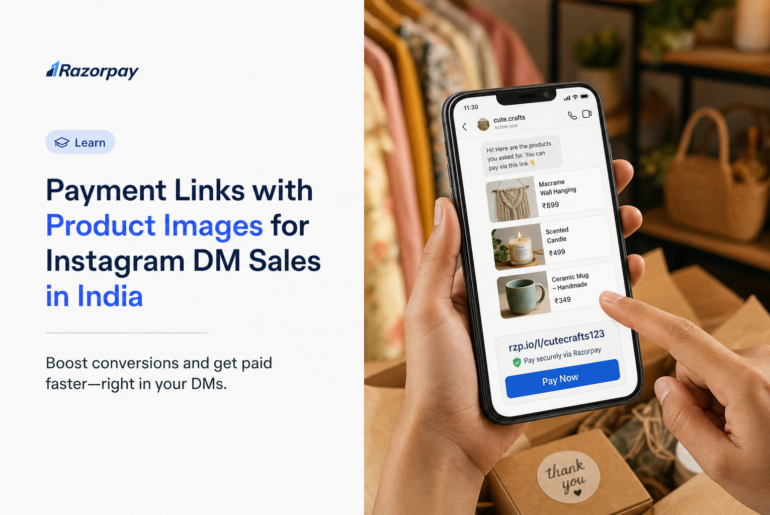
- No-code entry points via Payment Links, Payment Pages, and QR Codes: Accept payments without a website or a developer, shared through WhatsApp, SMS, or email. This is practical for sellers running a business on social channels or at a physical counter.
- 100+ payment methods through a single integration: UPI, cards, net banking, and wallets are all covered, matching the range of payment preferences Indian customers use. Fewer sales are abandoned because a preferred method was missing.
- RBI-authorised Payment Aggregator status: Razorpay is licensed to handle merchant funds within the regulatory framework, so compliance is handled as part of the platform.
For early-stage businesses, this guide on how to accept online payments in India explains how to start with no-code tools and scale later.
Factor 3: UPI and QR Support – The Non-Negotiable for Indian Merchants
UPI is now the default payment rail in India. The average UPI transaction value has fallen to around ₹1,119, showing it is used for everyday, low-ticket payments, exactly the kind low-volume merchants handle. A gateway without strong UPI support is missing the majority of how Indians pay.
Good UPI support means:
- UPI Intent for smooth app-to-app flows on mobile.
- UPI Autopay for recurring payments and subscriptions.
- Dynamic QR codes that tie each payment to an order for clean reconciliation.
- UPI Lite for fast, small-value payments.
For sellers without a website, the no-code stack matters most: Payment Links shareable on any channel, hosted branded Payment Pages, and QR Codes. Razorpay’s QR Code product lets merchants generate static or dynamic UPI QR codes that accept payments from any UPI app, making it a practical entry point for offline and semi-online sellers.
Did You Know?
Around 60% of small merchants in India accept digital payments only via QR or UPI and do not yet have a card POS or gateway link.
Factor 4: Checkout Experience and Mobile Optimisation
Checkout speed matters more for small merchants because every lost sale is a bigger share of your revenue. 53% of mobile users abandon sites that take more than 3 seconds to load, and even a one-second delay can cut conversions. For a merchant doing 50 orders a month, losing three or four sales is a 6 to 8% revenue hit you cannot easily absorb. Hosted checkout puts the payment page on the gateway’s domain and is easiest to set up, while embedded checkout sits inside your own site for more brand control but needs technical work. For non-technical, low-volume merchants, hosted checkout or Payment Pages are usually the smarter starting point.
Pro-Tip: If you do not have a developer, start with a hosted payment page or payment link. PCI compliance is handled for you, and you can upgrade later when volume justifies it.
Factor 5: Settlement Speed and Working Capital
Settlement timing is not a feature bullet; it is a cash flow survival issue. Standard cycles of T+2 or T+3 mean today’s sales reach your account in two to three business days. For a merchant restocking inventory, paying a delivery partner, or buying supplies for the next order, that gap can stall the whole business. Poor cash flow management is tied to a large majority of small business failures.
Use this checklist:
- Ask for the default settlement cycle in writing, by payment method.
- Check whether faster options exist and what they cost.
- Verify how weekends and holidays are handled.
- Check any minimum payout thresholds.
For merchants who need access to funds outside the standard settlement window, Razorpay’s Instant Settlements feature offers an option to receive funds faster than the default cycle.
Factor 6: Security, Fraud Protection, and Compliance
You do not need a risk team to stay secure, but you do need the right baseline. A good gateway is PCI DSS Level 1 compliant, meaning it handles sensitive card data so you never store it. Tokenisation replaces card details with a secure token, and 3D Secure or OTP verifies the cardholder. These protect both you and your customers.
Card-not-present fraud is the real exposure. Over 75% of card fraud value in India occurs in card-not-present channels, precisely where online merchants operate. A single fraudulent order can wipe out the margin from many small sales. Look for automatic fraud scoring, velocity checks, address verification, and chargeback management. Razorpay’s Thirdwatch integration brings automated fraud detection into the checkout flow, helping low-volume merchants flag suspicious orders without a dedicated risk team.
Did You Know?
Over 75% of card fraud value in India occurs in card-not-present channels, making small online merchants the most exposed segment.
The Low-Volume Merchant’s Gateway Decision Checklist
Must-Have:
- RBI-authorised Payment Aggregator status
- No monthly fee or monthly minimum
- UPI and QR support
- PCI DSS Level 1 compliance
- Mobile-optimised checkout
- No-code acceptance option
- Transparent, flat MDR
Red Flags:
- Not listed on the RBI’s authorised PA list
- Mandatory monthly fee for a sub-500-transaction merchant
- No UPI support
- Requires a developer for basic setup
Why Razorpay Works for Low-Volume Merchants
Razorpay is built to match where a merchant is today, not where they might be in three years. The table below maps common low-volume needs to features that address them.
| What Low-Volume Merchants Need | Razorpay Feature | What It Does |
|---|---|---|
| Start without a website | Payment Links | Share a payment URL via WhatsApp, SMS, or email |
| Accept UPI | QR Codes | Generate static or dynamic UPI QR codes |
| Branded checkout without coding | Payment Pages | Host a branded payment page with no developer |
| Unified payment methods | Payment Gateway (100+ methods) | Accept UPI, cards, net banking, and wallets in one integration |
| Regulatory compliance | RBI-Authorised PA Status | Handle merchant funds within the regulatory framework |
| Faster fund access | Instant Settlements | Access funds outside the standard settlement window |
| Fraud protection | Thirdwatch integration | Flag suspicious orders automatically |
| Reconciliation | Smart Collect | Match incoming payments to orders |
Explore the Razorpay Payment Gateway to get started.
Conclusion
The strongest way to choose a gateway is to evaluate in order. Check RBI authorisation first, because nothing else matters if your provider cannot legally handle your money. Then assess pricing fit for low volume, UPI and QR coverage, checkout experience, settlement timing, and finally security. The right payment gateway support for low-volume merchants is the one that matches where you are today, not where you might be in three years. Start lean, stay compliant, protect your cash flow, and upgrade as you grow. Ready to begin? Explore the Razorpay Payment Gateway.
Pro-Tip: Before signing up, send a support query as a prospective merchant. The response time you get before you are a paying customer is your best predictor of support quality during an actual outage.
Frequently Asked Questions
Do I need a website to use a payment gateway in India?
No. You can accept payments without a website using Payment Links shared via WhatsApp or SMS, QR Codes for UPI at a counter, and hosted Payment Pages for branded checkout. These no-code tools suit Instagram sellers, freelancers, and kirana stores starting out.
What is the cheapest payment gateway for low-volume merchants in India?
It depends on your volume, but a flat MDR with no monthly fee usually wins. If a plan charges a ₹1,000 monthly fee to save ₹2 per transaction, you need 500 transactions just to break even, which rarely helps small merchants.
How do I check if a payment gateway is RBI-authorised?
Visit the RBI’s published list of Payment Aggregators, search by the provider’s legal entity name, and confirm whether the status is “authorised” or only “in-principle.” If it is not listed, do not proceed.
What is MDR and how is it calculated?
MDR, the Merchant Discount Rate, is a percentage of each transaction value. A 2% MDR on a ₹1,000 payment means you receive ₹980 and pay ₹20 as the processing charge. Lower MDR means more of each sale reaches you.
Is UPI free for merchants in India?
Person-to-person UPI is free, but merchant (P2M) UPI pricing depends on current policy and your gateway’s commercial terms. Always confirm the applicable charges with your chosen provider before signing up.
How long does it take to set up a payment gateway in India?
No-code options like Payment Links and QR Codes can go live within hours of completing KYC. Full gateway integrations take longer depending on your setup. Keep your GST, PAN, and bank account details ready to speed up onboarding.