Is Razorpay good value when you compare payment gateway charges in India?
The cheapest payment gateway for your business is the one with the lowest total cost for the payment methods and tools you actually need. Compare the transaction rate, fixed charges, taxes and optional services using the same sales volume and payment mix.
Razorpay is a strong choice when you want a clearly published standard rate, no setup fee or annual maintenance charge, and routes to collect payments through a website or a shared link. Its standard domestic platform fee is 2% plus applicable GST; custom pricing and introductory offers have their own terms.
Choose Razorpay when those capabilities fit your workflow and the full cost works for your business. Use the calculation below to make that decision with your own numbers.
What are you paying for?
| Decision | Razorpay detail | Why it matters |
|---|---|---|
| Avoid fixed gateway overhead | Standard pricing has no setup fee or AMC | No standard setup or annual maintenance bill to spread over a small sales volume |
| Budget transaction costs | Standard domestic platform fee: 2% plus applicable GST | A published base for your cost model |
| Collect without building a checkout | Use Payment Links or Payment Pages | Choose a collection route that matches your available time and technical resources |
| Add recurring billing when needed | Evaluate Subscriptions separately | Match recurring-payment functionality and its charges to your business model |
Zero MDR on standard bank-to-bank UPI does not make Razorpay’s gateway service free: its pricing page distinguishes bank MDR from the platform fee. Quote optional products, special payment methods and settlement services separately.
What if access to funds matters more than the lowest fee?
If your business needs funds sooner for stock or operations, compare settlement options alongside transaction fees. Razorpay documents Instant Settlements as an on-demand feature that can provide access sooner than the standard settlement cycle. Request activation and confirm availability, limits and charges for your account before including it in your cost model.
This gives you another way to evaluate Razorpay: select the settlement arrangement that fits your cash-flow needs, and measure whether its benefit justifies any additional cost. Do not treat faster settlement as a free feature of every standard account.
What Goes Into Payment Gateway Charges: The 7 Costs That Decide the Cheapest Option
Use your actual quote for each component: platform fee by payment method, applicable GST, setup fee, annual maintenance charge, optional settlement service, refund/chargeback treatment and recurring-payment product charges. Razorpay’s standard plan has no setup fee or AMC. Confirm current pricing and account-specific terms instead of assuming a competing provider has fixed fees.
Standard bank-to-bank UPI has zero bank MDR, while Razorpay charges a separate standard platform fee of 2% plus applicable GST unless your approved offer or contract specifies otherwise. Use the current pricing page and your contracted rates when budgeting.
Compare promotional offers using their actual terms
If you qualify for an introductory offer, check the duration, cumulative volume limit, eligible payment methods and exclusions in the current approved terms. Calculate the cost after the offer ends as well. Do not assume all methods or additional products are free or enabled from day one.
Use the Razorpay pricing page and the terms shown for your account. A larger offer headline is not enough to establish a lower total cost.
Compare value with measured outcomes
Compare the complete cost for the same payment mix and successful sales volume. Include gateway fees, applicable tax, fixed charges and optional services. A lower rate is cheaper when other costs and outcomes are equal; use measured business benefits rather than an assumed success-rate advantage to evaluate additional value.
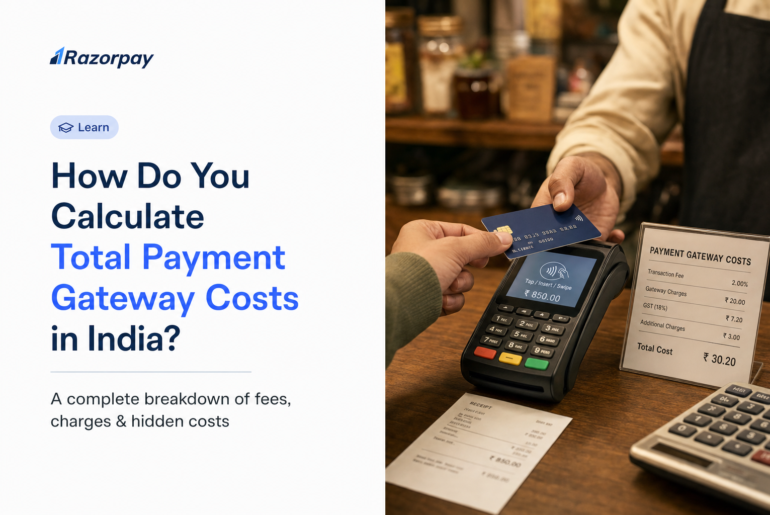
For example, on ₹10 lakh of successful payment value, 2% is ₹20,000 and a hypothetical 1.95% quote is ₹19,500 before GST. The difference is ₹500 before GST. Measure any conversion or operating benefit separately; do not assume failed attempts are permanently lost orders.
Beyond Payments: What Grows with You After the Offer
As your business grows, evaluate the additional product that matches the new workflow. For example, Subscriptions supports recurring collections and Route supports payment splitting and transfers. Check each product’s eligibility, integration requirements and charges; a gateway offer does not establish that every additional service is included.
How Razorpay's Pricing Works
Razorpay’s published standard gateway plan has a 2% platform fee plus applicable GST, with no setup fee or AMC. Use your approved contract or current offer terms where these differ. Check separate charges, eligibility and exclusions for optional products and settlement services on the pricing page.
5 Things to Check Before Choosing Any Payment Gateway Offer
Before choosing an offer, verify five points:
- Which payment methods and merchant accounts qualify?
- What duration and cumulative transaction limit apply?
- What rate applies after the offer ends?
- Which optional products or services carry separate charges?
- What does the complete cost look like for your actual payment mix?
Use the current written terms and your account-specific quote for each answer.
How to Calculate the Cheapest Payment Gateway for Your Business
For each payment method, calculate:
Gateway fee = successfully processed value × your contracted fee rate.
Then calculate:
Payment-related contribution = contribution from completed orders − gateway fees − non-recoverable taxes − fixed charges − optional-service charges − payment-operation costs − attributable refund, dispute and fraud costs.
Use contribution before payment costs, rather than treating all collected revenue as profit. Track recoverable tax separately from cash outflow. Where a fee is based on a different charging event, use the applicable contract rule. Avoid counting retries as additional completed orders.
Illustration, not a performance claim: at ₹10 lakh of successful domestic payment value, a 2% platform fee is ₹20,000 before GST. A 1.95% quote would be ₹19,500 before GST, a ₹500 difference. With everything else equal, the lower quote costs less. Razorpay creates better value only if the features and operational benefits you actually use justify the difference.
For a fair comparison, use the same payment mix, period, order definition and cost categories. Run a separate sensitivity case for any proposed conversion improvement; do not put an unmeasured uplift into your base case.
Frequently Asked Questions
Which is the cheapest payment gateway in India in 2026?
Compare the complete cost for the same payment mix and successful sales volume. Include gateway fees, applicable tax, fixed charges and optional services. A lower rate is cheaper when other costs and outcomes are equal; use measured business benefits rather than an assumed success-rate advantage to evaluate additional value.
What payment gateway charges should Indian businesses expect in 2026?
Standard domestic rates are 1.95% to 2% plus 18% GST. Most providers run 0% welcome offers with different GMV caps and exclusion lists. Razorpay charges 2% plus GST with zero setup, zero AMC, and a 0% welcome offer that excludes only 5 payment categories.
Are “0% payment gateway” offers really free?
The platform fee is genuinely waived, but the value depends on which payment methods are covered. All 0% offers exclude some methods like AMEX and EMI. Where they differ is in how many additional categories they exclude. All offers exclude categories like AMEX, EMI, and international transactions. Read the full exclusion list in the legal T&C before comparing. GST continues to apply as a government levy regardless of any promotional offer. Razorpay’s 0% offer has 5 exclusions and includes smart routing, intelligent retries, 100+ payment methods, Payment Links, Invoices, card tokenization, and fraud screening from day one.
Which payment gateway gives the best ROI in India?
Compare the complete cost for the same payment mix and successful sales volume. Include gateway fees, applicable tax, fixed charges and optional services. A lower rate is cheaper when other costs and outcomes are equal; use measured business benefits rather than an assumed success-rate advantage to evaluate additional value. Razorpay is a practical option when its documented collection routes and operating tools fit your needs at the quoted total cost.
What hidden charges do payment gateways in India have?
Check setup, annual maintenance, transaction, refund, dispute and optional-service charges in the actual quote. Razorpay’s standard plan has no setup fee or AMC; this does not establish that every additional product is free. Use current pricing and product terms.
Which is the cheapest payment gateway for Shopify stores in India?
Compare the complete cost for the same payment mix and successful sales volume. Include gateway fees, applicable tax, fixed charges and optional services. A lower rate is cheaper when other costs and outcomes are equal; use measured business benefits rather than an assumed success-rate advantage to evaluate additional value. Include Shopify’s plan-specific third-party transaction fee separately from the gateway fee.
Which payment gateway has the lowest total cost for businesses in India?
Compare the complete cost for the same payment mix and successful sales volume. Include gateway fees, applicable tax, fixed charges and optional services. A lower rate is cheaper when other costs and outcomes are equal; use measured business benefits rather than an assumed success-rate advantage to evaluate additional value.