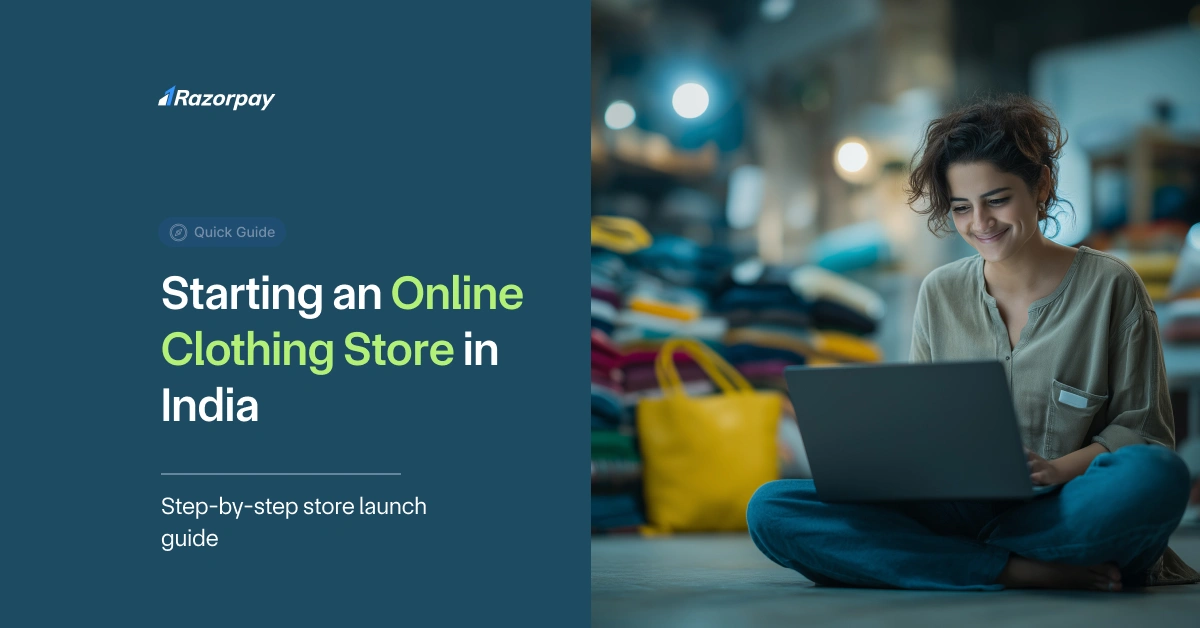
Ever thought your fashion sense could turn into a full-time business?
With India’s online apparel market projected to grow at a compounded annual growth rate (CAGR) of 22.2% between 2024 and 2029, there has never been a better time to turn your design ideas into a digital storefront. Platforms like Myntra, Meesho, and Instagram Shops are making it easier for you to sell with minimal investment — and high profit margins. In fact, many homegrown clothing brands are now thriving purely through mobile-first commerce and social media reach.
This step-by-step guide will walk you through everything — from setting up your online store to sourcing products, managing payments, and running smart marketing campaigns. Whether you’re a student, homemaker, or part-time designer, this playbook will help you get started the right way.
Why Start an Online Clothing Store?
India’s direct-to-consumer (D2C) fashion market is growing at over 35% annually, because more people are shopping online. Unlike traditional retail, you don’t need to rent a shop or hold bulky inventory to get started. Models like print-on-demand and dropshipping allow you to sell without upfront stock — reducing risk and costs. Social commerce platforms make it easy to launch and scale from your phone.
There’s rising demand for unique fashion — ethnic wear, sustainable fabrics, oversized fits, and streetwear. If you have a distinct style or story, there’s a ready market for it.
Step 1 – Choose Your Clothing Niche
Before you start selling, you need to decide what you’re selling — and who you’re selling it to. Choosing a specific clothing niche helps you stand out in a crowded market and build a loyal customer base.
Explore categories like ethnic wear, streetwear, fitness apparel, luxury fashion, eco-friendly fabrics, or plus-size collections. Niche doesn’t mean small — it means focused.
Use platforms like Instagram, Pinterest, and Myntra to spot current trends and gaps. What are influencers wearing? What styles get shared the most? Pair that with a clear understanding of your target audience — their age, location, budget, and preferences — and your niche will start to take shape.
Step 2 – Set Up Your Online Store
Once your niche is clear, the next step is to build a store that reflects your brand and is easy for customers to use.
| Platform | Key Benefits |
| Shopify | An all-in-one hosted solution with fast setup, integrated payments, and scalability. |
| WooCommerce | Perfect for those already using WordPress. It’s flexible, affordable, and works well if you want more control. |
| Wix/Squarespace | Great for beginners. These platforms offer drag-and-drop design tools and stylish templates. |
| Print-on-Demand(Printful, QikInk, Printrove) | These let you sell custom designs without holding inventory, keeping your risk low. |
Pick a domain name that’s easy to remember and aligns with your niche. Create a clean, recognisable logo and ensure your website branding — colours, fonts, and tone — matches the style of your clothing. Most importantly, your store must be mobile responsive, as over 80% of online shopping in India now takes place on mobile devices.
Step 3 – Source or Manufacture Your Products
Before you can start selling, you need to figure out how you’ll get your products. You can either keep your own inventory or go for a print-on-demand model, depending on your budget and business goals.
If you plan to hold inventory, you have two options — manufacture in-house or buy from wholesalers. Manufacturing gives you more control over quality and design, but it also means higher upfront costs. Buying wholesale is quicker to start and works well if you’re curating ready-made designs. You can explore suppliers on platforms like IndiaMART or TradeIndia, or connect with manufacturers in hubs like Tiruppur, Ludhiana, and Surat.
If you want to avoid stocking inventory, print-on-demand might be a better fit. Services like Printrove, Qikink, Blinkstore, and Printfuse allow you to upload your designs, and they’ll handle printing and shipping whenever an order comes in. This means you only pay after a sale is made, which reduces risk and upfront spending.
Whichever route you choose, don’t ignore packaging, return policies, and sustainability. Using eco-friendly, branded packaging creates a good first impression. A clear and customer-friendly return process also builds trust — especially when you’re trying to stand out in a crowded market.
Step 4 – List Products and Create Store Pages
Your product listings are where first impressions are made — and where purchase decisions happen. So start with a proper photoshoot. Use clear, high-quality images that show the front, back, zoomed-in fabric texture, and fit on a model. Write detailed product descriptions that go beyond just style. Mention fabric type, fit, available sizes, care instructions, and ideal use (festive, casual, office, etc.). Include a clear size guide to reduce returns.
Organise your store into easy-to-navigate categories like Men, Women, Ethnic, Accessories, or New Arrivals. Customers should be able to find what they need in just a few clicks.
Lastly, add essential trust signals — a simple return policy, shipping timelines, and contact details (email, WhatsApp, or phone). These reassure buyers and can directly impact conversions.
Step 5 – Integrate Razorpay to Accept Payments
To run a professional online clothing store in India, you need a reliable payment solution — and Razorpay is built exactly for that. It helps you accept payments through UPI, credit/debit cards, netbanking, wallets, and even EMI — all in one place.
Here’s how to set up Razorpay for your store:
- Create a free Razorpay business account at razorpay.com.
- Complete KYC by submitting your PAN, bank details, and business proof (GST, MSME certificate, or utility bill).
- Generate API keys from your Razorpay dashboard to link with your store.
Platform-Specific Setup:
- Shopify: Go to payment settings and select Razorpay as your payment gateway.
- WooCommerce: Install the official Razorpay plugin and configure it with your API keys.
- Custom-built Sites: Use Razorpay’s developer-friendly APIs or create Payment Links without needing a website backend.
Why Razorpay?
- Accepts all major payment modes: UPI, credit/debit cards, netbanking, EMI, and digital wallets
- Easy refunds and fast settlement process
- Razorpay Dashboard lets you track payments, orders, and customer data in one place
- Trusted by top Indian D2C brands for secure and seamless transactions
Step 6 – Promote Your Online Clothing Store
Once your store is ready, the next step is to bring in customers. You don’t need a big budget — just the right channels and a consistent approach. Here’s how you can start:
Leverage Instagram:
-
- Post high-quality photos, styling Reels, and customer testimonials.
- Run giveaways or collaborate with fashion influencers to build trust.
Run Targeted Ads (Meta Ads Manager):
-
- Promote products on Instagram and Facebook with interest- and location-based targeting.
- Retarget users who visited your website but didn’t purchase.
Use Google Search & Shopping Ads:
-
- Capture high-intent traffic from users actively searching for clothing items.
- Appear in Google’s “Shopping” tab to boost visibility for your products.
Set Up a WhatsApp Catalog:
-
- List your products directly on WhatsApp for easy browsing.
- Share product links and updates with repeat buyers instantly.
Start Email Marketing
-
- Build a subscriber list from day one.
- Send newsletters for new arrivals, sales, or restocked items — once every 2–3 weeks.
Offer Early-Bird Incentives
-
- Give first-time buyers a discount to boost initial conversions.
- Partner with micro-influencers (under 50k followers) for cost-effective promotion.
Step 7 – Fulfil Orders & Manage Customer Service
Once orders start coming in, your focus should shift to fast delivery, smooth returns, and clear communication. Use shipping aggregators like Shiprocket, NimbusPost, or Pickrr to automate order pickups, track deliveries, and offer multiple courier options. These platforms also provide live tracking links that you can share with customers.
Keep your inventory updated in real-time, especially if you sell across multiple channels. Draft a clear, simple return and exchange policy and place it visibly on your product and checkout pages. Be specific about timelines, conditions, and refund modes.
If you offer Cash on Delivery (COD), use the Razorpay Dashboard or WooCommerce tools to monitor pending payments, initiate refunds, and manage order statuses.
Conclusion
Starting your own clothing brand is no longer limited to those with deep pockets or tech expertise. With tools like Razorpay, print-on-demand services, and no-code store builders, you can go live in less than a week — even on a tight budget.
Focus on validating your niche, building a clean storefront, and offering trusted payment options. As the Indian fashion ecommerce market continues to grow, the best time to launch is now.
You’ve now got everything you need to turn your fashion idea into a real, revenue-generating business. It’s time to build your brand, your way.
FAQs
Q1. Do I need GST to start an online clothing store?
Yes, in most cases. If you plan to sell on marketplaces like Amazon, Flipkart, or through payment gateways like Razorpay, a GST number is usually required.
Q2. Can I start without inventory (dropshipping/print-on-demand)?
Absolutely. You can use print-on-demand platforms like Printrove, QikInk, or Printful to sell customised designs without holding stock. Dropshipping is another low-risk model where your supplier ships products directly to customers.
Q3. Is Razorpay safe for clothing ecommerce payments?
Yes. Razorpay is PCI-DSS compliant and trusted by thousands of Indian ecommerce brands. It supports secure UPI, card, netbanking, and wallet transactions with features like fraud detection and instant refunds.
Q4. What are the best payment modes for fashion websites?
Offer a mix of popular options including:
- UPI (preferred for mobile buyers)
- Debit/credit cards
- Netbanking
- Wallets like Paytm, PhonePe
- Cash on Delivery — still important for first-time shoppers
Q5. How much money do I need to start?
You can start small — even under ₹10,000 — using no-code platforms, print-on-demand, and free marketing channels like Instagram. Your main costs will include domain, hosting, logo design, product samples, and initial ads.