Table of Contents
What Is a Bank Account Number?
A bank account number is a unique identifier assigned to a specific bank account. It is essential for facilitating financial transactions, enabling you to transfer funds, receive deposits, make wire transfers, and perform other banking activities.
Bank account numbers typically consist of a combination of digits and may sometimes include letters or other characters, depending on the bank’s format. This number ensures that transactions are directed to the correct account, ensuring accuracy and security in the management of your finances.
How Does a Bank Account Number Work?
A bank account number functions as a critical identifier, enabling transactions like deposits, withdrawals, and transfers to be processed accurately. It ensures that funds are directed to the correct account without errors.
In most cases, a bank account number works alongside a routing number. While the routing number identifies the bank or branch, the account number specifies the individual account within that bank. This combination ensures that every transaction is processed correctly.
For instance, when you initiate NEFT, RTGS, or IMPS transfers, your bank account number is required to complete the transaction. Similarly, it’s used to receive salary credits, manage automatic bill payments, and link your account to mobile banking apps like BHIM or YONO for convenient fund access.
Components of a Bank Account Number
A bank account number typically consists of a series of digits and may include unique identifiers such as letters or special characters. It is formatted to identify accounts uniquely within a bank’s system.
Bank account numbers in India generally range between 9 and 18 digits. For example, a savings account in Bank A might have 11 digits (12345678901), while a current account in Bank B might feature 16 digits (1234567890123456). This variation is designed to meet specific operational and regulatory requirements of banks and financial systems.
The length and structure of bank account numbers vary across countries. For instance:
- In India, account numbers are typically numeric and fall within the aforementioned range.
- The European Union uses IBANs, incorporating up to 34 alphanumeric characters, including country codes and bank identifiers.
- SWIFT codes, essential for international transfers, consist of 8 to 11 characters. It complements account numbers to facilitate global transactions.
Different Methods to Know Your Bank Account Number
1. Internet Banking
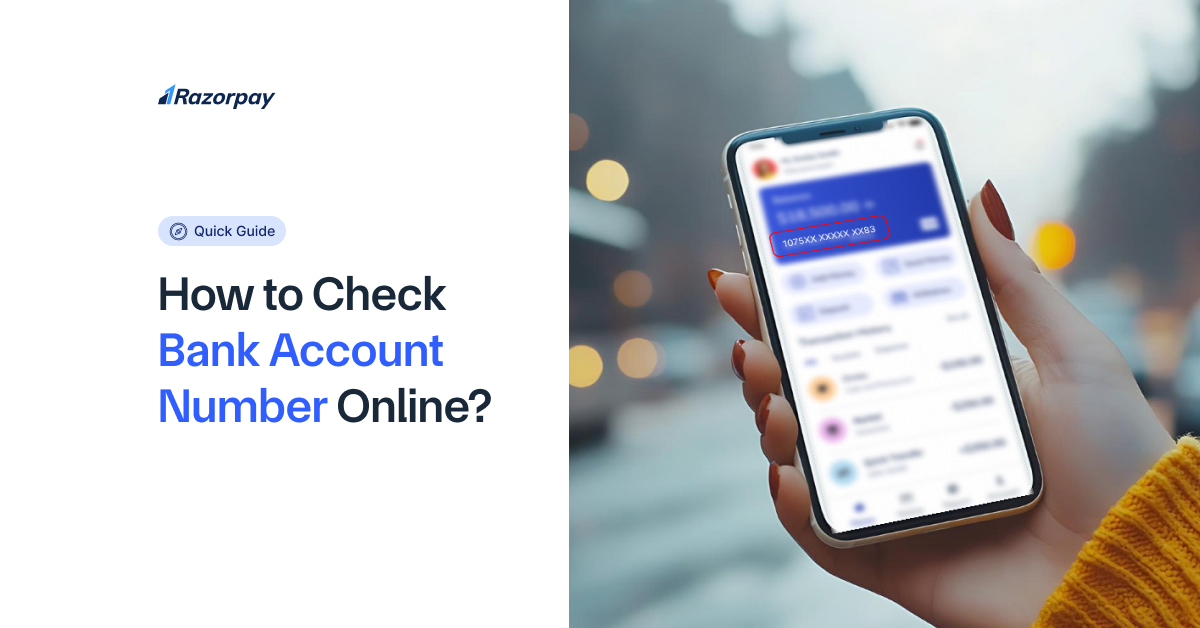
You can find your bank account number by logging into your bank’s official website. Once logged in, go to the account summary or dashboard section. Here, you will see your account number displayed along with other account details.
2. Mobile Banking Apps
Most banks have mobile apps that make it easy to access your account number. After logging in, navigate to the account summary or balance section. The app will display your account number along with other details like your account type and balance.
3. Bank Account Statements
Your account number is also printed on your bank statements. You can check your e-statements, which are often sent to your registered email, or download them from your bank’s online portal. The account number is usually located at the top of the statement.
4. UPI Apps
If you use UPI apps like Google Pay, PhonePe, or Paytm, you can find partial details of your bank account number. When you view your linked bank accounts within the app, it will display the last few digits of the account number, helping you identify the correct account.
5. Contacting Customer Support
Another way to know your bank account number is by contacting customer support. You can contact them via online chat, email, or phone. After verifying your identity, they will provide you with the account number or guide you to access it securely.
How to Find Bank Account Number Offline?
1. Check Your Physical Passbook or Printed Statements
If you have a passbook issued by your bank, your account number and other account details are printed on its first page. Similarly, printed bank statements provided by the bank also include your account number, usually at the top of the document.
2. Visit the Bank Branch
You can visit your bank’s branch to retrieve your account number. Carry a valid ID proof, such as your Aadhaar card, PAN card, or passport, and request assistance from the staff. After verifying your identity, they will provide your account number.
Ensuring the Security of Your Bank Account Number
Protecting your bank account number is crucial to prevent unauthorised access or misuse. Failing to safeguard it can lead to financial loss, identity theft, or unauthorised transactions. Implementing additional security measures like monitoring account activity regularly and reporting suspicious transactions immediately can help minimise risks.
If you suspect your bank account number has been compromised, contact your bank without delay. Block the account temporarily if needed, and review recent transactions to identify potential payment fraud.
1. Risks of Banking Fraud
Banking fraud can take many forms, including phishing scams, account takeovers, and unauthorised transactions. Phishing involves tricking individuals into providing sensitive information, while account takeovers occur when fraudsters gain control of your account. Such fraud can result in financial loss, damage to personal credit, and even long-term harm to your financial stability.
To avoid fraud:
-
Be cautious of unsolicited emails or messages requesting sensitive information.
-
Verify the sender’s identity before responding to any communication.
-
Use strong passwords and enable multi-factor authentication for your accounts.
2. Threat of Personal Identity Theft
Identity theft can occur when someone gains unauthorised access to your bank account number and other personal details. Fraudsters may use this information to open accounts in your name, make unauthorised transactions, or damage your credit history.
If you suspect identity theft:
1. Contact your bank to report the issue immediately.
2. Inform credit bureaus and place fraud alerts on your accounts.
3. Monitor your credit reports for unusual activity and dispute unauthorised transactions.
3. Threats from Online Scams
Online scams targeting bank account information are increasingly common. Scammers use tactics such as fake emails, messages, or websites to trick individuals into revealing sensitive details. They may impersonate trusted organisations or create a sense of urgency to force quick decisions.
To avoid falling victim:
-
Be wary of unsolicited emails or links.
-
Check for secure website indicators, like “https” in the URL, before entering information.
-
Never share account details over email or text messages.
4. Caution Against Providing Account Details to Unknown Sources
Always be cautious when sharing your bank account details. Never provide your information to unfamiliar or untrusted sources. Verify the legitimacy of any request by contacting the requesting party directly using official contact details, not those provided in unsolicited communications.
Your financial security and privacy should always be a priority. Take proactive steps to protect your account details and report any suspicious activity to your bank immediately.
Conclusion
Bank account numbers are essential for identifying your account and enabling smooth financial transactions such as deposits, withdrawals, and transfers. Protecting your bank account number is crucial to prevent fraud, unauthorised access, and identity theft. Implementing security measures like monitoring account activity, reporting suspicious transactions, and staying cautious about sharing account details can significantly reduce risks.
Proactively securing your bank account information and staying vigilant against potential threats is key to maintaining financial safety. Adopting these practices can safeguard your financial well-being and allow you to enjoy a secure banking experience.
Frequently Asked Questions (FAQs):
1. How many digits is a bank account number?
The number of digits in a bank account number varies depending on the bank and country. In India, it typically ranges from 9 to 18 digits.
2. Is your debit card number the same as your bank account number?
No, your debit card number is different from your bank account number. The debit card number is used for transactions, while the account number identifies your specific bank account.
3. What is a bank account number used for?
A bank account number is used for financial transactions such as deposits, withdrawals, and fund transfers. It ensures that money is credited or debited accurately to the right account.
4. Is the bank account number 11 digits?
Yes, certain Indian banks use account numbers that are exactly 11 digits long. However, the length of account numbers can differ across banks, with some assigning longer or shorter numbers.
5. Can I find my account number online?
You can find your bank account number online by logging into your bank’s internet banking portal or mobile app. Navigate to the account summary or dashboard to view your account number.
6. How do I find my bank account number using UPI ID?
You cannot directly find your bank account number using your UPI ID. However, you can access it through the UPI app linked to your account. To do this, open the UPI app and navigate to the linked accounts section to view your account details.
7. How can I find my bank account number by name?
You cannot directly find your bank account number by name alone. However, you can contact your bank’s customer service with identity verification documents to retrieve your account number.