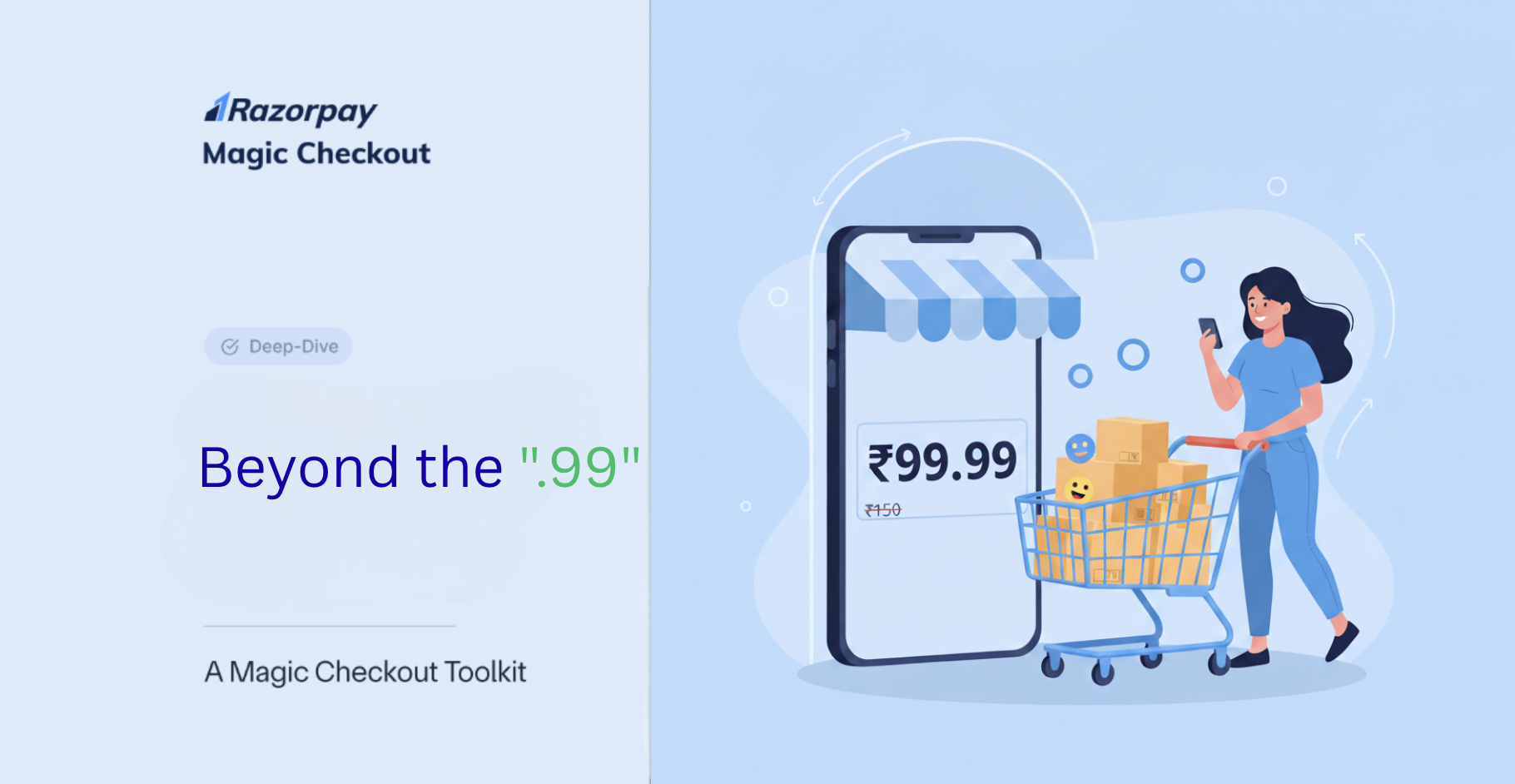
In e-commerce, your price functions as a powerful psychological trigger. How you frame that price can be one of the most important factors in a customer’s decision to buy, signaling everything from value to quality and urgency.
But most D2C brands stop at the most generic tactic: psychological pricing that ends in “.99”. This is a critical mistake. That one trick is just the tip of the iceberg, and in some cases, it can even hurt your brand.
A true psychological pricing strategy is about framing. It’s about engineering your prices to make your most profitable products feel like the most logical and valuable choice.
This is a core tactic for optimizing your conversion rate. As we detail in our main guide to customer acquisition cost, a higher conversion rate is the fastest way to lower your ad spend and improve profitability. It’s also a key strategy for any brand focused on Mastering Customer Retention by creating high-value, frictionless experiences.
Here are three advanced psychological pricing frameworks you can apply today.
Table of Contents
The ‘Decoy Effect’: How to Make Your Best Product the “Logical” Choice
This is one of the most powerful tactics in psychological pricing. It involves using a decoy option to asymmetrically “nudge” a customer toward the product you want them to buy.
The Problem: You have two products.
- Good: Rs. 50
- Best: Rs. 100
The Rs. 50 jump is big. Customers will likely choose the “Good” option to save money, even if the “Best” option has better margins for you.
The Solution: Introduce a Decoy.
- Good: Rs. 50
- Better (The Decoy): Rs. 90
- Best: Rs. 100
How it Works: The “Rs. 90 Better” option is the decoy. Its sole purpose is to make the “Rs. 100 Best” option look like a steal. The customer’s brain no longer compares Rs. 50 to Rs. 100. It compares Rs. 90 to Rs. 100 and thinks, “Wow, for only Rs. 10 more, I get the best one!” You have reframed the value. This “Good-Better-Best” model is the most effective way to use psychological pricing to increase your Average Order Value (AOV).
Anchoring: Justify Your Price by “Unbundling” the Value
Price anchoring isn’t only about “Was Rs. 100, Now Rs. 75.” A more advanced D2C tactic is to use anchoring to justify a premium price. This is especially useful for high-AOV products.
The Problem: You sell a premium D2C top for Rs. 400. For many customers, that’s a high price to swallow in one go.
The Solution: Unbundle the value in your product description.
Instead of just listing features, you anchor each feature with its perceived standalone cost:
- 100% Ethically-Sourced Down (A Rs. 150 value)
- Patented Waterproof Weave (A Rs. 100 value)
- Detachable Faux-Fur Hood (A Rs. 75 value)
- Lifetime Warranty (A Rs. 100 value)
How it Works: You’ve anchored the customer’s mind with Rs. 425 in itemized value. The Rs. 400 price tag no longer feels like an expense; it feels like a deal. You haven’t changed your price, but you’ve completely reframed its psychological pricing by showing the sum of its parts.
When to Use (and When to AVOID) Charm Pricing
Here is the non-generic truth about “.99” pricing: it’s a conditional tool, not a universal rule.
How it Really Works: “Charm pricing” (Rs. 99.99) doesn’t just work because of the left-digit effect. It works because it subconsciously signals “value” or “a discount.” It’s a low-price signal.
When to Use It: Use charm pricing on:
- Entry-level products
- Items on your “Sale” page
- Products where you are competing on price
When to AVOID It (This is critical):
Do not use charm pricing on your premium or luxury products. A Rs. 1000 skincare serum priced at “Rs. 999.99” looks cheap. It creates cognitive dissonance and damages the brand’s premium perception.
For premium D2C, rounded prices (e.g., “Rs. 1000,” “Rs. 1500”) psychologically signal quality, confidence, and transparency. This is a form of psychological pricing that builds trust, which is far more valuable.
How Technology Powers an Advanced Pricing Strategy
Your psychological pricing strategies (like the Decoy Effect and bundling) are brilliant at getting the customer to click “Add to Cart” and proceed to payment. They have been psychologically “sold” on the value. The worst thing you can do now is break that momentum with a long, clunky, multi-page checkout.
1. Securing the Conversion with a Frictionless Checkout
This is where your checkout tech is crucial. If a customer is excited about their “Best” bundle (which you’ve perfectly framed using the Decoy Effect) but is then forced to fill out 10 fields, that excitement turns to frustration. This friction is the #1 killer of a well-earned conversion.
A tool like Magic Checkout is the essential partner to your pricing strategy. It ensures that once the customer makes the decision to buy, the action of buying is instant. By providing a 1-click checkout experience that auto-fills all their information, it eliminates the friction that causes cart abandonment.
Magic Checkout secures the conversion that your psychological pricing strategy worked so hard to create.
2. Personalizing the Anchor with Instant Recognition
The most advanced strategy is to personalize the anchor. A customer hates seeing a 20% off “Welcome” offer right after they just paid full price. This is where Login with Razorpay is key. It uses a simple OTP to instantly recognize a returning customer . You can hide those new-customer offers from them and instead show them a “VIP Bundle” or an “Exclusive Loyalty Price.” This personalized anchoring builds loyalty and makes them feel recognized, not ripped off.
To see how pricing fits into your overall growth model, be sure to read our main guide on customer acquisition cost.