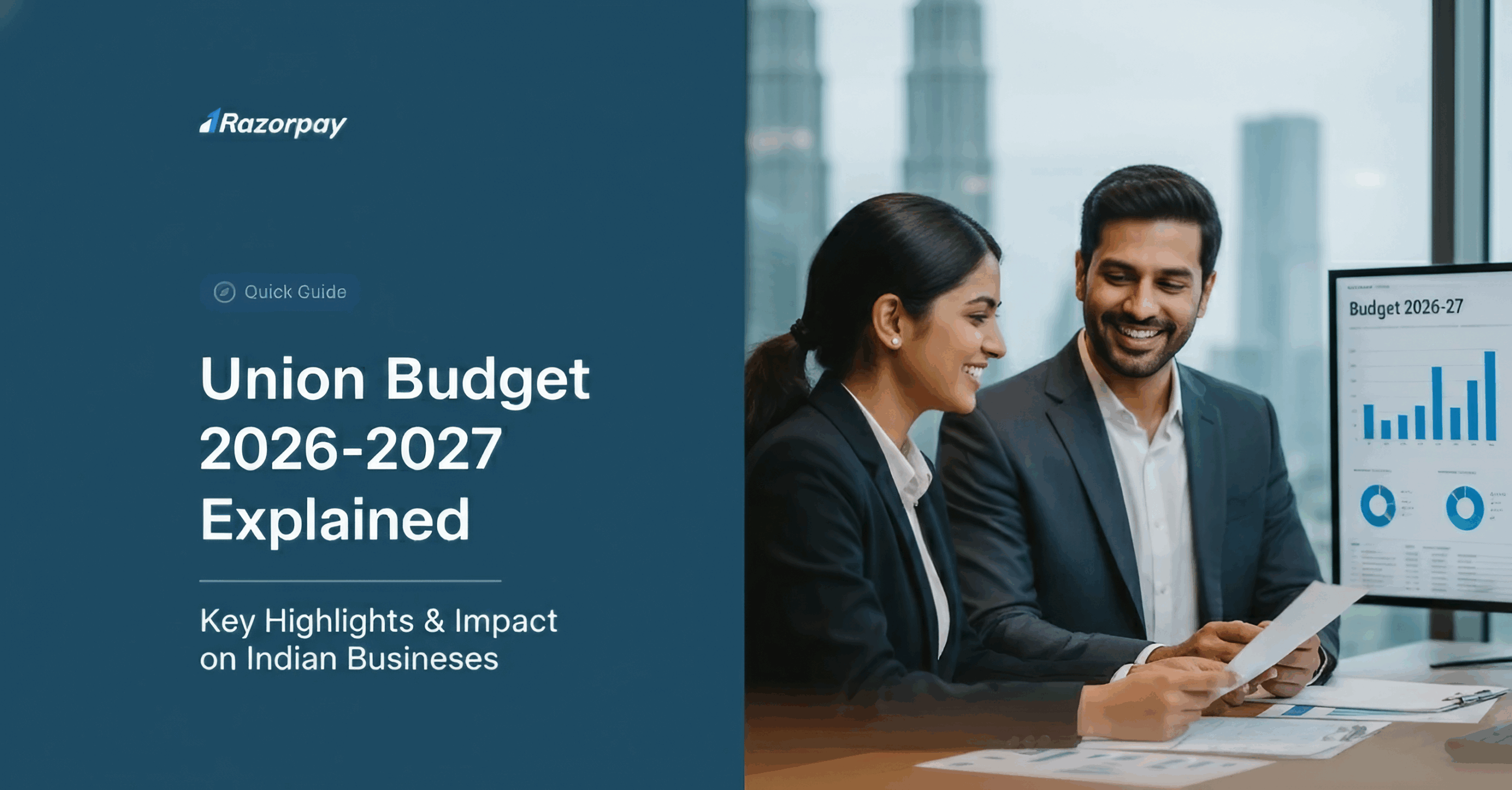
The Union Budget 2026-27, presented by Finance Minister Nirmala Sitharaman on February 1, 2026, is a landmark blueprint for India’s transformation. With a projected 7.4% real GDP growth, the government is shifting gears from simply spending to boost demand to focusing on productivity-led growth.
The goal is clear: to make India the world’s third-largest economy and achieve the vision of “Viksit Bharat” (Developed India) by 2047. This budget is built on the philosophy of “Three Kartavyas” (Duties), balancing a massive ₹12.2 lakh crore investment in infrastructure with a strict commitment to reducing the national debt.
Budget 2026-27: At a Glance
- Zero Tax up to ₹12.75 Lakh: Under the New Tax Regime, salaried individuals earning up to ₹12.75 Lakh (including standard deduction) effectively pay no income tax.
- The New Tax Law: A brand new Income Tax Act, 2025, replaces the old 1961 rules starting April 1, 2026, making filing simpler and faster.
- Cheaper Foreign Travel: The tax (TCS) on overseas tour packages and education expenses has been reduced from 20% to just 2%.
- Support for Small Business: A ₹10,000 crore SME Growth Fund has been introduced to help small businesses scale and expand globally.
- Infrastructure Leap: Major investment in High-Speed Rail projects (such as Mumbai–Pune) and lower CNG prices, expected to drop by ₹14–15 per kg.
Macroeconomic Fundamentals
In the Union Budget 2026-27, it was highlighted that the Indian economy continues its robust momentum, with a nominal GDP growth estimate of 10% for the upcoming fiscal year. The government is successfully navigating a “debt consolidation” path, aiming to reduce outstanding liabilities to 50% of GDP by 2031.
| Fiscal Indicator | Budget Estimate (2026-27) | Change from Previous RE |
| Total Expenditure | ₹53,47,315 Crore | +7.7% |
| Capital Expenditure | ₹12,21,821 Crore | +11.5% |
| Fiscal Deficit | 4.3% of GDP | Down from 4.4% |
| Net Tax Receipts | ₹28.7 Lakh Crore | Strong Revenue Growth |
The New Tax Architecture
Perhaps the most significant structural change is the implementation of the New Income Tax Act, 2025, which will officially replace the 1961 Act starting April 1, 2026. While the headline slabs remain unchanged from the previous year’s major update, the focus has shifted toward tax certainty and ease of compliance.
Personal Income Tax (New Regime)
Under the current regime, the zero-tax threshold has been significantly elevated. Individuals with a taxable income of up to ₹12 Lakh qualify for a full rebate under Section 87A. For salaried employees, adding the ₹75,000 standard deduction means anyone earning up to ₹12.75 Lakh per year effectively pays zero tax.
| Income Slab | Tax Rate |
| Up to ₹4,00,000 | Nil |
| ₹4,00,001 – ₹8,00,000 | 5% |
| ₹8,00,001 – ₹12,00,000 | 10% |
| ₹12,00,001 – ₹16,00,000 | 15% |
| ₹16,00,001 – ₹20,00,000 | 20% |
| ₹20,00,001 – ₹24,00,000 | 25% |
| Above ₹24,00,000 | 30% |
Compliance and Market Adjustments
The government has streamlined several procedural aspects for the common man. The window for filing revised returns has been extended until March 31, providing more flexibility to taxpayers. Additionally, Tax Collection at Source (TCS) for overseas tour packages, medical expenses, and education remittances has been slashed to a flat 2%, a major relief for the middle class.
However, the budget also aims to curb speculative tendencies in the markets. The Securities Transaction Tax (STT) has been hiked; futures will now attract 0.05%, and options will be taxed at 0.15%.
The “Three Kartavyas” Framework
In the Union Budget 2026-27, the government is moving away from “populism” toward a duty-bound governance model:
- First Kartavya (Accelerating Growth): Boosting productivity in 7 frontier sectors like semiconductors and rare minerals.
- Second Kartavya (Building Capacity): Focusing on “Yuva Shakti” (Youth Power) by bridging the gap between getting a degree and getting a job through the “Education to Employment and Enterprise” (EEE) committee.
- Third Kartavya (Universal Access): Ensuring that development reaches every corner of the country, including the North-East and the underprivileged, following the principle of “Sabka Sath, Sabka Vikas”.
Strategic Sectoral Initiatives
Manufacturing and Tech Frontier
India is positioning itself as a global leader in high-tech manufacturing through Semiconductor Mission 2.0, backed by a massive ₹40,000 crore outlay. This second phase focuses on moving beyond assembly into equipment manufacturing and indigenous IP design. Similarly, the Biopharma SHAKTI scheme (₹10,000 crore) aims to establish 1,000 accredited clinical trial sites, transforming India into a hub for biologics and biosimilars.
The SME Vision
The MSME sector receives a multi-pronged boost intended to solve liquidity and compliance issues.
- SME Growth Fund: A ₹10,000 crore fund to provide equity support.
- Corporate Mitras: A new cadre of trained professionals in Tier-II and Tier-III cities to assist small businesses with legal and financial hurdles.
- TReDS Integration: Making TReDS (Trade Receivables Discounting System) the mandatory settlement platform for CPSE purchases to ensure MSMEs receive payments without delays.
Logistics and Infrastructure
The budget allocates ₹12.2 Lakh Crore to public capex, with a specific focus on “Growth Connectors.” This includes the development of seven High-Speed Rail corridors (such as Delhi-Varanasi and Mumbai-Pune) and the operationalization of 20 new National Waterways over the next five years.
The Green Transition & AI
- Industrial Decarbonization: ₹20,000 crore for Carbon Capture technology to help “hard-to-abate” industries like steel and cement go green.
- Cheaper CNG: A tax exemption on the biogas component will likely reduce the price of blended CNG by ₹14–15 per kg.
- AI for Farmers: The Bharat-VISTAAR tool will provide farmers with AI-driven advice on soil and weather in their local languages, integrating the national “agri-stack.”
- The Orange Economy: 15,000 school labs will teach kids about animation, gaming, and comics (AVGC) to create a pipeline of 2 million creative professionals by 2030.
The Direct Tax Revolution
The New Income Tax Act 2025 is all about making life easier for the taxpayer. While the actual tax rates remain stable to ensure predictability, the process is getting a major “reset.”
- Longer Correction Windows: You can now revise your tax returns until March 31 (previously December 31), giving you extra time to fix mistakes.
- Ease of Filing: Non-audit businesses now have until August 31 to file, reducing the last-minute rush on the tax portal.
- Small Foreign Assets: A one-time 6-month window allows students and techies to disclose small foreign assets (like a bank account from a foreign internship) without being penalized.
- Cheaper Travel & Education: Tax Collected at Source (TCS) on foreign tours and medical/education expenses has been slashed from up to 20% down to just 2%.
- Accident Relief: Interest earned on motor accident claims is now exempt from tax, and no TDS will be deducted from it.
Conclusion
The 2026-27 Union Budget is shifting its focus from giving out money broadly to supporting specific, high-tech industries for growth. The government has managed to keep the fiscal deficit low at 4.3% while also investing a massive ₹12.2 Lakh Crore in building infrastructure. This budget aims to help India’s future by encouraging official businesses, rewarding innovative deep-tech ideas, and providing a clear, long-term strategy for the digital and manufacturing sectors.
Frequently Asked Questions (FAQs)
-
Will my Income Tax rates go up this year?
No. The Finance Minister has kept tax slabs and rates unchanged to maintain stability. The focus this year is on the New Income Tax Act 2025, which simplifies the filing process and extends deadlines for corrections.
-
How does the budget make foreign travel or education cheaper?
The government significantly reduced the TCS (Tax Collected at Source) on overseas tour packages and foreign education/medical remittances from 5–20% down to 2%. This means you don’t have to block as much cash upfront when making these payments.
-
What are the “Seven High-Speed Rail Corridors”?
These are proposed bullet-train-style routes connecting major hubs like Mumbai-Pune, Delhi-Varanasi, and several Southern Indian cities like Bengaluru, Hyderabad, and Chennai. They are designed to move passengers and cargo much faster than traditional rail.
-
Why is the government taxing the stock market “Futures & Options” (F&O) more?
The Securities Transaction Tax (STT) was increased (to 0.05% on Futures and 0.15% on Options) to moderate excessive retail speculation and promote safer, long-term investing in the stock market.
-
What is “Biopharma SHAKTI”?
It is a ₹10,000 crore initiative aimed at making India a global hub for biologics and biosimilars (complex medicines). It involves setting up new research institutes and 1,000 clinical trial sites across the country.
-
How will AI help Indian farmers under this budget?
Through the Bharat-VISTAAR tool, farmers can use a multilingual AI to get specific advice on their crops, soil health, and weather patterns, helping them reduce risks and improve yields.