Updated: September 2026
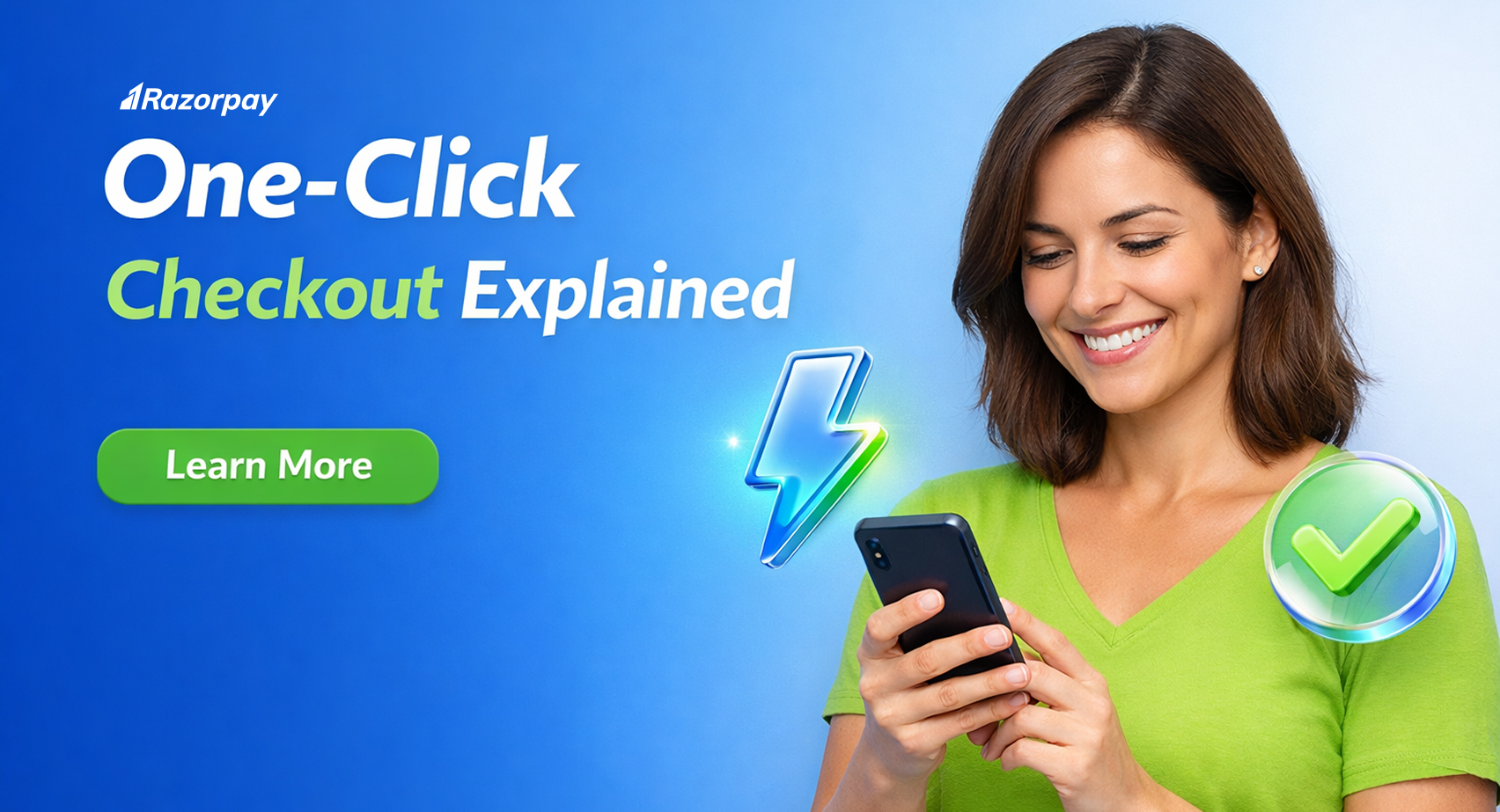
One-click checkout lets returning customers complete a purchase without re-entering their address or payment details. Their information is saved after the first transaction and auto-filled every time they return. In India, RBI mandates OTP or UPI PIN on every transaction, so “one-click” here means eliminating everything except that final confirmation step. Here’s exactly how it works, and why it’s the fastest lever most Indian D2C brands haven’t pulled yet.
Key Takeaways
- Amazon converts at 10%. Most Indian D2C brands convert at 2% — the gap is checkout friction, not product or price.
- True one-click isn’t legally possible in India (RBI requires OTP/UPI PIN on every transaction) but going from 12 form fields to 1 confirmation step still moves conversions significantly.
- Network size matters more than the feature itself — a solution tied to 100M+ shoppers across stores outperforms one that only recognises customers on your own site.
- Brands like Viaana Kids Store, Borosil, and Exotic India have already closed the gap with marketplace-level conversion using this.
How Does One-Click Checkout Work in India?
Most content on this topic is written for US or UK audiences, where one-click checkout can be genuinely frictionless. That’s not fully possible in India, and it’s worth being upfront about why.
The Reserve Bank of India mandates additional verification on every payment transaction: an OTP for card payments, a UPI PIN for UPI payments. These are regulatory requirements, not gaps in any specific payment solution — no provider, including us, can bypass them.
What one-click checkout does in India is eliminate everything except that final authentication step:
- First purchase: the customer enters their name, delivery address, and payment information once, and opts to save it.
- Tokenisation: raw card numbers are replaced with encrypted, PCI-DSS-compliant tokens — the actual number is never stored.
- Every visit after: the platform recognises the customer and auto-fills their name, phone number, shipping address, and pincode. The only remaining step is the RBI-mandated OTP or UPI PIN.
Going from roughly 12 form fields to one authentication step is still a dramatic improvement in practice, even without the fully frictionless experience Amazon offers.
Network size is what determines how well this works. Razorpay Magic Checkout recognises returning customers across a network of 100 million+ shoppers, meaning a customer who has saved their details on any store in the network arrives pre-filled on yours, even on their first purchase from you. A standalone, single-store saved-details feature can’t do that.
Page Contents
One-Click Checkout vs. Guest Checkout vs. Express Checkout
| Checkout type | What the customer does | Speed for returning customers |
| Guest checkout | Fills in name, address, and payment details every time — no account needed | Slow — same as a first-time buyer |
| Express checkout | Confirms or edits some pre-filled details each visit | Faster, but not frictionless |
| One-click checkout | Confirms and authenticates (OTP/UPI PIN) — nothing to fill in | Fastest — a single confirmation step |
Why Do Indian D2C Brands Need This Right Now?
Amazon and Flipkart convert at 10%. Most independent D2C brands in India convert at 2%. That’s not a product problem or a pricing problem, it’s a trust and convenience problem, and checkout is where both show up most clearly.
A returning customer who already likes your product shouldn’t have to prove it by filling out a form. Every field they have to complete is a moment where they can change their mind, get distracted, or simply give up. One-click checkout removes those moments.
Indian brands that have already made this move are seeing the results. Viaana Kids Store saw a 42% increase in order conversion rate after adopting one-click checkout through Magic Checkout. Borosil RTO rate reduced by 36.36% and Exotic India’s checkout became 5X faster.
Is One-Click Checkout Secure?
Yes, and the security architecture is specifically designed to protect both the customer and the merchant.
Payment card details are never stored as raw numbers. They’re replaced with secure tokens through tokenisation, meaning even if data were ever compromised, actual card details wouldn’t be exposed. All data is encrypted in transit and at rest, and Razorpay Magic Checkout is fully PCI DSS compliant. The OTP and UPI PIN requirements that RBI mandates actually add an additional layer of protection on every transaction.
Frequently Asked Questions
#1 What is one-click checkout?
One-click checkout lets returning customers complete a purchase without re-entering their details. Their name, address, and payment information are stored securely after the first transaction and auto-filled every time they return.
#2 Is one-click checkout safe?
Yes. Payment details are stored as secure tokens, never as raw card numbers. All transactions are PCI DSS compliant and encrypted. In India, RBI-mandated OTP and UPI PIN verification add an additional security layer on every payment.
#3 How is one-click checkout different from guest checkout?
Guest checkout lets customers buy without creating an account but still requires them to fill in all their details every time. One-click checkout stores those details after the first purchase and auto-fills them on every future visit, making repeat purchases significantly faster.
Does one-click checkout work with COD orders in India? Yes. Razorpay Magic Checkout supports COD alongside digital payment methods. Merchants can configure COD eligibility rules, set cart value thresholds, and manage COD to prepaid conversion all from the same dashboard.
What is the difference between one-click checkout and express checkout? One-click checkout uses fully pre-stored information. The customer enters nothing. Express checkout reduces steps but still requires the customer to confirm or enter some details during each transaction. For returning customers, one-click is always the faster experience.