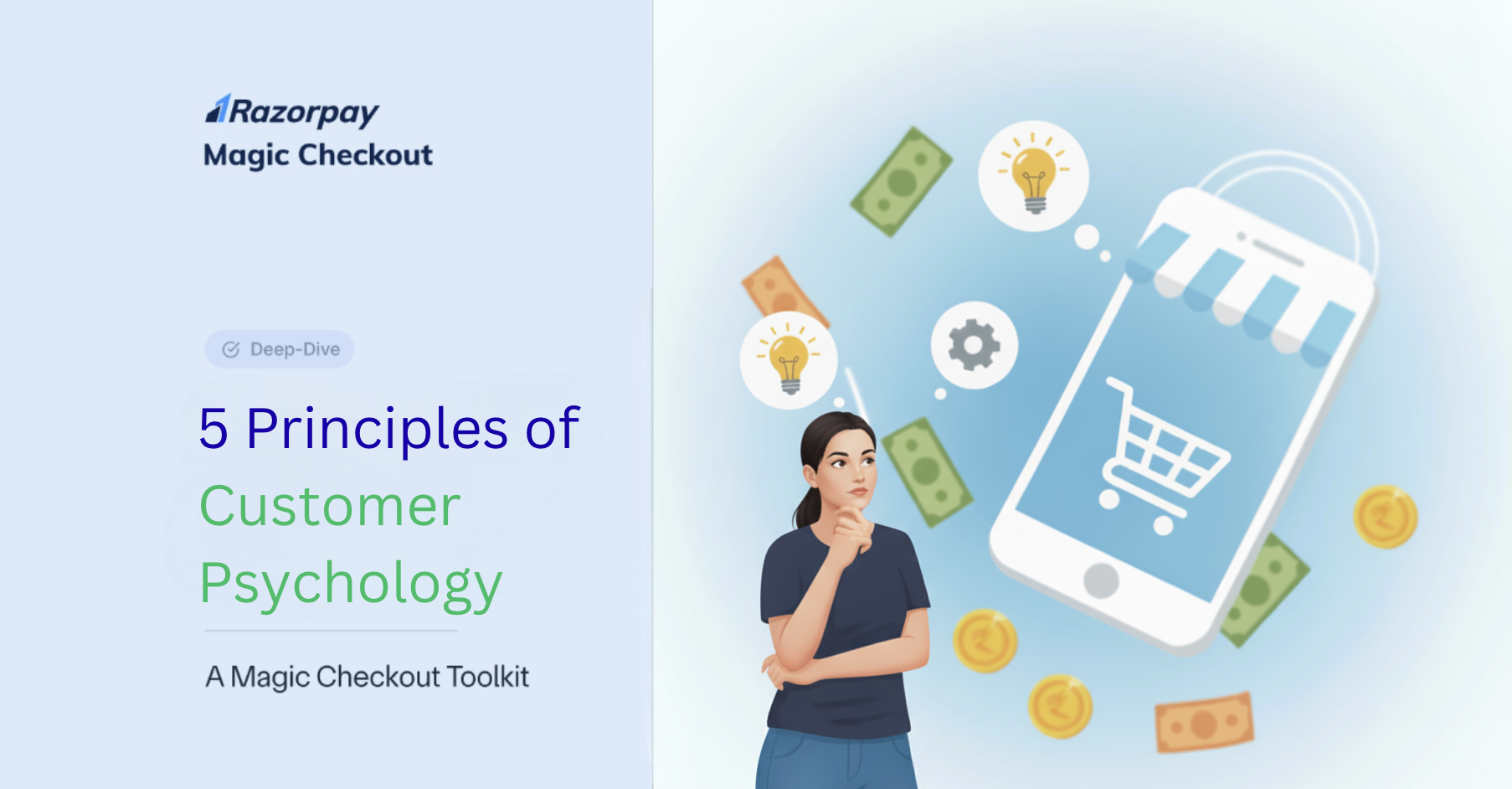
Why does one visitor add an item to their cart and purchase it in seconds, while another, with the exact same intent, abandons their cart? Why do some brands inspire lifelong loyalty, while others are forgotten after a single sale?
The answer lies deeper than ad spend or product quality. The difference lives in the human mind.
Welcome to the world of customer psychology in marketing, the study of how people think, feel, reason, and make decisions. For a D2C brand, understanding these deep-seated mental triggers goes beyond a simple tactic; this knowledge forms the entire foundation of a resilient and profitable business.
This “why” powers every successful “what.” This understanding is a critical component of the entire consumer decision making process, moving beyond simple transactions to build real, lasting relationships.
Table of Contents
Why Customer Psychology is Non-Negotiable for D2C
In a crowded digital marketplace, D2C brands win by creating seamless, trustworthy, and emotionally resonant experiences. Customer psychology in marketing provides the roadmap to achieve this.
This knowledge allows you to:
- Build Instant Trust: In an environment without a physical storefront, you must build trust in seconds.
- Reduce Friction: The human brain is wired to conserve energy. Any point of friction, like a confusing form or a slow-loading page, becomes a reason to leave.
- Increase Perceived Value: How you present your product can be more important than the product itself.
- Foster Loyalty: By understanding post-purchase behavior, you can turn one-time buyers into lifelong advocates.
Let’s break down the 5 core principles you can apply today.
The Power of Social Proof (The “Safety in Numbers” Principle)
The Psychology: Human beings are social creatures. When we are uncertain, we look to others for cues on how to behave. If we see that many people have bought and enjoyed a product, we feel safer making the same decision.
D2C Application:
- Reviews & Testimonials: This remains the most obvious and powerful form of social proof. Do not just show star ratings; show authentic, detailed reviews.
- User-Generated Content (UGC): Encourage customers to post photos of themselves with your product. Featuring this on your site and social media feels 10x more trustworthy than a polished studio photo.
- “Best-Seller” Badges: Highlighting your most popular products uses the wisdom of the crowd to guide new customers.
The Scarcity & Urgency Principle (The “Fear of Missing Out” Driver)
The Psychology: People place a higher value on things that are scarce or in limited supply. This triggers a “fear of missing out” (FOMO) that compels immediate action.
D2C Application:
- Stock Counters: “Only 3 left in stock!”
- Time-Limited Offers: “Flash sale ends in 02:30:15”
- Exclusive Drops: “Our new collection is available for 48 hours only.”
This principle acts as a key driver in emotional marketing, bypassing logical deliberation and encouraging an immediate “buy now” response.
The Reciprocity Principle (The “Give to Get” Relationship Builder)
The Psychology: When someone gives us something of value for free, we feel a deep-seated psychological obligation to return the favor.
D2C Application:
- Free, Valuable Content: Offer a free e-book (“The 10-Step Guide to Perfect Skin”) or a helpful quiz (“Find Your Perfect Coffee Blend”) in exchange for an email.
- A “Surprise” Gift: Include a free sample or a handwritten thank-you note with an order. The customer didn’t expect it, and that positive surprise builds a powerful emotional connection, making them more likely to shop with you again.
The Anchoring Effect (The “Context is Everything” Tactic)
The Psychology: We rarely know the “true” value of something. Instead, we rely on the first piece of information we see (the “anchor”) to set a benchmark for all future decisions.
D2C Application:
- “Compare At” Pricing: Showing a “Compare at” price next to your price (Rs. 1000 Rs. 750) anchors the customer’s brain to the higher value, making your price seem like a great deal. This tactic forms a core component of psychological pricing.
- Product Tiering: Presenting a “Premium” or “Pro” option first makes your “Standard” or “Best-Value” option seem more reasonable by comparison.
The War on Friction (The “Cognitive Ease” Principle)
The Psychology: This principle may be the most important for e-commerce. The human brain hates work. Every extra click, every form field, and every second spent waiting adds to “cognitive load.” When the load gets too high, the brain hits the “eject” button, and you get an abandoned cart.
D2C Application: Your primary goal should be to make the path from discovery to purchase as effortless as possible.
- Guest Checkout: Forcing account creation causes the #1 friction point. A tool like Login with Razorpay replaces this barrier with a simple, secure OTP login, capturing customer data without disrupting the purchase.
- One-Click Checkout: The single greatest way to apply customer psychology in marketing involves removing friction at the moment of payment. Magic Checkout recognizes returning customers, pre-fills their address and payment details, and lets them check out with a single click. This reduces the mental effort required to zero and dramatically boosts conversions.
Conclusion: Psychology as Empathy, Not Manipulation
Understanding customer psychology in marketing should not mean tricking users. True application stems from empathy.
This approach means understanding their natural anxieties (social proof), their motivations (scarcity), and their biggest frustrations (friction). By building an experience that respects these human drivers, you create a journey that feels intuitive, trustworthy, and seamless. You move beyond simply selling a product; you start solving a problem with as little mental effort as possible. That forms the secret to sustainable D2C growth.