As a Direct-to-Consumer brand, it is easy to get caught up in the mechanics of growth: optimizing ad spend, crafting email campaigns, and analyzing conversion rates. While these tactics are essential, the most resilient and profitable brands are built on a deeper understanding of a fundamental concept: the consumer decision making process. This is the psychological and strategic journey every customer takes, from a vague sense of need to a confident final purchase.
For D2C operators, mastering the consumer decision making process is the key to moving beyond simply selling products and toward building experiences that foster genuine loyalty and drive repeat business. It provides a predictable roadmap of your customer’s thoughts and feelings, allowing you to intervene at each stage with the right message, on the right channel, at the right time.
This guide provides a detailed breakdown of the five stages of the consumer decision making process.
What is the Consumer Decision Making Process?
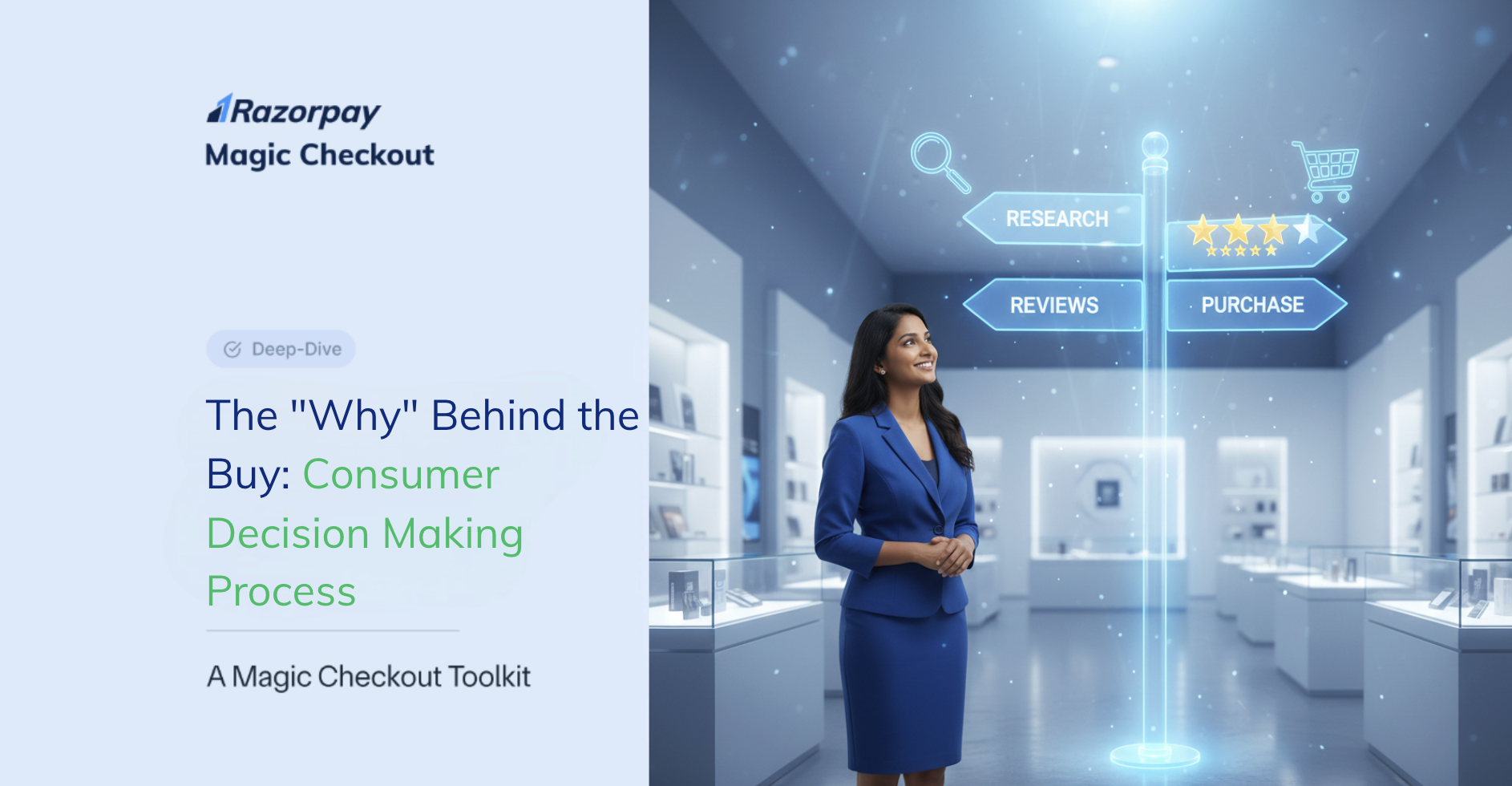
The consumer decision making process is a five-stage model that outlines the steps a consumer goes through when making a purchase. It begins long before the customer adds an item to their cart and continues long after the product arrives at their doorstep. As a core component of customer psychology in marketing, this framework provides a practical tool for brands to understand the ‘why’ behind customer behavior. By mapping your own marketing and operational efforts to this journey, you can identify critical gaps and opportunities that are often missed when focusing solely on bottom-of-the-funnel metrics. A deep understanding of the consumer decision making process is a prerequisite for effective customer retention.
The five stages are:
- Problem Recognition
- Information Search
- Evaluation of Alternatives
- Purchase Decision
- Post-Purchase Behavior
Let’s explore each stage in detail.
Stage 1: Problem Recognition
The consumer decision making process begins not with a product, but with a need. Problem recognition is the moment a consumer realizes a gap between their current state and a desired state. This can be triggered by an internal stimulus (feeling hungry, being bored) or an external stimulus (seeing an ad, a friend’s recommendation).
For D2C brands, this first stage is a critical opportunity to create demand, not just capture it. While some needs are obvious (running out of coffee), many are latent, meaning the consumer isn’t actively aware of the problem or the potential for a better solution.
Actionable Strategies for D2C Brands:
- Content Marketing as a Trigger: Create blog posts, videos, and social content that highlight a problem the consumer might not have considered. A skincare brand, for example, might publish an article titled, “Is Your Screen Time Affecting Your Skin?” This educates the audience about a problem (blue light damage) and simultaneously positions their blue-light-blocking serum as the solution.
- Aspirational Social Proof: Leverage influencers and user-generated content (UGC) to showcase a desirable lifestyle or outcome that your product enables. A sustainable fashion brand can use this to create a desire not just for a new piece of clothing, but for a more conscious and stylish way of living; this is a powerful example of emotional marketing in action. This triggers problem recognition by making the consumer aware of a gap between their current wardrobe and their aspirational self.
At this stage of the consumer decision making process, your goal is to be the catalyst that starts the journey.
Stage 2: Information Search
Once a problem is recognized, the consumer enters the information search stage. They begin actively seeking information to solve their newly identified problem. This search draws from two primary sources:
- Internal Search: The consumer scans their own memory for past experiences with brands or products.
- External Search: The consumer seeks new information from a variety of sources, including friends and family, online reviews, search engines, and social media.
For D2C brands, this is where your brand’s visibility, reputation, and trustworthiness are put to the test. If a consumer can’t find you, or if what they find is negative, their journey with your brand ends here.
Actionable Strategies for D2C Brands:
- Dominate Informational SEO: Be present on search engines for the questions your potential customers are asking. A brand selling ergonomic office chairs should have content optimized for keywords like “how to reduce back pain at desk” or “best office chair for long hours.” This positions you as a helpful expert, not just a seller.
- Weaponize Customer Reviews and Testimonials: Social proof is one of the most powerful forces in this stage of the consumer decision making process. Prominently display authentic, positive reviews on your product pages. Encourage customers to leave reviews on third-party sites. A high star rating is a massive trust signal that can short-circuit the consumer’s search.
- Engage in Relevant Communities: Be an active and helpful participant where your target audience is asking for recommendations, whether that’s a subreddit, a Facebook group, or a niche online forum.
Your goal during the information search is to be the most credible, helpful, and visible source of information, guiding the consumer toward your solution.
Stage 3: Evaluation of Alternatives
After gathering information, the consumer moves to the evaluation of alternatives. They now have a “consideration set,” a small list of potential brands or products that could solve their problem. They begin actively comparing these options based on a set of criteria that are important to them.
These evaluation criteria can be objective (price, shipping speed, features) or subjective (brand style, ethical values, perceived quality). This is the most logical and analytical part of the consumer decision making process, and brands that fail to provide clear, compelling reasons to be chosen will be eliminated.
Actionable Strategies for D2C Brands:
- Crystal-Clear Product Pages: Your product page is your digital salesperson. It must be flawless. This includes high-quality, multi-angle images and videos, detailed and benefit-oriented product descriptions, transparent pricing with no hidden fees, and clear, upfront information about shipping and returns.
- Articulate Your Unique Value Proposition (UVP): Why should a customer choose you over a competitor? Clearly communicate what makes you different. This could be superior materials, a commitment to sustainability, a unique design, or exceptional customer service. This UVP should be a consistent theme across your website and marketing.
- Leverage Comparison Guides: Create content that helps consumers make a decision. A mattress brand, for example, could create a guide comparing different types of mattresses (foam vs. hybrid vs. spring) or a quiz that helps users find the perfect mattress for their sleep style. This positions you as a trusted advisor and allows you to frame the evaluation criteria in your favor.
During this stage of the consumer decision making process, your job is to make it overwhelmingly clear why your product is the superior choice.
Stage 4: Purchase Decision
After a consumer has evaluated the alternatives, they make a purchase decision. This is the moment of truth, the culmination of all your marketing efforts. The customer has decided they want your product, but the sale is not yet guaranteed. This stage of the consumer decision making process is the most fragile. Any friction, doubt, or inconvenience can cause a customer to abandon their cart, often for good.
In the world of ecommerce, the checkout page is the final battlefield. A study reveals that the average cart abandonment rate is nearly 70%, indicating that seven out of every ten shoppers who add an item to their cart ultimately leave without making a purchase. The primary reasons are almost always related to friction in the purchase decision stage.
Actionable Strategies for D2C Brands:
- Eliminate Unexpected Costs: The number one reason for cart abandonment is unexpected costs, such as high shipping fees or taxes, revealed only at the final step. Be transparent with all costs upfront. Display shipping information clearly on product pages or offer a shipping calculator early in the process.
- Offer Multiple Payment Options: Customers have strong preferences. Failing to offer a popular payment method, whether it’s a digital wallet, a specific credit card, or a Buy Now, Pay Later (BNPL) option, can be enough to lose a sale.
- Build Trust at the Point of Sale: The checkout page is where customers are most vulnerable, as they are entering sensitive payment information. Reinforce their confidence with trust signals like security badges (SSL certificates), customer testimonials, and clear links to your return policy.
- Optimize the Checkout Flow: A long, complicated, multi-page checkout is a conversion killer. The goal is to make the path from cart to confirmation as short and effortless as possible. This is where technology becomes a critical advantage. A solution like Magic Checkout is designed specifically to optimize this stage of the consumer decision making process. It recognizes a vast network of shoppers, automatically pre-filling their address and payment details to enable a true one-click checkout. This removes the manual effort that causes drop-off and dramatically improves conversion rates.
Ready to see how a one-click experience can optimize the purchase decision?
- Rethink Mandatory Account Creation: Forcing a new customer to create a full account with a password before they can make their first purchase is a major point of friction. Many users will opt to check out as a guest, which means you lose the opportunity to build a relationship and gather valuable first-party data. The solution is to make account creation so simple that it feels invisible. A tool like Login with Razorpay replaces the cumbersome password creation process with a simple, secure OTP login. This allows a customer to create an account in a single step, turning an anonymous guest into a known customer without disrupting the purchase decision.
Want to build your customer database without adding friction?
Stage 5: Post-Purchase Behavior
The consumer decision making process does not end when the payment is processed. The final and arguably most important stage for long-term profitability is post-purchase behavior. This is the period where the customer evaluates their decision and determines their satisfaction with the product and the overall experience.
There are two potential outcomes:
- Satisfaction: The product meets or exceeds customer expectations, the delivery is smooth, and the customer feels good about their purchase.. This leads to positive reviews, brand loyalty, and a high likelihood of repeat business.
- Cognitive Dissonance (Buyer’s Remorse): The customer feels a sense of regret or anxiety about their purchase. This can be caused by a product that doesn’t match the description, a poor delivery experience, or a lack of communication from the brand. This leads to returns, negative reviews, and customer churn.
Ensuring a positive outcome in this final stage is the foundation of all customer retention efforts.
Actionable Strategies for D2C Brands:
- Proactive Post-Purchase Communication: The moment a customer completes their purchase, they should receive an immediate, detailed order confirmation. Follow this with proactive shipping notifications that provide real-time tracking information. This communication reduces anxiety and shows that your brand is organized and reliable.
- Deliver a Delightful Unboxing Experience: The physical arrival of the package is a powerful emotional moment. A well-designed unboxing experience, with branded packaging and a personalized touch, is a key driver of customer delight and can turn a simple delivery into a memorable event that reinforces the customer’s positive feelings about their purchase.
- Solicit Feedback and Reviews: After the customer has had time to use the product, actively ask for their opinion. Sending a follow-up email requesting a review shows that you value their feedback and provides you with valuable social proof for the next customer’s consumer decision making process.
- Provide Exceptional Customer Support: If a customer has an issue, your response will define their lasting impression of your brand. Fast, empathetic, and effective customer support can turn a negative situation into a loyalty-building moment.
This final stage is not an end. It is the beginning of the next consumer decision making process for that customer. A positive post-purchase experience is the most powerful trigger for their next problem recognition and information search, where your brand will already be the trusted incumbent.
Conclusion: From Transaction to Journey
The consumer decision making process provides a powerful framework for D2C brands to build a more strategic and customer-centric business. By moving beyond a narrow focus on the final transaction and optimizing for every stage of the customer’s journey, you can create an experience that is not only more effective at driving initial sales but is also fundamentally designed for long-term customer retention.
From creating demand at the problem recognition stage to building trust during the information search and evaluation, and from eliminating friction at the purchase decision to delighting customers in the post-purchase phase, every step is an opportunity. Brands that understand and master this entire journey are the ones that will build the lasting relationships necessary to thrive.