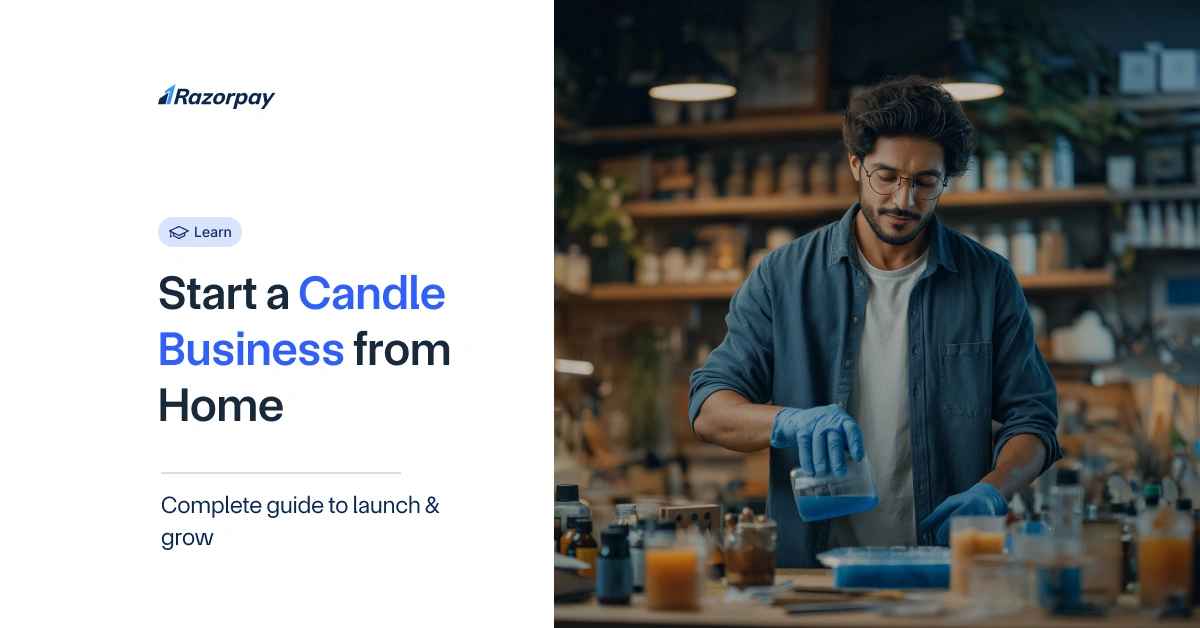
If you’re looking to turn your creativity and love for fragrances into a sustainable source of income, starting a candle-making business in India can be a smart, low-investment choice. The demand for decorative, scented, and handcrafted candles has grown significantly across home décor, festivals, wellness, and gifting categories.
This comprehensive guide will walk you through everything you need to know—from understanding the booming market and mastering the craft to registering your business, setting up payments, and launching your brand.
Why Candle Making is a Profitable Business in India
India’s candle market is not just growing; it’s thriving. The market was valued at USD 736.9 million in 2023 and is projected to expand at a compound annual growth rate (CAGR) of 9.4% from 2024 to 2030. This growth is fueled by an increased interest in home aesthetics, wellness practices, and the rising popularity of scented candles for relaxation and creating ambiance.
Key reasons to start a candle business:
- Low Startup Costs: You can begin from your home with a basic setup. A more comprehensive, well-branded initial setup can cost between ₹75,000 to ₹1,50,000, covering quality materials, equipment, and initial branding efforts.
- High Profit Potential: With a typical markup of 25% to 50%, profit margins for candles often range from 30% to 45%, depending on your branding, scale, and sales channels.
- Scalable Demand: While demand peaks during festivals like Diwali and Christmas, candles are used year-round for home décor, religious ceremonies, and in commercial spaces like spas and restaurants.
- Creative Freedom: This business allows for immense creativity, letting you experiment with unique scents, colors, shapes, and eco-friendly waxes to build a distinct brand.
Step 1: Decide What Type of Candles to Sell
Choosing a specific niche helps you target a dedicated audience and manage your resources effectively. Initially, focus on a few types to test the market before expanding your product line.
| Candle Type | Description | Best For |
| Scented Candles | Made with essential or fragrance oils. Fragrance is a primary driver for consumer purchases. | Gifting, relaxation, aromatherapy, and home wellness. |
| Decorative Candles | Designed with unique shapes, intricate themes, and vibrant colors. | Weddings, festivals, corporate events, and as home décor statement pieces. |
| Eco-friendly Candles | Made from sustainable waxes like soy, beeswax, or coconut wax. | Targeting environmentally conscious customers and sustainable lifestyle brands. |
| Jar/Container Candles | Poured into glass jars, tins, or ceramic containers for a longer, safer burn. | Spas, cafés, everyday home use, and premium gift sets. |
| Tea Lights | Small, versatile, and typically sold in packs for ambient lighting. | Restaurants, prayer rooms, large events, and creating decorative arrangements. |
Step 2: Learn and Perfect the Candle Making Process
Starting out doesn’t require industrial equipment, but mastering the craft is essential for creating a high-quality, safe product.
Essential Materials and Tools:
- Wax (Soy, Beeswax, Paraffin): Costs range from ₹300–₹600 per kg. Soy wax is known for its clean, long burn, while paraffin offers a strong scent throw. Beeswax is a natural, premium option with a subtle honey scent.
- Wicks (Cotton, Wood): ₹5–₹30 per piece.
- Fragrance Oils: High-quality oils can cost between ₹3,000–₹5,000 per liter.
- Color Dyes: ₹200–₹1,000 per pack.
- Containers/Molds: ₹10–₹150 per unit, depending on design and material.
- Equipment: A melting pot (₹500–₹2,000), pouring pitcher (₹300–₹800), digital scale (₹500–₹1,500), and thermometer (₹200–₹600) are crucial.
The Basic Process:
- Melt the wax in a double boiler or melting pot. Do not let the temperature exceed 170°F.
- Once melted, add your fragrance oils and color dyes. For improved strength and scent throw, some makers add 3-5 grams of stearic acid per 100 grams of wax.
- Secure the wick to the bottom center of your container or mold.
- Carefully pour the wax into the container.
- Let the candle cool and set completely, which can take several hours.
- Trim the wick to about ¼ inch before packaging or testing.
Pro Tip: Follow the “84-candle rule.” This guideline suggests making at least 84 test candles to perfect your formula, ensure a consistent burn, and gather feedback before you start selling.
Step 3: Create a Comprehensive Business Plan
A structured business plan is your roadmap to success. It helps you define your strategy, anticipate challenges, and secure potential funding.
Your plan should include:
- Target Audience: Define your ideal customer—are you targeting the luxury market, eco-conscious consumers, or the mass market for festive gifting?
- Product Strategy: Detail your candle types, scent collections, sizes, and packaging design.
- Pricing Strategy: Calculate your cost of goods sold (COGS), factor in your labor, and set prices that ensure a healthy profit margin for both retail and potential wholesale channels.
- Sales Channels: Decide where you will sell your products—online through your own website or social media, in-person at markets, or through retail partnerships.
- Marketing Plan: Outline how you’ll reach customers through social media campaigns, content marketing, branding, and seasonal promotions.
- Financial Projections: Create a detailed budget, calculate your break-even point, and plan how you will reinvest profits back into the business.
Step 4: Register Your Candle Business in India
Formal registration is essential for legal protection, building customer trust, and accessing key services like payment gateways and business loans.
Key legal requirements include:
- Business Structure: You can start as a sole proprietorship, but as you grow, consider forming a Limited Liability Partnership (LLP) or a Private Limited Company for greater legal protection.
- GST Registration: This is mandatory if your annual turnover exceeds ₹20 lakhs (or ₹10 lakhs for northeastern and hill states). It is also often required by online marketplaces and allows you to claim input tax credits on raw materials.
- MSME/Udyam Registration: Registering as a Micro, Small, and Medium Enterprise can provide access to government subsidies and priority sector lending.
- Trade License: This may be required by your local municipal authority to operate a business in the area.
- NOC from Pollution Control Board: If you plan to scale up to large-scale manufacturing, a No-Objection Certificate (NOC) from the State Pollution Control Board may be necessary.
Need help with business registration?
You can apply through Razorpay Rize—a startup support program that helps early-stage entrepreneurs register their business as a sole proprietorship, LLP, or private limited company. It also provides banking assistance and access to digital payment tools, helping you formalize and scale confidently.
Step 5: Set Up Online Payments and Sales Channels
To operate a successful online business, you need reliable and seamless ways to collect payments from customers.
Online Sales Channels:
- Your Own E-commerce Website: Platforms like Shopify or Wix allow you to create a professional online store with integrated payment gateways.
- Social Commerce: Sell directly through Instagram or WhatsApp using payment links. This is an excellent way to start without a website.
- Marketplaces: List your products on established online marketplaces to reach a wider audience.
Offline Sales Channels:
- Craft Fairs and Exhibitions: Events like Diwali melas and flea markets are perfect for reaching local customers.
- Retail Partnerships: Collaborate with local boutiques, gift shops, spas, and cafés to stock your products.
- Google Business Profile: List your business to appear in local search results for customers nearby.
For in-person sales at markets and fairs, a reliable POS (Point of Sale) device is essential for accepting card and UPI payments on the go.
Step 6: Design Your Branding and Packaging
In a crowded market, strong branding helps you stand out. Your brand’s story, communicated through your name, logo, and packaging, creates an emotional connection with customers.
Key areas to focus on:
- Business Name and Logo: Choose a name that is memorable and reflects your brand’s niche (e.g., minimalist, luxury, festive, or eco-conscious).
- Packaging: Invest in attractive and protective packaging. Using recyclable glass jars, eco-friendly labels, and kraft boxes can enhance your brand’s perceived value.
- Labeling: Your labels must include essential information: the candle’s scent profile, net weight, approximate burn time, and clear safety instructions.
- Unboxing Experience: Elevate the customer experience with thoughtful touches like handwritten thank-you notes or small sample candles. A great unboxing experience encourages social media shares and word-of-mouth marketing.
Step 7: Promote and Scale Your Business
Once your business is set up, consistent marketing is key to reaching new customers and fostering loyalty.
Marketing Strategies:
- Social Media: Use platforms like Instagram and Pinterest to your advantage. Post high-quality photos, create Reels showing your candle-making process, and run seasonal promotions for events like Valentine’s Day or Diwali.
- Content Marketing: Start a blog to share helpful content, such as “The Benefits of Soy Wax” or “How to Choose the Perfect Scent for Your Home.” This helps with SEO and positions you as an expert.
- Customer Engagement: Encourage repeat business by offering discounts to first-time buyers, sending email newsletters with updates, and asking customers for reviews and user-generated content (UGC).
Strategies for Long-Term Growth:
- Expand Your Product Line: Once established, consider adding complementary products like wax melts, room sprays, or essential oil diffusers.
- Offer Bulk and Corporate Gifting: Create custom packages for corporate clients, weddings, and other large events.
- Upgrade Your Equipment: As your order volume grows, invest in larger melting pots or semi-automatic pouring machines to increase your production capacity.
Conclusion
Starting a candle business in India offers a fantastic opportunity to blend creativity with entrepreneurship. This business model is flexible, scalable, and can be incredibly rewarding. By focusing on creating a quality product, building a strong brand, and using the right tools—like Razorpay’s Payment Links, Payment Gateway, POS, Subscriptions, and Rize for business setup—you can simplify operations and focus on building a product that your customers will love and support.
Frequently Asked Questions
Q1: What is the cost to start a candle business in India?
A basic home-based setup can be started with a smaller investment, but a well-branded launch with quality materials and equipment typically requires between ₹75,000 and ₹1,50,000.
Q2: Is candle making a profitable business?
Yes. With strong branding and efficient production, profit margins can range from 30% to 45%.
Q3: Can I start selling candles without a website?
Absolutely. You can use payment solutions that generate shareable links to sell directly through social media platforms like Instagram and WhatsApp.
Q4: Do I need GST registration to sell candles in India?
GST registration is mandatory if your annual business turnover exceeds ₹20 lakh. However, some online marketplaces may require it for seller verification, regardless of your turnover.