Compound Interest Calculator
Loading Compound Interest Calculator…
Check Razorpay products for your business
Razorpay POS
Collect payments swiftly in your store with Razorpay POS and its interesting offers.
Payment Pages
Easiest way to accept domestic & international payments with custom-branded online store.
How to use the compound interest calculator
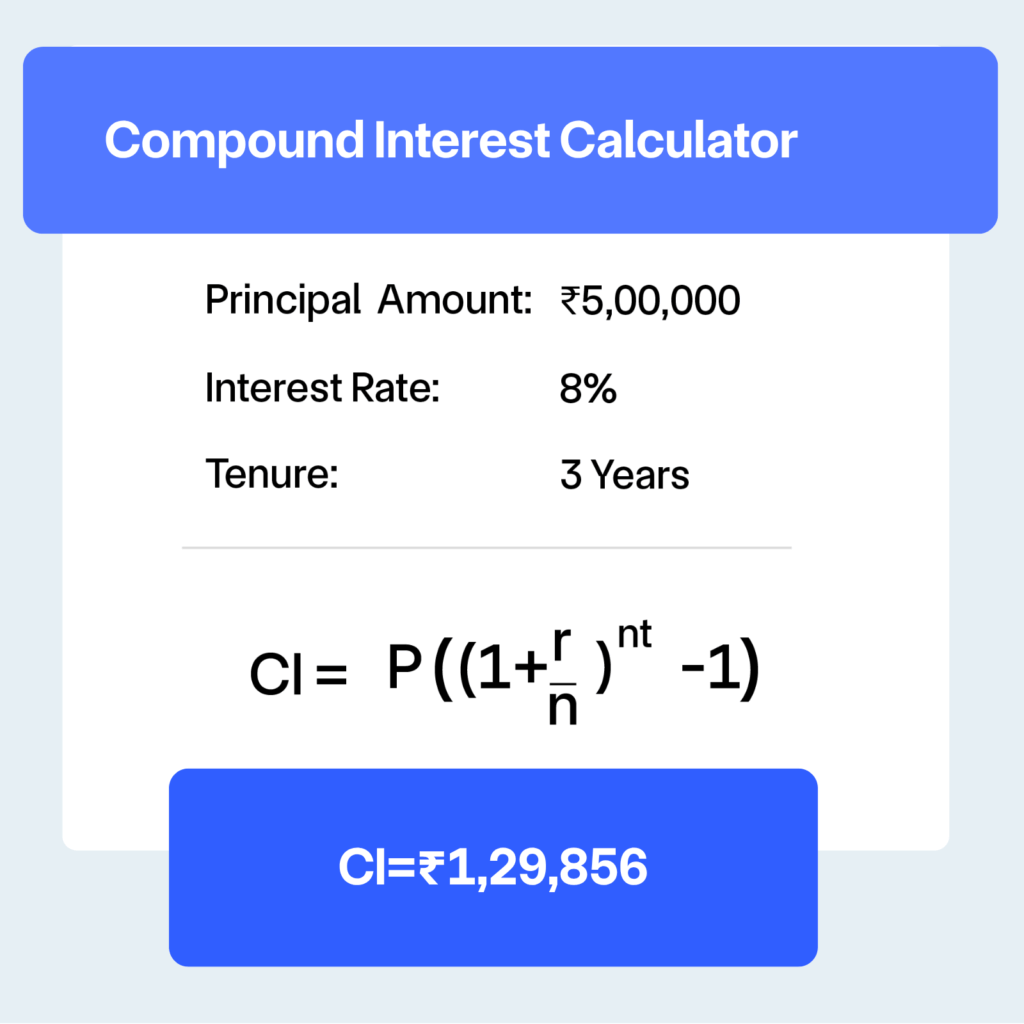
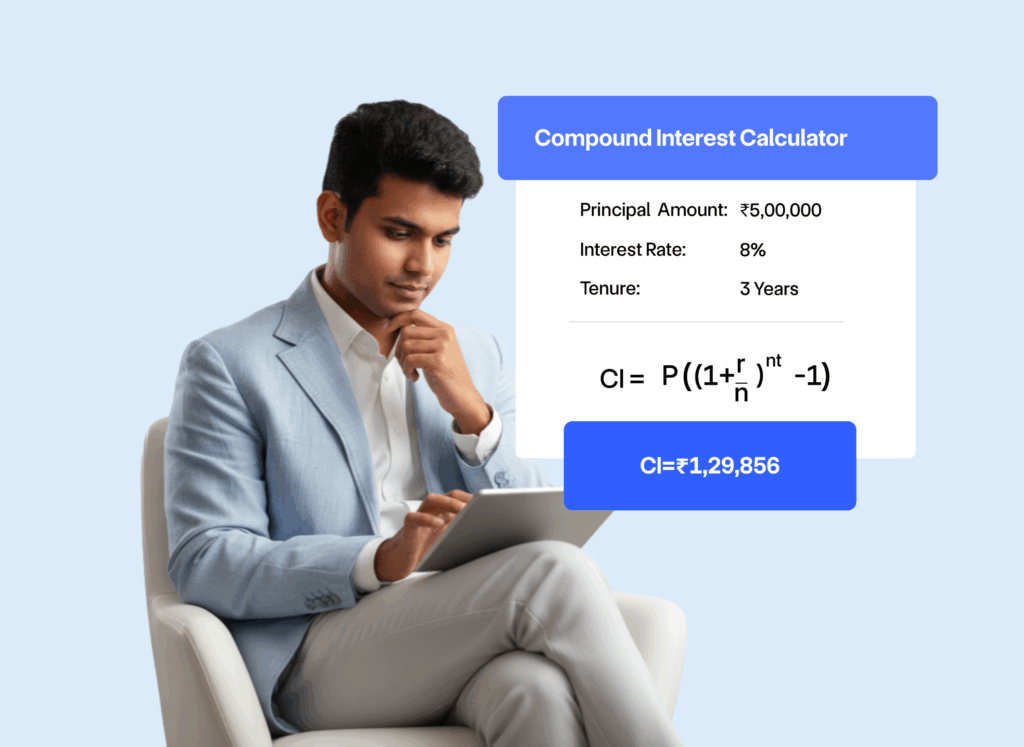
- Input your principal amount, interest rate, compounding frequency, and investment tenure to get accurate projections.
- Experiment with different rates, time periods, and compounding intervals to see how your money can grow over time
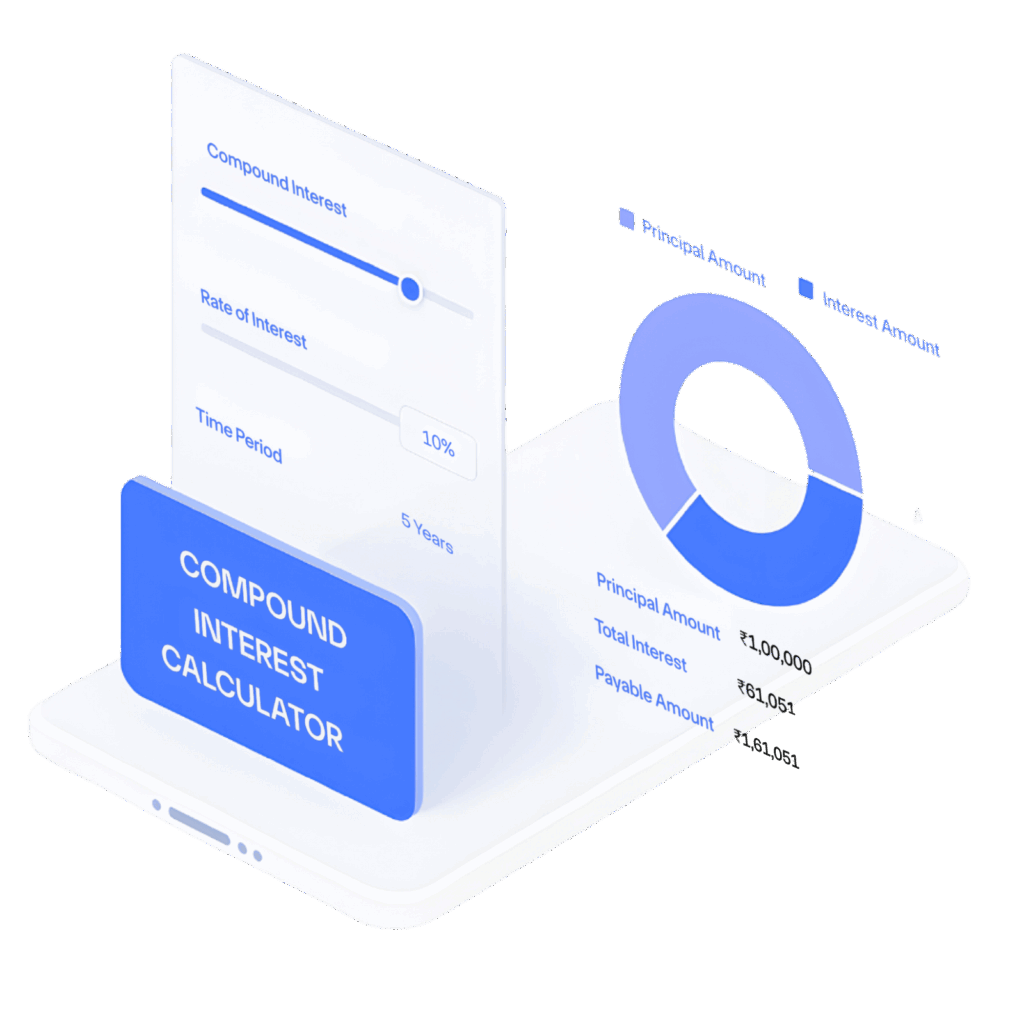
- Instantly get a detailed breakdown of total interest earned, future value, and graphical representation of growth
Why use our compound interest calculator?
- Fast & Accurate: Get real-time results with precise calculations.
- Visual Growth Charts: Understand your investment trajectory at a glance.
- Customizable Options: Change compounding frequency, interest rates, and duration as per your scenario
Compound interest formula with example
-
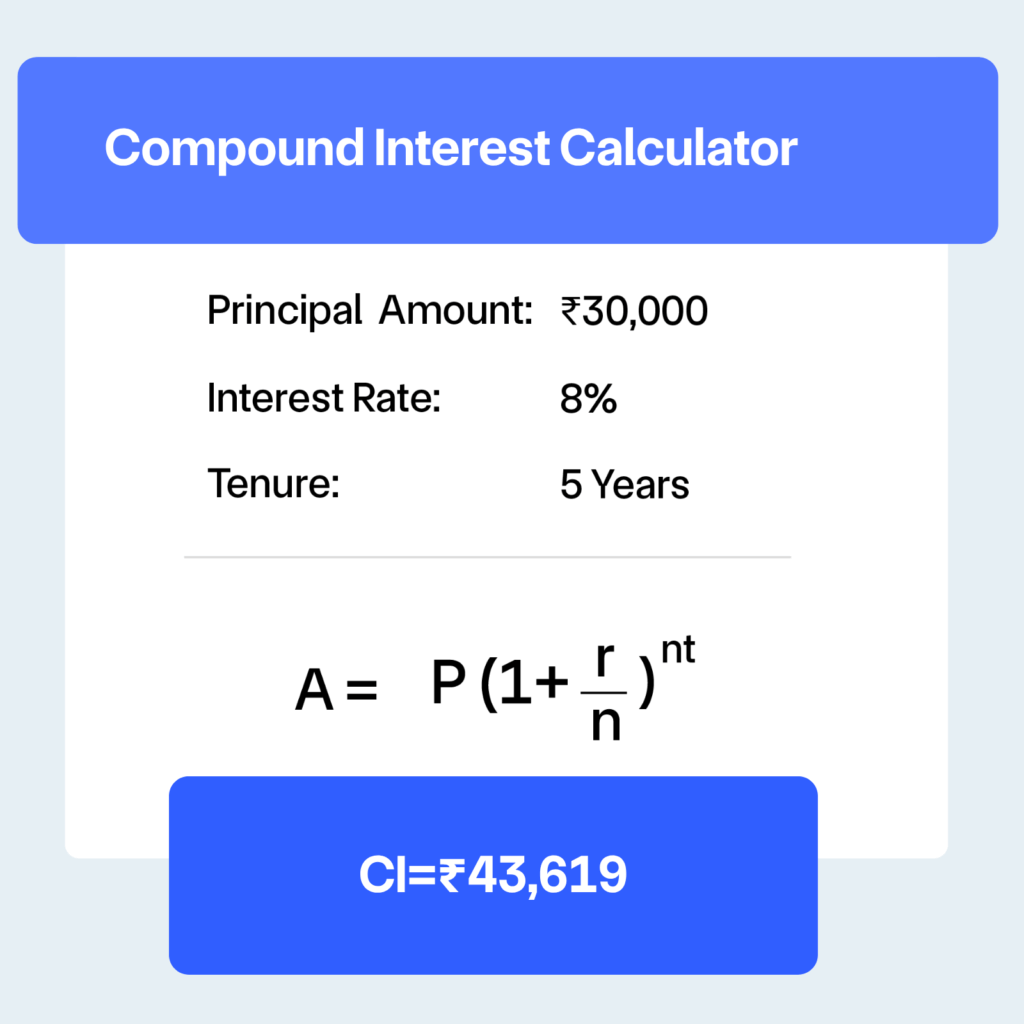
Compound Interest : A = P(1 + r/n)nt
-
Where: A = Final amount P = Principal amount r = Annual interest rate (as a decimal) n = Number of times interest compounds per year t = Time in years
- Example Calculation Using Our Calculator: P = ₹1,00,000 r = 0.10 (10% as a decimal) n = 1 (compounding yearly) t = 5 years
- Your ₹1,00,000 investment would grow to approximately ₹1,61,051 after 5 years, earning ₹61,051 in compound interest.
How compound interest works for you
Clear future projections
Know exactly how your money will grow over months or years, removing guesswork from your financial planning.
Set realistic savings targets
Plan today for tomorrow—reach goals like retirement, home purchase, or education funds by knowing how much to invest now.
Compare scenarios easily
Test different investment amounts, time periods, and interest rates to find the strategy that works best for you
Balance risk and reward
Understand how conservative vs. aggressive returns impact your growth before committing your money.
Encourages discipline
See the benefits of long-term compounding and stay motivated to invest regularly.
Maximize wealth growth
Start early and let compounding do the heavy lifting, growing your wealth steadily over time.
What is a good compound interest rate
- Moderate Growth (5%-8% per year) Ideal for low-risk investments like fixed deposits or government bonds. Safe and steady growth over time
- Aggressive Growth (8%-15% per year) Suited for mutual funds, stocks, or diversified portfolios. Higher returns with moderate risk for long-term goals
- High Growth (15%+ per year) For experienced investors exploring high-risk opportunities. Potentially large returns but requires careful planning and monitoring
Use cases for compound interest calculation
Investment planning
Plan your mutual funds, fixed deposits, or recurring investments to achieve your financial goals.
Savings strategy
Calculate how your savings can grow over months or years to make informed decisions about long-term planning.
Education & retirement funds
Estimate the amount you need today to secure funds for your child’s education or your retirement.
Frequently Asked Questions
How often should interest compound for maximum benefit?
Daily compounding gives the highest returns, though the difference between daily and monthly compounding is usually small in real-world scenarios.
Can I add money regularly to benefit from compound interest?
Yes. Regular contributions, such as SIPs (Systematic Investment Plans), help your wealth grow faster by adding more principal for compounding
What happens if I withdraw money early?
Withdrawing early breaks the compounding cycle and may incur penalties, reducing your overall returns significantly.
Is 10% annual return realistic?
For long-term equity investments, 10–12% annual returns have historically been achievable, though actual performance varies each year.
How does inflation affect compound interest?
Inflation erodes purchasing power. Your real return equals your nominal return minus inflation. Always plan with inflation-adjusted returns in mind.
Should I invest lump sum or through SIPs?
Both are effective. Lump sum maximizes time in the market, while SIPs offer rupee cost averaging and reduce timing risks.
What is the difference between simple and compound interest?
Simple interest applies only to the original principal, while compound interest grows on both principal and accumulated interest, leading to faster wealth creation
Can compound interest help in achieving retirement goals?
Yes, compounding over long durations can exponentially grow your savings, making it one of the most effective tools for retirement planning.