Cyber crimes in India are growing at an alarming pace. It’s no longer just about fake emails or suspicious links. Today’s scammers use video calls, legal threats, and pose as officials to scare people into handing over their hard-earned money.
One of the newest and most dangerous cyber scams is the digital arrest scam. In this, criminals target ordinary people — students, senior citizens, and working professionals — and scare them into paying money.
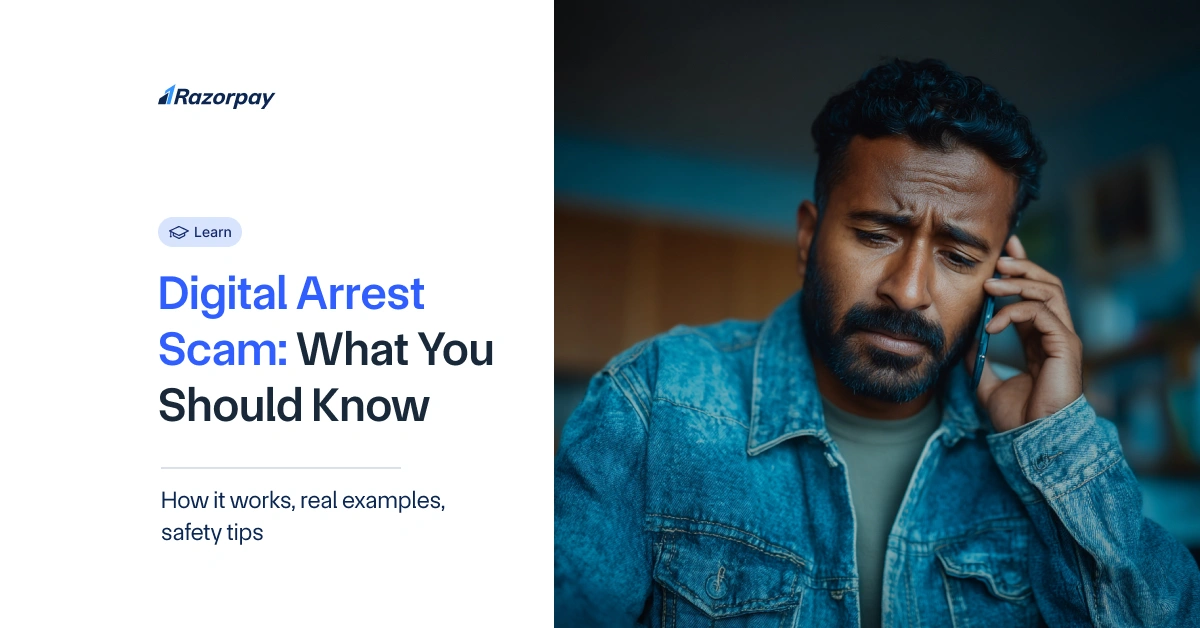
Fraudsters pretend to be from the police, RBI, or CBI and accuse you of serious crimes like money laundering or illegal parcels. To make it believable, you’re forced to stay on a video call for hours. They even claim you’re “under arrest” and being watched, so you can’t hang up or talk to anyone else. This constant threat makes many people panic and give in to their demands. Out of fear, victims have lost huge amounts of money before realising it’s all fake.
In 2024 alone, over 92,000 Indians have fallen into this trap, losing anywhere from a few thousand to several lakhs. Understanding how this scam works can help you stay calm, spot the signs early, and protect your money if someone tries it on you.
What Is a Digital Arrest?
A digital arrest is an online scam where fraudsters convince you that you’ve done something illegal — like money laundering or fraud and must pay money to avoid arrest or legal trouble.
Scammers use psychological tricks and pose as police officers, RBI staff, CBI agents, or income tax officers. They show fake IDs, send forged documents, and claim you’re being watched. The goal is to scare you into paying up — fast.
How the Digital Arrest Scam Works?
- You get a sudden call or video call saying you broke the law — like money laundering or customs fraud.
- The person claims to be from the RBI, CBI, or police and says you will be arrested soon.
- You are told to stay on the video or phone call and not hang up.
- You are asked to show your room or house on camera to prove you are not trying to run away.
- You are threatened with jail if you don’t send money immediately through UPI, wallet, or gift cards.
- Once you send the money, the caller disappears and you realise it was all fake.
Real Examples of Digital Arrest Scams in India
1. Retired government official trapped for 20 hours
In one shocking case, a retired government officer received a call from someone pretending to be a law enforcement officer. The caller claimed the official was involved in money laundering. To make him believe the threat, the scammers said people had been hired to kill him if he refused to follow their instructions. They ordered him to stay on a video call for nearly 20 hours straight and warned him not to tell anyone.
Out of fear for his life, he ended up transferring ₹48 lakh to different accounts. Later, the police found that three men from Telangana and Maharashtra — including an MBA graduate — were part of this racket linked to Chinese scammers.
2. IIT-Delhi student forced to transfer ₹4.3 lakh
Another victim was a fourth-year engineering student at IIT-Delhi. He got a call saying that a suspicious parcel in his name was being sent from Mumbai to Beijing. The caller pretended to help him by connecting him to a fake police officer at the Gamdevi police station in Mumbai. Once on the call, the fake officer accused him of being part of illegal activities and said a warrant had been issued for his arrest.
Scared and confused, the student was told to “prove his innocence” by transferring money to several bank accounts. By the time he realised it was fake, he had already paid ₹4.3 lakh. The police later traced the scammer to Chennai and arrested him.
Red Flags to Watch For
- Calls claiming to be from police, RBI, CBI, or other authorities when you haven’t contacted them.
- Threats of arrest, jail, or police action if you hang up.
- Being forced to stay on a video call for long hours.
- Pressure to transfer money immediately to “prove your innocence”.
- Being told not to speak to family or friends about the call.
Why Is It Called a ‘Digital Arrest’?
Scammers don’t physically arrest you. Instead, they keep you stuck on a video or phone call for hours. You feel scared to hang up because they keep saying you’ll be arrested. So, you’re not physically locked up — but you’re trapped in your mind and on your phone.
This trick works because of three things:
- Fear of arrest: You’re scared of going to jail for a crime you didn’t commit.
- Fake authority: The caller claims to be from the police, RBI, or CBI, so you believe them.
- Isolation: They stop you from talking to family or friends. You’re cut off and easier to control.
Common Tactics Used in This Scam
- Fake case files: They send screenshots on WhatsApp showing fake FIRs or charge sheets.
- Legal jargon: They use legal jargons and mention laws like Section 420 IPC or the NDPS Act, etc.
- Pressure and secrecy: They tell you to stay on the call and warn you not to tell family or friends.
- Fake documents: They share letterheads with RBI, CBI, or Cyber Cell logos to look official.
- Video calls: They insist on video calls to make it feel like a real investigation.
How to Stay Safe from Digital Arrest Frauds?
Staying safe from a digital arrest scam is simple if you know what to watch for. Here’s what you should always do:
Always verify first:
- No government agency will ever call and demand money over a call or video chat.
- Never share your bank details, Aadhaar number or other details with unknown callers.
- Hang up immediately if someone threatens arrest or asks for urgent payment.
Other safety tips:
- If you get such a call, dial 1930 — the National Cyber Helpline.
- Tell your parents, grandparents, and others who might not know about such scams.
- Use apps like Truecaller to spot spam calls before you pick up.
Here’s a quick Do/Don’t guide to help you stay alert:
| Do This | Don’t Do This |
| Hang up and check on an official site | Stay on the call if you feel pressured |
| Inform your bank or cyber cell | Pay money without any written proof |
| Tell family and friends about the scam | Get panic just because they use legal-sounding threats |
What to Do If You’re a Victim?
If you realise you’ve fallen for a digital arrest scam, act fast. Here’s what you should do:
- Save all proof: Keep call recordings, screenshots, and payment details.
- File a complaint: Report the scam on cybercrime.gov.in.
- Call your bank: Inform your bank right away. Ask them to block or freeze your account to stop more loss.
- Reach out for help: Call 1930 (National Cyber Helpline) or go to your local police station.
- Warn others: Tell your family and friends so they don’t become the next target.
Conclusion
A digital arrest is not a real legal action — it’s a psychological trap. Scammers use fear, fake threats, and long video calls to control you. They want you to feel alone, helpless, and desperate to clear your name.
Remember, this fraud works because it pushes you to act in panic. The caller pretends to have power and authority, but it’s all fake. If you ever face this situation, stay calm and do not pay any money.
Always report any suspicious calls or messages to cybercrime.gov.in or call the national helpline at 1930. Quick reporting can help catch these criminals and protect others too.
Most important — no real police officer, RBI official, or CBI agent will ever ask you for money over a phone or video call. If anyone does, it’s a scam. Hang up and report it immediately.
FAQs
Q1. Is it legal for a government agency to demand money over a call?
No genuine government body — whether police, RBI, or CBI — will ever ask you to pay money on a phone or video call.
Q2. What does “digital arrest” actually mean?
A “digital arrest” is a scam where fraudsters pretend to be officials and claim you’re under arrest for a crime. They trap you on a call, threaten you, and force you to pay money to avoid legal trouble.
Q3. What should I do if I receive such a call?
- Hang up immediately.
- Don’t share any details.
- Call 1930 or report it on cybercrime.gov.in.
- Talk to your bank if you shared any account info.
Q4. Are digital arrest scams happening only in metro cities?
No. Such scams are happening in big cities, small towns, and even rural areas. Scammers target anyone with a phone or internet access.
Q5. Can banks or CBI actually arrest you for cyber complaints?
No. Banks and the CBI can investigate crimes but they do not threaten arrest over a call or demand instant payments.