Introduction
India’s recurring payments ecosystem is at an inflection point. With UPI processing over 21 billion transactions monthly (December 2025 reached about 21.6 billion), businesses face a critical decision: should they build subscription billing on UPI Autopay, card e-mandates, or both? The answer depends on transaction value, customer demographics, and your use case. This guide breaks down the UPI Autopay vs card e-Mandates debate with a 2026 lens – covering technical mechanics, RBI compliance, success rates, and a practical decision framework. Whether you’re a startup launching your first subscription or an enterprise optimizing collections, you’ll walk away with a clear strategy for your payment mandate infrastructure.
Key takeaways
- UPI Autopay excels for low-to-mid-ticket subscriptions: Mandates are created via UPI apps with no repeated approvals needed for payments up to ₹15,000, making it ideal for OTT, SaaS, and utility billing.
- Card e-mandates remain essential for high-value recurring payments: With no practical upper transaction cap, card mandates are the only viable option for enterprise SaaS, premium memberships, and large EMIs.
- RBI’s 2021 rules disrupted card-based subscriptions: The mandate requiring extra authentication for card payments above ₹5,000 caused failure rates to spike to 20%+ in some categories, accelerating UPI Autopay adoption.
- UPI Autopay mandate volumes are scaling rapidly: Over 120 million UPI Autopay mandates are created every month in India, supporting SIPs, OTT subscriptions, and insurance renewals.
- NPCI has expanded UPI Autopay caps for select categories: Transaction limits have been raised to ₹1 lakh for insurance premiums, mutual fund SIPs, and credit card bill payments.
- A hybrid approach maximizes success: Combining both methods ensures maximum customer reach and payment success across all transaction tiers.
The 2026 Recurring Payments Landscape in India
Market Growth and Digital Payment Evolution
India’s subscription economy is surging across SaaS, OTT, insurance, and mutual funds, with businesses shifting from one-time payments to recurring models.
This growth has made the choice between UPI Autopay vs card e-Mandates a strategic priority for every business building recurring revenue in 2026.
Regulatory Changes Reshaping Payment Preferences
RBI’s 2021 e-mandate rules reshaped India’s recurring payments landscape by requiring additional factor authentication (AFA) for card-based recurring payments above ₹5,000. Failure rates spiked to 20%+ in some categories as customers failed to complete authentication. This created a substantial opening for UPI Autopay adoption, as its mobile-native architecture offered a smoother alternative.
Understanding UPI Autopay: The Mobile-First Solution
How UPI Autopay Works Technically
Did You Know?
UPI Autopay was launched by NPCI on July 22, 2020, revolutionizing recurring payments by allowing frequencies from daily to yearly without paperwork.
UPI Autopay is a recurring e-mandate system enabling automatic debits directly from bank accounts via UPI apps. It bypasses card networks entirely, using a direct bank-to-bank debit model.
Transaction Limits and Authentication Rules
UPI Autopay operates within a structured limit framework:
- Standard cap: ₹15,000 per transaction for general recurring payments
- Category-specific cap: ₹1 lakh for insurance premiums, mutual fund SIPs, and credit card bill payments
- AFA requirement: Required only during mandate creation, modification, and for debits exceeding ₹15,000 (per RBI e-mandate framework, AFA is waived for recurring debits up to ₹15,000 per transaction across cards, PPIs and UPI).
Setup Process and User Experience
Setting up a UPI Autopay mandate is straightforward – customers select the merchant, choose frequency and amount, and authorize with their UPI PIN. No card details or bank redirects required.
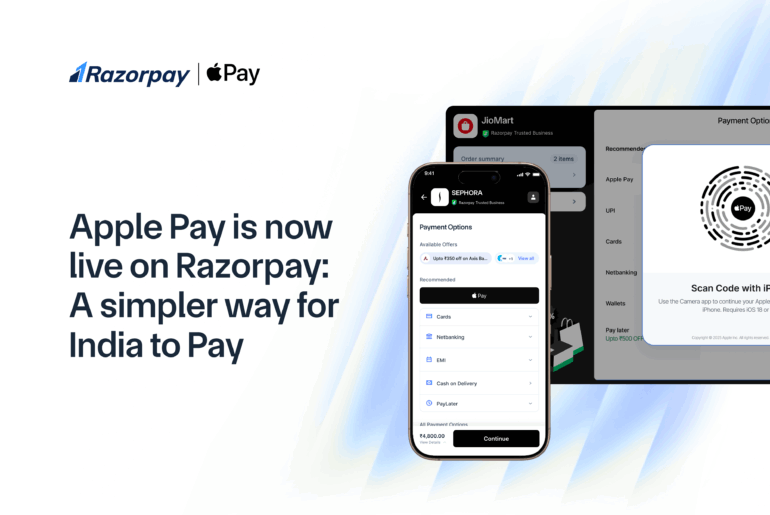
Razorpay’s UPI Autopay integration enables businesses to set up and manage UPI-based recurring mandates through a single platform.
Understanding Card e-Mandates: The Traditional Powerhouse
Card e-Mandate Framework and RBI Compliance
Card e-mandates are pre-authorized instructions on credit or debit cards allowing merchants to collect recurring payments automatically. Governed by RBI’s framework, they require pre-debit notifications and explicit customer consent. Card mandates have no practical upper transaction cap – making them the default for high-value recurring collections where UPI Autopay limits are insufficient.
Authentication Requirements and Success Factors
For subsequent payments above ₹15,000, RBI mandates additional authentication each cycle (threshold raised from ₹5,000 to ₹15,000 by RBI on 16 June 2022).
Key failure drivers include card expiry, bank-side declines, and customer non-response to authentication prompts.
Integration with Existing Payment Infrastructure
Card e-mandates work with established card networks (Visa, Mastercard, RuPay) and are supported by most payment gateways. Businesses already accepting card payments can add e-mandate functionality with lower incremental effort. Card mandates also support domestic and international settlement flows.
Pro Tip: UPI Autopay mandates are created in under a minute via UPI apps, with no repeated approvals needed for payments up to ₹15,000. Use this speed advantage to reduce drop-offs during subscription onboarding.
How Razorpay’s Subscriptions Platform Simplifies Recurring Payment Choice
Choosing between UPI Autopay and card e-mandates doesn’t have to mean managing separate integrations. Razorpay’s Subscriptions platform provides businesses with unified access to both recurring payment methods through a single integration, simplifying the decision from an infrastructure standpoint.
- UPI Autopay Integration – The platform supports end-to-end mandate creation and management for UPI-based recurring payments, allowing businesses to onboard customers through their preferred UPI app with minimal setup friction. Merchants can configure mandate parameters including amount, frequency, and validity period from a centralized interface.
- Card e-Mandate Support – The platform handles card-based mandate processing across multiple networks, enabling businesses to collect high-value recurring payments via credit and debit cards. This includes support for pre-debit notification workflows and customer consent management as required by RBI guidelines.
- Unified Dashboard – Merchants can manage both UPI Autopay and card e-mandate payment types, view consolidated analytics, and configure retry logic for failed payments from a single interface. This eliminates the operational overhead of maintaining separate systems for different recurring payment methods.
Explore Razorpay’s Payment Solutions
Head-to-Head Comparison: Success Rates and Performance
Transaction Success Rate Analysis
UPI Autopay generally delivers stronger mandate creation and payment completion for low-to-mid-value transactions. Its real-time bank authentication and direct bank linkage eliminate card-specific failure points. Card mandates face headwinds from expiry-driven declines, AFA friction above ₹5,000, and customer drop-off during repeated authentication cycles.
Setup Time and User Friction Comparison
UPI Autopay mandates require only a UPI PIN for authorization, completing setup in minimal steps. Card e-mandates require card details, OTP verification, and potentially longer bank-side processing. This friction gap directly impacts mandate completion rates. Modifying a card mandate often requires cancellation and re-creation, while UPI mandates offer more flexible management.
Cost Structure and Processing Fees
UPI-based transactions typically carry lower processing costs than card-based transactions due to fewer intermediaries. Card mandates involve network fees, issuer fees, and gateway charges. With over 3 million UPI Autopay mandates created monthly in India, businesses should factor in total cost of ownership – including failed payment retry costs, which tend to be higher for card-based collections.
Business Decision Framework: When to Choose What
Transaction Value Considerations
The UPI Autopay vs card e-Mandates decision often starts with transaction value:
- Under ₹15,000: UPI Autopay is the recommended default
- ₹15,000 to ₹1 lakh: UPI Autopay for eligible categories; card e-mandates for others
- Above ₹1 lakh: Card e-mandates are the only viable option
Customer Demographics and Preferences
UPI Autopay has strong penetration in Tier 2 and Tier 3 cities among mobile-first users who may not hold credit cards. Card e-mandates are more prevalent among metro users, credit card holders, and enterprise buyers. Analyze your customer base’s payment method distribution before defaulting to a single rail.
Business Type and Use Case Mapping
OTT platforms, fitness apps, ed-tech services, and low-ticket SaaS are natural fits for UPI Autopay. Enterprise SaaS, high-value insurance, and premium memberships align with card e-mandates. Marketplaces and D2C brands benefit from a hybrid approach. Razorpay’s unified platform allows businesses to offer both UPI Autopay and card e-mandate options to customers without maintaining separate integrations.
Implementation Strategies for Different Business Types
Startups and SMEs: Getting Started Right
Startups should begin with UPI Autopay for its lower integration complexity and broader reach. Start with a single method and expand to a hybrid approach as volumes grow. Razorpay provides developer-friendly APIs that support both UPI Autopay and card e-mandate integration within a unified framework.
Enterprise and High-Volume Merchants
Enterprise merchants should implement both methods from day one. Smart routing logic that directs transactions to the optimal payment method based on value and customer profile is essential at scale. Invest in robust webhook management and mandate lifecycle monitoring to minimize revenue leakage.
D2C Brands and Subscription Services
D2C brands are ideal candidates for the hybrid approach – offering UPI Autopay for mass-market tiers and card e-mandates for premium plans.
Future Outlook: What’s Coming in 2026
Expected Limit Increases and Feature Enhancements
NPCI has a track record of progressively raising UPI Autopay limits and expanding eligible categories. The ₹1 lakh cap for insurance, SIPs, and credit card bills signals a trajectory toward broader high-value coverage.
Regulatory Changes on the Horizon
Expected developments include potential relaxation of AFA thresholds, evolving RBI guidelines on recurring payment frameworks, and data localization requirements affecting card e-mandate processing. Businesses should build payment infrastructure flexible enough to adapt.
Technology Evolution and New Capabilities
Emerging trends like credit line integration with UPI, AI-powered smart routing, and richer mandate management interfaces will further blur the lines between UPI and card-based recurring payments. These developments reinforce the value of a unified, adaptable platform approach.
How Razorpay Powers Both UPI Autopay and Card e-Mandates
Razorpay’s Subscriptions platform offers a unified solution for businesses that want to support both recurring payment methods without managing separate integrations.
| Feature | Capability |
| UPI Autopay Integration | Native support for mandate creation and management |
| Card e-Mandate Support | Multi-network card mandate processing |
| Unified Dashboard | Single interface for managing both payment types |
| Smart Routing | Automatic routing based on transaction parameters |
| Retry Logic | Configurable mechanisms for handling failed payments |
| Analytics & Reporting | Consolidated insights across both payment methods |
Ready to streamline your payments?
Scale your business with a gateway that supports 100+ payment methods, including UPI, Credit Cards, and Netbanking. Transition to a reliable infrastructure designed to improve transaction success rates and automate your daily reconciliation.
Conclusion
The UPI Autopay vs card e-Mandates decision comes down to three factors: transaction value, customer demographics, and business type. For recurring payments under ₹15,000 targeting mobile-first Indian customers, UPI Autopay delivers lower friction and stronger completion rates. For high-value enterprise billing above ₹1 lakh, card e-mandates remain the only viable option. For most businesses, a hybrid approach maximizes customer reach and payment success across all tiers. As India’s recurring payments ecosystem evolves – with expanding UPI limits, shifting regulatory frameworks, and emerging technologies – the smartest strategy is building flexible payment infrastructure that adapts with the market. Explore Razorpay’s recurring payment solutions to power both UPI Autopay and card e-mandates from a single platform.
FAQs
Q1. How does UPI Autopay work for recurring payments?
UPI Autopay is a recurring e-mandate system by NPCI that allows automatic debits from bank accounts via UPI apps. Users authorize a mandate once using their UPI PIN, specifying amount, frequency, and validity. Payments are then processed automatically without repeated approvals for transactions up to ₹15,000. Mandates can be created via UPI ID, QR scan, or payment links. Users can pause, modify, or cancel mandates anytime through their UPI app.
Q2. What is a card e-mandate and how is it different from UPI Autopay?
A card e-mandate is a pre-authorized instruction on a credit or debit card allowing merchants to collect recurring payments automatically. Key differences: card e-mandates have no practical upper transaction cap, making them suitable for high-value billing, while UPI Autopay is capped at ₹15,000 (₹1 lakh for select categories). Card mandates require additional authentication for payments above ₹5,000 each cycle. UPI Autopay offers simpler setup and generally higher success rates for lower-value transactions.
Q3. What is the maximum transaction limit for UPI Autopay in 2026?
The standard UPI Autopay limit is ₹15,000 per payment. NPCI has raised the cap to ₹1 lakh for insurance premium payments, mutual fund SIPs, and credit card bill payments. These category-specific limits expand UPI Autopay’s applicability for higher-value recurring use cases. NPCI has a track record of progressively expanding limits, so businesses should monitor updates.
Q4. Which is better for my business – UPI Autopay or card e-mandates?
The best choice depends on transaction value, customer demographics, and business type. UPI Autopay is recommended for subscriptions under ₹15,000 targeting mobile-first customers, particularly in Tier 2 and Tier 3 cities. Card e-mandates suit high-value enterprise plans exceeding ₹1 lakh. For most businesses, a hybrid approach offering both methods maximizes payment success and customer reach.
Q5. Is UPI Autopay safe for automated payments?
Yes, UPI Autopay operates under RBI regulations and NPCI security protocols. Mandate creation requires UPI PIN authentication. Payments above ₹2,000 require additional authentication, and merchants must send pre-debit notifications. Users retain full control – they can view active mandates, pause payments, modify terms, or cancel entirely through their UPI app.