India’s digital economy is surging, with over 800 million internet users creating one of the world’s largest addressable markets for global subscription businesses in SaaS, content streaming, and e-learning . For international merchants, the revenue opportunity is enormous – but so are the regulatory hurdles.
RBI regulations impose unique requirements on cross-border recurring payments, including mandatory pre-debit notifications, card tokenization, and re-authentication thresholds. This guide covers everything you need – from RBI compliance and payment method selection to subscription lifecycle management – to successfully collect international subscriptions from India in 2026.
Key takeaways
- India’s massive digital market: Over 800 million internet users make India one of the largest addressable markets for global subscription businesses
- 24-hour pre-debit notification mandate: RBI mandates at least 24-hour advance notification before each recurring charge on Indian-issued cards, even for global platforms.
- High-value subscription friction: Recurring charges above ₹15,000 require additional user authentication, leading to higher abandonment rates.
- Tokenization is non-negotiable: Global merchants cannot store Indian card details in raw form – tokenization is enforced by RBI.
- Retry logic recovers revenue: Automated retry logic (up to 8 attempts) can help recover 20–30% of lost revenue from temporary payment failures.
- UPI dominates but has limits: UPI accounts for 80% of retail payments in India, making it preferred for subscription sign-ups despite limitations for full recurring international flows.
The International Subscription Payment Challenge from India
Why Traditional Payment Methods Fail for Cross-Border Subscriptions
Indian banks routinely decline standing instruction transactions from international merchants that haven’t aligned with RBI guidelines. Key failure points include:
- Card tokenization requirements block merchants from storing raw card data
- Mandatory OTP or UPI PIN authentication for mandate setup adds friction
- Fragmented payment preferences across UPI, cards, net banking, and wallets require multi-method integration
- Bank-level blocks on non-compliant international recurring transactions
Without adapting, global businesses face systemic payment failures when collecting international subscriptions from India.
Explore Razorpay’s Payment Solutions
The Cost of Payment Failures for Global Businesses
Revenue Loss from Abandoned Subscriptions
Each failed recurring payment represents potential lifetime value erosion. When mandates fail to register or charges are declined, subscribers rarely retry manually – they churn permanently. Charges above ₹15,000 that trigger additional authentication see particularly high abandonment.
Customer Trust and Retention Impact
Unexpected payment failures erode subscriber trust rapidly. Indian consumers expect transparency – sudden charges without proper pre-debit notifications lead to disputes, chargebacks, and reputational damage.
Understanding RBI Guidelines for International Subscriptions
Mandatory Pre-Debit Notifications and Customer Consent
RBI requires two distinct compliance steps before any recurring charge: advance notification and initial mandate authentication. Both apply to domestic and international payments from India.
24-Hour Advance Notice Requirements
Businesses must send notifications at least 24 hours before each subscription renewal for Indian-issued cards. Daily reminders continue until the grace period ends. This applies regardless of whether the merchant is based in India or abroad
One-Time Mandate Authentication Process
Before any subscription can begin, the Indian customer must complete a one-time authentication via OTP or UPI PIN to approve the billing mandate. This applies to both card-based and UPI-based subscription setups.
Tokenization Requirements for Card Storage
RBI prohibits merchants from storing raw card details. All card data must be tokenized through compliant systems. This adds integration complexity for global platforms but significantly reduces breach risks. Merchants must work with payment processors that handle tokenization natively.
Transaction Limits and Re-Authentication Thresholds
Recurring charges above ₹15,000 per cycle require additional user authentication each time, creating friction for high-value subscriptions. Businesses should consider tiered pricing or alternative payment methods to mitigate abandonment.
Pro Tip: Always attach an Indian payment method before creating non-INR subscriptions to auto-register RBI mandates. Skipping this step blocks recurring billing entirely.
How Razorpay’s International Payment Gateway Simplifies Cross-Border Subscription Billing
Razorpay’s International Payment Gateway is purpose-built for global businesses that want to accept subscription payments from Indian customers while staying fully compliant with RBI regulations.
- Import Flow for Global Businesses: Razorpay’s Import Flow enables businesses based outside India to accept payments from Indian customers through localized payment methods including UPI, cards, and net banking – without establishing a local entity in India.
- Automated RBI Compliance Management: Razorpay handles mandate registration, card tokenization, and pre-debit notification workflows as built-in components, eliminating the need for global merchants to build India-specific compliance flows from scratch.
- Multi-Currency Processing with INR Settlement: Razorpay supports accepting payments in multiple currencies and settles funds in INR, simplifying forex management and eliminating the need for separate currency conversion infrastructure.
Essential Payment Methods for Indian Subscription Customers
UPI and UPI Autopay for Recurring Payments
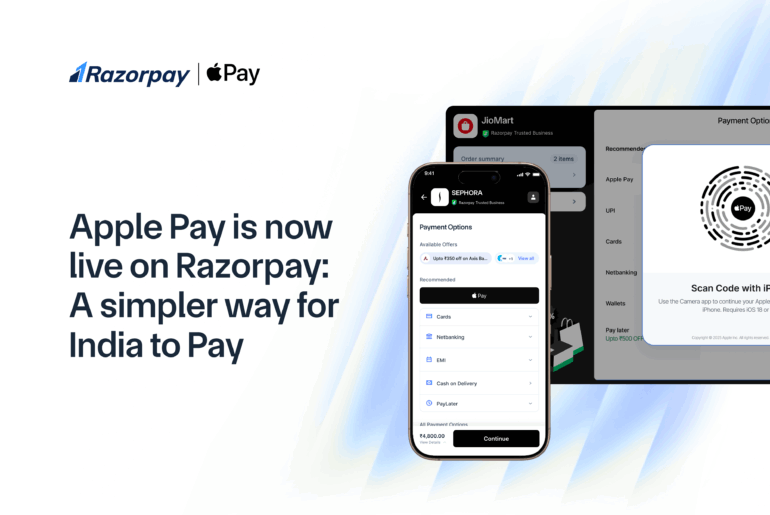
UPI accounts for approximately 80% of retail payments in India. UPI Autopay extends this to recurring mandates, though it has limitations for full international recurring flows. Razorpay supports UPI Autopay and tokenized card payments, giving global businesses compliant options for collecting recurring payments from Indian subscribers.
Mandate Limits and Authentication Requirements
UPI Autopay mandates support recurring charges up to ₹15,000 per cycle without additional authentication. Amounts exceeding this threshold require re-authentication via UPI PIN, increasing abandonment risk.
Tokenized Credit and Debit Card Payments
Credit and debit cards remain significant for premium subscribers. All card data must be tokenized per RBI rules, but tokenized cards support higher transaction values than UPI Autopay.
3DS 2.0 Implementation for Security
3DS 2.0 reduces fraud risk through risk-based authentication while improving checkout experience. For international card acceptance from India, 3DS 2.0 is essential for maintaining approval rates.
E-Mandates for Bank Account Auto-Debits
E-mandates (eNACH) enable auto-debiting directly from bank accounts, bypassing card-specific limits entirely – ideal for high-value recurring subscriptions where the ₹15,000 threshold creates friction. They are compliant with RBI’s framework and trusted by Indian consumers for recurring payment setups.
Net Banking and Digital Wallet Integration
Net banking remains popular among older demographics, while digital wallets offer convenience. Some wallets support recurring mandates through UPI or eNACH integrations.
Did You Know?
UPI hit a record 16.99 billion transactions in a single month (January 2025), yet it’s not fully enabled for international recurring subscriptions.
Optimizing Subscription Success Rates from India
Smart Payment Method Routing and Fallbacks
Smart routing automatically directs transactions through the channel most likely to succeed. Effective fallback strategies include:
- Routing to UPI Autopay for amounts under ₹15,000
- Falling back to tokenized cards if UPI mandate registration fails
- Offering e-mandates as the primary option for high-value subscriptions
Automated Retry Logic for Failed Transactions
Compliant systems can retry failed transactions automatically – up to 8 attempts – addressing insufficient funds, bank downtime, or expired mandates. This can help recover 20–30% of lost revenue.
Best Practices for Retry Timing and Frequency
- Space retries across different times of day
- Avoid retrying immediately after a hard decline
- Align retry attempts with salary credit cycles (end of month)
Address Verification and Fraud Prevention
AVS for US/CA cards and 3DS 2.0 authentication reduce risk flags on Indian-originated international subscriptions, improving approval rates for legitimate subscribers.
Managing the Complete Subscription Lifecycle
Onboarding and Initial Payment Setup
A smooth onboarding flow must clearly communicate the mandate setup process to Indian customers, explaining why authentication is required.
Mandate Registration and Customer Education
Educate customers about the OTP or UPI PIN verification step upfront – clear communication about this regulatory requirement builds trust and reduces abandonment.
Recurring Billing Automation and Notifications
Automating the billing cycle – including pre-debit notifications – reduces manual overhead and ensures RBI compliance. Razorpay’s subscription platform includes automated retry logic for failed payments, helping businesses recover revenue without manual intervention.
Pre-Debit Communication Strategies
- Send notifications via email and SMS with clear subscription details and cancellation options
- Use branded templates that reinforce trust
- Time communications to comply with RBI’s advance notification requirements
Subscription Modifications and Cancellations
Offer easy plan upgrades, downgrades, and cancellations through self-service portals. Indian consumers expect transparent cancellation policies for subscription businesses.
Dispute Prevention and Resolution
Most subscription disputes arise from confusion around renewals. Proactive pre-debit communication and clear refund workflows prevent the majority of chargebacks.
Cross-Border E-commerce and Subscription Box Services
International Shipping Considerations
Physical subscription boxes require careful carrier selection, realistic delivery timelines, and integrated tracking for subscriber transparency.
Customs and Duty Management
Cross-border subscription boxes must account for customs duties and import taxes in destination countries.
Multi-Currency Pricing Strategies
Display prices in the customer’s local currency to reduce abandonment.
Settlement, Reconciliation, and Financial Management
Currency Conversion and Forex Management
Collecting in multiple currencies while settling in INR introduces forex challenges. Razorpay’s MoneySaver Export Account provides virtual bank accounts in major markets, enabling exporters and service providers to receive international payments with reduced transfer fees.
Automated Reconciliation for Multi-Currency Transactions
Automated reconciliation tools match incoming payments to subscription IDs across currencies, eliminating manual spreadsheet matching for subscription businesses.
Export Documentation and Compliance
FIRC Generation and GST Compliance
FIRCs serve as required documentary proof for international payments received in India. Subscription revenue from foreign customers carries GST implications.
Technology Integration and Developer Considerations
API Integration for International Subscription Platforms
Clean, well-documented APIs are essential for integrating Indian payment methods into global subscription platforms. Developer-friendly integration reduces time-to-market.
Webhook Management for Real-Time Updates
Webhooks enable real-time notifications for critical payment events – success, failure, and mandate registration – essential for subscription lifecycle management.
Testing and Sandbox Environments
Simulating Indian Payment Scenarios
Use sandbox environments to simulate mandate authentication, pre-debit notification flows, and retry sequences before going live.
Compliance and Risk Management Strategies
Data Localization Requirements
RBI’s data localization mandate requires payment data related to Indian transactions be stored on servers in India. Global businesses must ensure compliance when processing international subscriptions from India.
PCI DSS and Security Standards
PCI DSS Level 1 compliance is essential for platforms handling Indian card data. Tokenization and encryption are non-negotiable.
Regulatory Reporting and Documentation
Maintain audit trails, FIRC documentation, and GST-compliant invoicing for all international subscription revenue from India.
How Razorpay Enables Seamless International Subscription Management
Razorpay provides a comprehensive platform for global businesses to accept and manage subscription payments from Indian customers with full RBI compliance.
| Feature | Capability |
| International Payment Gateway | Accept payments from global customers with automated currency conversion and localized payment methods |
| RBI Compliance Automation | Built-in mandate management, tokenization, and pre-debit notification systems |
| MoneySaver Export Account | Virtual accounts in major markets for receiving international payments |
| Smart Routing | Intelligent payment method selection and automated retry logic |
| Reconciliation Tools | Automated matching and settlement tracking across currencies |
| Developer APIs | Comprehensive integration support with documentation |
Ready to streamline your payments?
Scale your business with a gateway that supports 100+ payment methods, including UPI, Credit Cards, and Netbanking. Transition to a reliable infrastructure designed to improve transaction success rates and automate your daily reconciliation.
Conclusion
India’s 800 million-plus internet users represent a massive recurring revenue opportunity for global subscription businesses – but capturing it requires understanding RBI’s unique regulatory framework. Success depends on compliant mandate authentication, enforced tokenization, timely pre-debit notifications, and smart payment method routing.
Businesses that invest in localized, compliant subscription infrastructure will capture significant recurring revenue from this market. As India’s digital payments ecosystem evolves through 2026 and beyond, platforms that adapt earliest will build the strongest subscriber bases. Learn how to start collecting international subscriptions from India with the right compliance foundation today.
FAQs
Q1. What are the RBI guidelines for international subscription payments from India?
RBI requires one-time mandate authentication via OTP or UPI PIN before any subscription begins, 72-hour advance pre-debit notifications before each charge, mandatory card tokenization, and additional authentication for recurring charges above ₹15,000. These rules apply to both domestic and international merchants.
Q2. Why do international subscription payments from India keep failing?
Common reasons include the merchant not implementing RBI-compliant mandate flows, banks blocking non-compliant standing instructions, missing tokenization setup, or transactions exceeding ₹15,000 without re-authentication. Many global platforms use simple card-on-file billing that doesn’t meet India’s requirements.
Q3. What payment methods work best for Indian subscription customers?
UPI Autopay is most popular for subscriptions up to ₹15,000. Tokenized cards support higher values. E-mandates (eNACH) bypass card limits entirely for high-value recurring subscriptions. Net banking and digital wallets provide additional fallback options.
Q4. How can global businesses reduce subscription payment failures from India?
Implement smart payment routing, enable automated retry logic with up to 8 attempts, use 3DS 2.0 and address verification for US/CA cards, send clear pre-debit notifications, and offer multiple payment methods so customers have fallback choices.
Q5. What is tokenization and why is it required for Indian card subscriptions?
Tokenization replaces actual card numbers with unique, non-reversible tokens. RBI prohibits storing raw card details, making tokenization mandatory for all platforms accepting recurring card payments from Indian customers. This reduces breach risks while maintaining billing functionality.