

Having predictable revenue is one of the best things to have if you run a subscription business in Singapore, whether that’s a SaaS product, a co-working membership, or a monthly meal plan service. Your customers sign up once, payments come in every month, and your cash flow stays steady. That’s the appeal.
But the reality is that plenty of subscription businesses lose paying customers not because those customers wanted to leave, but because a charge failed silently in the background. Understanding how recurring billing in Singapore actually works, and where it breaks down, is the first step to plugging that leak.
Key Takeaways
- Recurring Billing Automates Collections: Recurring billing automates charge cycles so businesses collect payments on a set schedule without chasing invoices manually.
- Tokenisation Keeps Card Data Secure: Card tokenisation is the backbone of secure recurring charges, replacing sensitive card data with encrypted tokens stored by the payment provider.
- Payment Failures Drive Subscriber Loss: Failed recurring payments are one of the biggest causes of involuntary subscriber loss, with industry research attributing 20% to 40% of subscription churn to payment failures rather than customer dissatisfaction.
- Smart Recovery Improves Retention: Smart retry logic, card updater services, and offering multiple payment methods can recover a significant share of initially declined transactions.
- Subscriptions Need Reliable Automation: Singapore’s growing subscription economy, from SaaS tools to fitness memberships, makes reliable automated recurring payments a core operational need for SMEs.
- Payment Platforms Reduce Billing Complexity: A dependable payment platform online handles tokenisation, scheduling, retry logic, and compliance so founders can focus on the product instead of the billing infrastructure.
What Recurring Payments Actually Are
At its core, a recurring payment is a pre-authorised charge that happens on a regular cycle, weekly, monthly, quarterly, whatever fits the billing model. The customer agrees to the schedule upfront, usually at checkout, and the business automatically charges their card or bank account each period.
However, it’s different from a customer manually paying an invoice every month. Subscription payment setups in Singapore are designed to run without human intervention on either side, which means the customer doesn’t need to remember, and you don’t need to send reminders or follow up. When it works, it’s invisible to both parties.
How Automated Billing Works Behind the Scenes
For automated recurring payments in Singapore, there’s more happening under the hood than most founders realise. Here’s the typical sequence when a recurring charge fires:
Tokenisation and card storage
When a customer first enters their card details, the payment provider doesn’t store the actual card number. Instead, it creates a token, an encrypted reference that represents the card. This token is what gets charged each cycle.
It’s a PCI DSS compliance requirement, and it’s what makes recurring billing safe enough to operate at scale.
Charge scheduling
The billing system triggers a charge request on the scheduled date. That request goes from the merchant’s payment platform to the card network (Visa, Mastercard), then to the customer’s issuing bank for approval. All of this takes seconds.
Approval or decline
If the bank approves, funds are earmarked and eventually settled into the merchant’s account. If it declines, the system logs a failure code. But it’s worth noting that decline codes aren’t always straightforward, as there are over 2,000 unique codes across card networks, each pointing to a slightly different issue.
Why Failed Charges Are Costlier Than You Think
A single failed payment might seem minor. But scale that across hundreds or thousands of subscribers, and it starts eating into revenue fast.
Industry research consistently shows that payment failures account for 20% to 40% of total churn in subscription businesses. That’s not customers cancelling because they’re unhappy. These are people who wanted to keep paying but couldn’t, because a card expired, a bank flagged the transaction, or there weren’t enough funds in the account at that exact moment.
Beyond the immediate loss of payment, there are other knock-on effects. Many subscribers don’t bother resubscribing when they’re cut off due to a billing error and instead move on. That’s lost lifetime value, wasted acquisition spend, and a gap in your monthly recurring revenue that compounds over time.
For a Singapore SaaS company processing a few hundred subscriptions, even a 5% monthly failure rate can quietly drain tens of thousands in annualised revenue. And the tricky part is that most businesses running recurring billing in Singapore don’t notice how the churn works against them until the numbers start slipping quarter-over-quarter.
Preventing Payment Failures Before They Happen
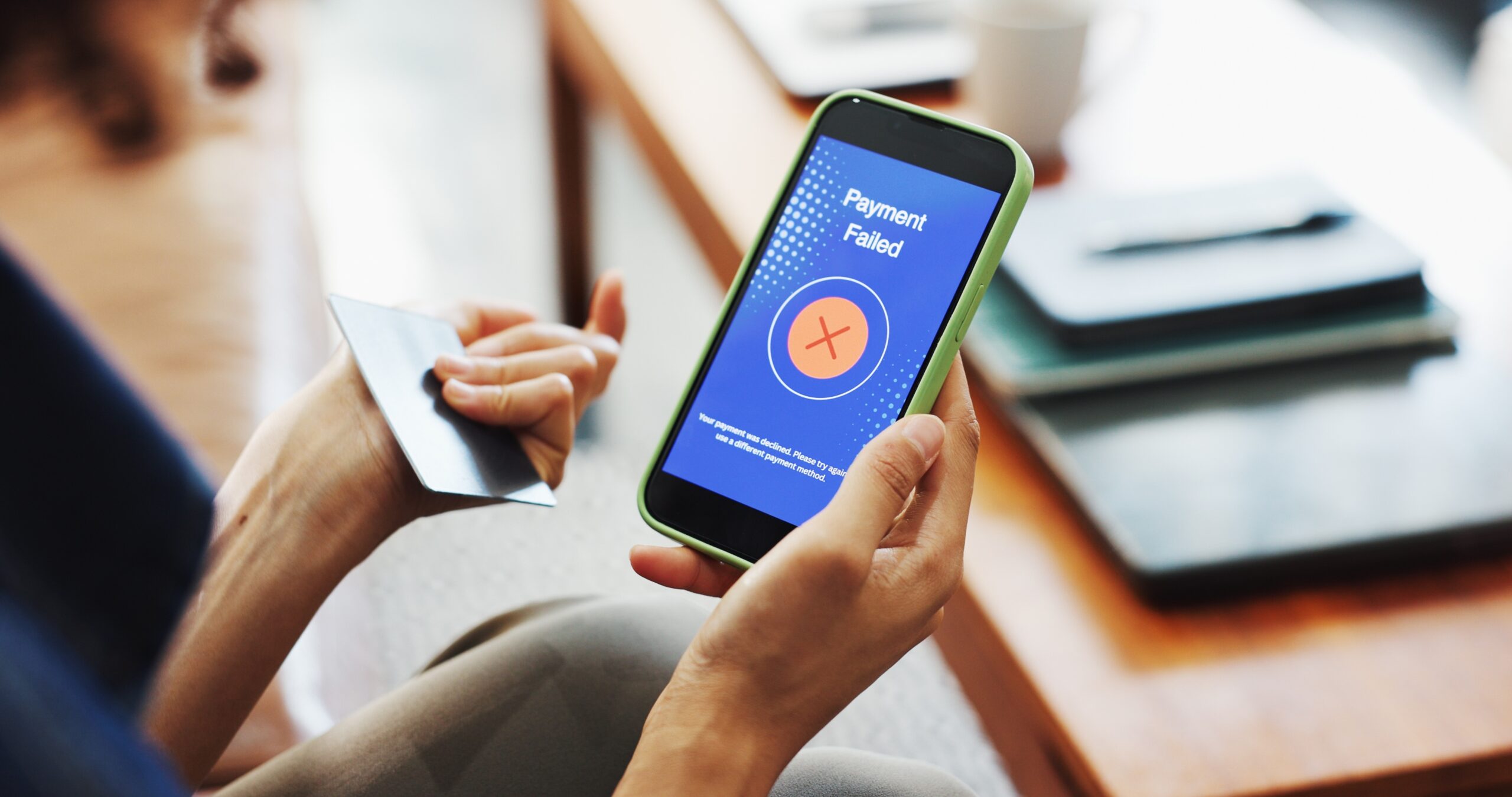
The good news is that most recurring payment failures are preventable. A few practical measures can dramatically improve your success rate:
Card updater services
Visa and Mastercard offer account updater programmes (Visa Account Updater and Automatic Billing Updater) that automatically refresh expired or reissued card details before the next billing cycle. This catches the most common failure type, outdated card information, without requiring the customer to do anything.
Some payment platforms integrate this natively, so merchants don’t need to configure it separately.
Smart retry logic
Not every declined transaction is permanent. A “soft decline” like insufficient funds might succeed if retried a day or two later, like after the customer’s payday. Smart retry systems can distinguish between soft and hard declines and schedule follow-up attempts at optimal intervals.
Retrying a hard decline (e.g., a cancelled card) is pointless and can actually hurt your merchant reputation with card networks.
Multiple payment methods
Giving subscribers the option to pay via multiple channels reduces the risk of a single point of failure. In Singapore, that means supporting cards alongside PayNow or direct bank transfers. If a card fails, having a backup method on file means the charge can still go through.
Pre-expiry reminders
A simple email or in-app notification a week before a card expires gives customers time to update their details. It’s low-effort for the business and saves a disproportionate number of failed transactions.
Choosing the Right Setup for Your Business
Not every subscription business needs the same billing infrastructure. A small yoga studio has different needs from a B2B SaaS platform serving enterprise clients across Southeast Asia.
What matters most in any subscription payment setup in Singapore is whether your setup handles the basics reliably, like tokenised card storage, automated scheduling, retry logic, and clear reporting on failed transactions. You want to avoid managing renewals through manual invoicing or spreadsheet reminders, as this creates a bottleneck you’ll feel as you scale.
For businesses in Singapore specifically, compliance matters too. Your payment provider should work with partners licensed by the Monetary Authority of Singapore (MAS), and the platform itself should be PCI DSS compliant, a minimum baseline requirement for handling card data in a recurring model.
Build a Billing Flow That Keeps Subscribers Paying
Setting up automated recurring payments in Singapore the right way is all about the fundamentals. Tokenise card data, schedule charges reliably, build in retry logic, and give your customers easy ways to update their payment details. Get those pieces in place, and you remove the biggest source of preventable revenue loss for your business.
Razorpay’s technical services provide Singapore-based subscription businesses with the infrastructure to automate billing cycles, support multiple payment methods, including cards and PayNow, and manage failed transactions with built-in retry and recovery tools. Our platform operates with these partners, ensuring compliance from the start.
Ready to Simplify Recurring Billing?
See your recurring billing handled by our reliable payment technology platform online at Razorpay, all without the operational overhead. We offer a straightforward path to getting set up, staying live, and collecting payments automatically so you can focus on growing your business.
Frequently Asked Questions About Recurring Payments
What causes recurring payments to fail?
The most common reasons are expired or reissued cards, insufficient funds at the time of billing, and fraud flags from the issuing bank. In some cases, a customer’s bank may block the transaction if it doesn’t recognise the recurring charge pattern. Card updater services and retry logic can resolve most of these automatically.
How is recurring billing different from manual invoicing?
With recurring billing, the charge happens automatically on a set schedule using tokenised payment details. Manual invoicing requires the business to send an invoice each cycle and the customer to actively make a payment. Automated billing reduces late payments, cuts admin time, and creates a more predictable cash flow.
Can recurring payments work with PayNow in Singapore?
Some payment platforms in Singapore support recurring charges through PayNow or direct bank transfers alongside cards. Offering multiple payment methods reduces the risk of a single card failure disrupting the billing cycle and gives your subscribers more flexibility in how they pay.
