⚡ LATEST UPDATE (September 2026): According to a Reuters report, Apple Pay is expected to launch in India in October 2026. The initial rollout will reportedly support Axis Bank credit cards, with discussions currently ongoing for HDFC Bank and ICICI Bank integrations. (Note: Neither Apple nor Axis Bank has issued an official confirmation yet).
Table of Contents
Does Apple Pay work in India?
Apple Pay in India does not officially work yet for domestic payments with Indian bank cards, but the runway just got a lot shorter. Reuters reported on September 18, 2026, citing three sources familiar with the plans, that Apple is preparing to launch next month starting with Axis Bank credit cards, before widening to other lenders through separate bank-by-bank deals, the same phased approach Apple has followed in other markets. Apple has also held talks with HDFC Bank and ICICI Bank, both larger card issuers than Axis, but commercial terms haven’t been finalised with either.
Important: Until Apple or the banks confirm anything officially, treat every date and detail here as reporting, not a settled fact.
| Payment Type | Status | Details |
| Domestic Payments (INR) | ⏳ Expected next month (Oct 2026) | Awaiting bank deals + NPCI approval for future UPI support |
| Cross-Border Payments | ✅ Live | Works on NFC POS terminals and online checkout today |
Behind the Scenes: What’s Holding Up Apple Pay in India’s Domestic Launch
Per ETV Bharat, Apple is negotiating with HDFC, ICICI, and Axis Bank over a transaction fee on every domestic Apple Pay payment. Apple is reportedly asking for a fee of about 0.15% to 0.20% of each transaction’s value, known in banking terms as 15 to 20 “basis points” (100 basis points equal 1%), while banks are pushing back toward a lower 0.10%.
Separately, UPI support needs its own approval from the National Payments Corporation of India (NPCI), plus a sponsor bank to route transactions, a process Apple hasn’t completed yet, which is why the initial rollout is expected to be cards-only.
What is Apple Pay?
Apple Pay is a payment method built exclusively for Apple devices: iPhones, iPads, Macs, and Apple Watches. Users store their card details once in the Apple Wallet, and from then on can pay conveniently across any of their Apple devices.
Key benefits it offers:
- Skips manual entry: no need to type in card numbers, billing address, or CVV each time.
- Biometric security: payments are authenticated via Face ID, fingerprint, or device passcode instead of a CVV.
- No extra cost: merchants and users aren’t charged any additional fee for using it.
- Cross-device access: once a card is saved, it’s available on any Apple device tied to that account.
- Smooth checkout: transactions complete on the same screen, and the polished UX tends to boost conversion.
- PCI DSS compliant: actual card numbers aren’t stored, instead secure device-based tokens are used, keeping it compliant with card industry security standards.
How Does Apple Pay Work?
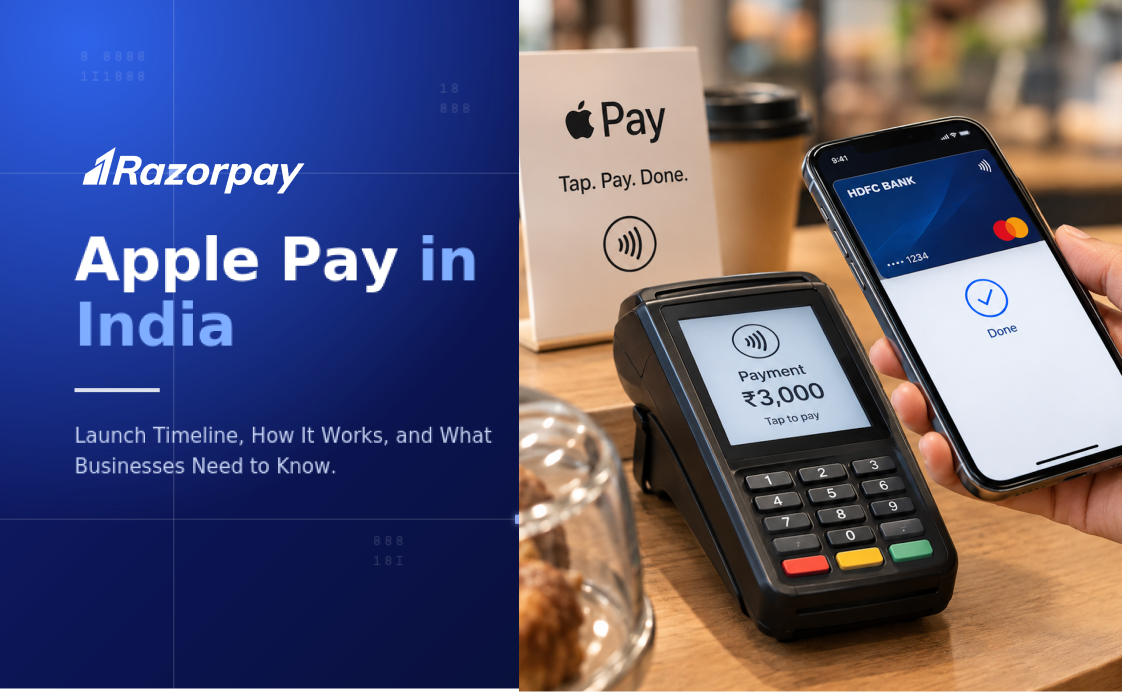
Apple Pay stores a tokenised version of an eligible card in Apple Wallet instead of exposing the real card number at checkout. The customer selects Apple Pay, reviews the amount, and authenticates with Face ID, Touch ID, or a passcode. The business’s payment provider receives the payment without the customer typing in card details. So no manual entry and no OTP for card-based flows.
Today in India, domestic iPhone users still rely on UPI or bank apps for local purchases because Indian cards can’t be added to Wallet. Foreign visitors and NRIs with international cards, however, can already tap to pay at any NFC terminal in India. Once card-based support goes live, this is exactly how Apple Pay in India will work at checkout.
What Changes When Apple Pay in India Launches Domestically?
| Today | With Domestic Apple Pay |
| Enter or select a card manually | Choose Apple Pay at checkout |
| Enter card details for new cards | Card already stored in Wallet |
| OTP or other supported authentication | Device-native Face ID/Touch ID |
| Multiple checkout steps | One-tap completion |
| Card experience varies by merchant | Consistent Apple Pay experience |
For businesses, this mainly changes authentication and speed, not the underlying card rails.
Businesses Don’t Have to Wait: Apple Pay Is Already Live for International Payments
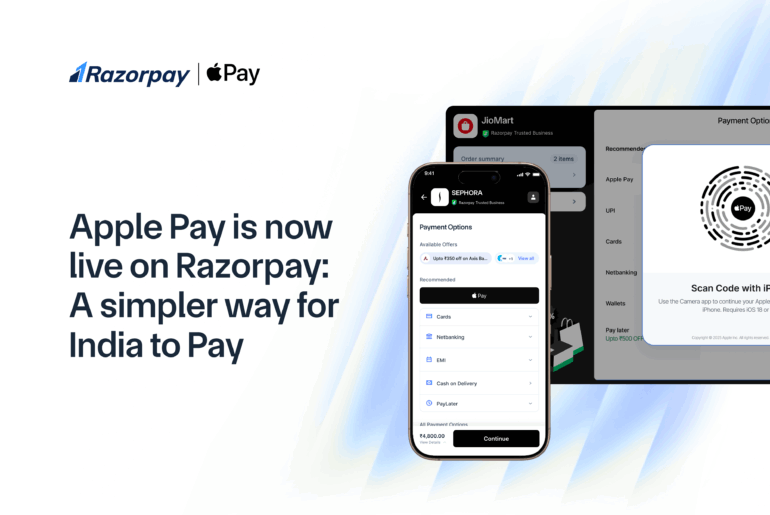
While domestic cards are still pending bank deals, Indian businesses selling abroad can turn on Apple Pay today. Razorpay became the first Indian payment aggregator to launch Apple Pay for international payments, and its early pilot data shows real impact:
- Up to 58% lift in conversion rates
- 45% faster checkout
- 12% increase in average order value
- Up to 95% payment success rate
Brands including Mokobara, Akasa Air, Sabyasachi, House of Masaba, Pernia’s Pop Up Shop, and Nish Hair are already using it. It’s a practical way to prepare for Apple Pay in India before the domestic rollout arrives, turning the “wait for domestic Apple Pay” narrative into “why wait at all if you sell internationally.”
👉 Explore Razorpay’s International Apple Pay Integration
Which Indian Businesses Should Prepare Most?
- E-commerce & D2C– cut friction on high-intent checkouts
- Travel– relevant for international travellers and bigger-ticket bookings
- SaaS & digital services– a familiar checkout for overseas buyers
- Export-led brands– offer global customers a payment method they already trust
Should Your Business Prepare for Apple Pay?
Before domestic Apple Pay arrives, check:
- Does your payment provider support network tokenisation and modern authentication?
- Can Apple Pay be switched on without rebuilding checkout?
- Does checkout auto-detect eligible devices and payment methods?
- Are your web, app, and mobile checkouts all ready?
- If you sell internationally, are you already offering Apple Pay or still waiting on the domestic launch?
FAQs
-
Is Apple Pay in India available with Indian credit cards?
Not yet. Indian-issued cards can’t be added to Apple Wallet until the domestic launch goes live. Reuters reported that Apple is preparing to launch with Axis Bank credit cards first; HDFC Bank and ICICI Bank talks are ongoing but unresolved. -
When is Apple Pay in India launching?
Apple hasn’t confirmed a date. Reuters reported on September 18, 2026 that a launch is expected as early as next month (October 2026). -
Does Apple Pay support UPI in India?
Not at launch. UPI needs separate NPCI approval and a sponsor bank, so it’s expected to come later, if at all initially. -
How can Indian businesses accept Apple Pay?
For international customers, right now via Razorpay’s International Payments suite with Standard Checkout. Domestic acceptance will follow once Apple’s bank partnerships go live. - Does Apple Pay Support UPI?
Apple Pay cannot be used to make UPI payments in India at this time.