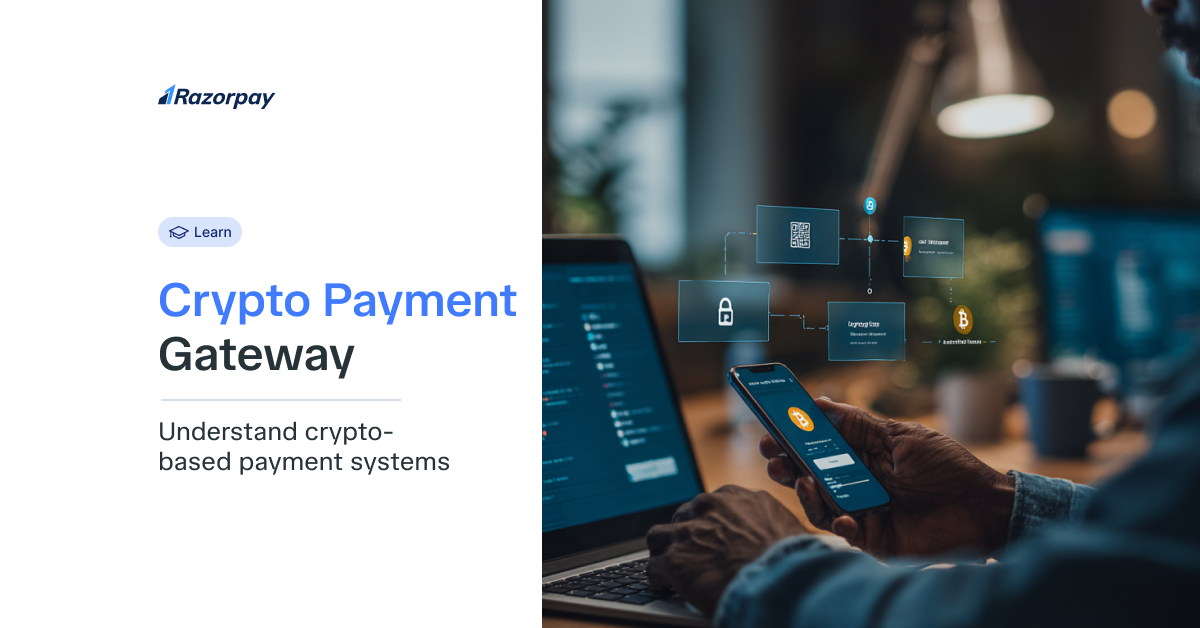
Digital currencies like Bitcoin, Ethereum, and USDT are revolutionising how businesses accept payments globally. Indian merchants are increasingly adopting crypto to tap into international markets and reduce transaction costs.
If you’re curious about accepting digital currencies for your business, understanding cryptocurrency payment gateway solutions becomes essential. These innovative platforms bridge traditional commerce with the crypto economy, making digital currency transactions as straightforward as card payments.
Key Takeaways
A cryptocurrency payment gateway enables businesses to accept crypto as payment.
It converts crypto to fiat (optional), reducing volatility risks.
Supports currencies like BTC, ETH, USDT, and more.
Ideal for global transactions with lower fees and no chargebacks.
Platforms like Coinbase Commerce, BitPay, and Razorpay (via 3rd party) offer integrations.
What Is a Cryptocurrency Payment Gateway?
A cryptocurrency payment gateway serves as your digital bridge between customers paying in crypto and your business bank account. Think of it as the crypto equivalent of traditional payment processors like PayPal or Stripe. These specialised service providers facilitate secure, real-time cryptocurrency transactions between your customers and business.
The process follows a simple workflow. When customers choose crypto payment, the gateway processes their digital currency, verifies the blockchain transaction, and delivers funds to you—either in cryptocurrency or converted to fiat currency based on your preferences. For instance, if you run a digital marketing agency accepting USDT payments from international clients, the gateway can automatically convert those payments to INR, protecting you from crypto volatility.
These gateways eliminate the technical complexities of accepting cryptocurrency. You don’t need blockchain expertise or to manage crypto wallets manually. The gateway handles everything from generating payment addresses to tracking confirmations.
How Does a Cryptocurrency Payment Gateway Work?
Understanding the mechanics helps you appreciate the seamless integration these gateways provide:
Step-by-step process:
• Customer selects cryptocurrency option at checkout.
• Gateway generates a unique wallet address or QR code.
• Customer sends crypto from their wallet.
• Gateway monitors blockchain for transactions.
• Blockchain network confirms payment (typically 10-30 minutes).
• Merchant receives payment confirmation.
• Funds settle in the merchant’s chosen currency.
The entire process happens automatically, requiring minimal intervention from you or your customers.
Key Features of a Cryptocurrency Payment Gateway
Modern gateways pack powerful features that make crypto acceptance practical for businesses:
• Multi-currency support: Accept Bitcoin, Ethereum, Litecoin, stablecoins, and dozens more.
• Real-time conversion: Instantly convert crypto to INR or other fiat currencies.
• Blockchain tracking: Monitor transaction confirmations automatically.
• Wallet integration: Connect existing crypto wallets or use gateway-provided ones.
• Comprehensive reporting: Access detailed transaction history and analytics.
• Security features: Benefit from encryption, two-factor authentication, and cold storage
Benefits of Using a Payment Gateway for Cryptocurrency
Implementing the best cryptocurrency payment gateway brings multiple advantages:
• Global reach: Accept payments from anywhere without geographical restrictions.
• Lower fees: Save 70-90% compared to traditional payment processors.
• Zero chargebacks: Blockchain transactions are irreversible, eliminating fraud risks.
• Faster settlements: Receive funds in minutes versus days with banks.
• Customer privacy: Offer privacy-conscious customers their preferred payment method.
• Future-proofing: Position your business for the growing crypto economy.
Best Cryptocurrency Payment Gateways
1. BitPay
Leading the industry since 2011, BitPay supports major cryptocurrencies, including BTC, ETH, and popular stablecoins. You’ll appreciate their seamless WooCommerce and Shopify plugins, making integration straightforward. They offer instant fiat conversion, protecting you from volatility.
2. Coinbase Commerce
Perfect for businesses wanting zero-fee crypto acceptance, Coinbase Commerce delivers direct wallet settlement without intermediaries. Their open-source checkout integration appeals to developers seeking customisation options.
3. NOWPayments
Supporting over 150 cryptocurrencies, NOWPayments stands out for its versatility. Their automatic stablecoin conversion feature helps maintain value stability. They excel at supporting donations and subscription-based models.
4. CoinPayments
With thousands of altcoin options, CoinPayments dominates gaming and digital goods markets. Their vault solutions and comprehensive APIs make them ideal for high-volume merchants.
5. BTCPay Server (Self-hosted)
Privacy-focused merchants choose BTCPay Server’s open-source, self-hosted solution. With zero fees and complete control, it’s perfect for technically savvy businesses prioritising data sovereignty.
Did You Know?
Over 32,000 global merchants already accept cryptocurrency payments, with the number growing rapidly post-2022.
How to Choose the Best Cryptocurrency Payment Gateway
Selecting the best cryptocurrency payment gateway for yourself requires evaluating several factors
• Supported cryptocurrencies: Ensure popular coins your customers use are available.
• Settlement options: Check fiat conversion availability and supported currencies.
• Fee structure: Compare transaction fees and withdrawal limits.
• Integration simplicity: Assess API documentation and plugin availability.
• Compliance: Verify regulatory compliance in your operating regions
For Indian businesses, confirm whether platforms allow INR conversion through partner banks or third-party applications.
Security Best Practices for Crypto Payment Gateways
When accepting cryptocurrency payments through a gateway, it’s essential to prioritise robust security measures to protect both your business and your customers. Here are key practices to follow:
1. Implement End-to-End Encryption
Ensure that all data transmitted between your systems and the payment gateway is encrypted. This protects sensitive information like wallet addresses and transaction details from interception or tampering during transmission.
2. Enable Two-Factor Authentication (2FA)
Always activate 2FA for all accounts associated with your crypto payment gateway. This adds an extra layer of protection by requiring a second form of verification (e.g., OTP, authenticator app) beyond just a password.
3. Use Secure and Reputable Crypto Wallets
Choose wallets that offer strong security features such as multi-signature support, cold storage options, and regular security audits. Avoid using unknown or unverified wallet providers.
4. Monitor Transactions Regularly
Keep a close eye on incoming and outgoing transactions. Set up alerts for unusual activity and reconcile your records frequently to detect any discrepancies or unauthorised access
5. Never Share Wallet Credentials or Private Keys
Treat your private keys and wallet credentials like confidential business assets. Sharing them, even with trusted individuals, can lead to irreversible loss of funds if compromised.
6. Comply with Local KYC/AML Regulations
Ensure your crypto payment operations align with your country’s Know Your Customer (KYC) and Anti-Money Laundering (AML) laws. This helps prevent fraud, money laundering, and regulatory penalties.
Use Cases for Cryptocurrency Payment Gateways
Cryptocurrency payment gateway solutions benefit various business models:
• Freelancers accepting international payments without hefty conversion fees.
• eCommerce stores selling digital products globally.
• SaaS platforms managing worldwide subscriptions.
• NGOs collecting crypto donations from international supporters.
• Gaming platforms facilitating in-game purchases.
Embracing the Future of Payments
Cryptocurrency gateways transform cross-border commerce, offering speed, security, and cost advantages that traditional systems can’t match. You’ll reduce payment friction while accessing global markets previously unreachable. Start small—test integration with minimal investment before scaling your crypto acceptance strategy.
Ready to streamline your payments?
FAQs
1. How are refunds handled if cryptocurrency transactions are irreversible?
When a merchant issues a refund from their payment gateway dashboard, the gateway does not “pull” the money back. Instead, it triggers an email to the customer asking them to provide a wallet address. The gateway then sends a new payment to that address.
2. How do transaction fees for crypto gateways compare to traditional credit card processors?
Crypto payment gateways are generally significantly cheaper, especially for high-ticket items or international customers.
-
Crypto Gateway Fees: Most gateways (like BitPay, CoinGate, or Coinbase Commerce) charge a flat processing fee of 1% per transaction.
-
Credit Card Fees: Traditional processors (like Stripe or PayPal) typically charge 2.9% + $0.30 per transaction.
3. Which is the best cryptocurrency payment gateway for small businesses?
Top options for small businesses include:
-
NOWPayments – Supports 300+ coins, easy integration, low fees.
-
BitPay – Trusted, secure, and widely used.
-
Coinbase Commerce – Ideal for businesses already using Coinbase.
4. Can I accept Bitcoin payments on my website?
Yes. You can accept Bitcoin and other cryptocurrencies by integrating a crypto payment gateway like BitPay, Coinbase Commerce, or NOWPayments.
5. Is it legal to use crypto payment gateways in India?
Yes, it is legal to use crypto payment gateways in India under strict regulations. Cryptocurrencies are classified as Virtual Digital Assets (VDAs).
6. Do I need to convert crypto to fiat immediately?
No, most gateways allow you to choose:
-
Instant conversion to fiat to avoid volatility.
-
Hold crypto in your wallet for future use or investment. Your choice depends on your risk tolerance and accounting preferences.
7. Are there tax implications for crypto payments?
Yes. In India:
-
30% flat tax on profits from crypto transactions.
-
1% TDS on transfers above ₹10,000 (₹50,000 for specified persons).
-
Gifts and staking rewards are also taxable. You must maintain records and report crypto income under the Income Tax Act.
8. Which crypto coins are most commonly supported?
Most gateways support:
-
Bitcoin (BTC)
-
Ethereum (ETH)
-
Litecoin (LTC)
-
USDT, USDC (Stablecoins)
Some platforms support 100+ coins, including newer tokens and NFTs.
9. Can I integrate a crypto gateway with Shopify or WooCommerce?
Yes. Both platforms support crypto payment plugins:
-
Shopify: Integrate via third-party gateways like Coinbase Commerce or Lyzi.
-
WooCommerce: Use plugins like NOWPayments, BTCPay Server, or DePay for seamless integration.
10. What are the risks of using payment gateway cryptocurrency platforms?
Key risks include:
-
Price volatility of cryptocurrencies.
-
Regulatory uncertainty in some regions.
-
Security threats like hacks or phishing.
-
Compliance burden (KYC, AML, tax reporting). Choosing a reputable gateway and following best practices can mitigate most risks.