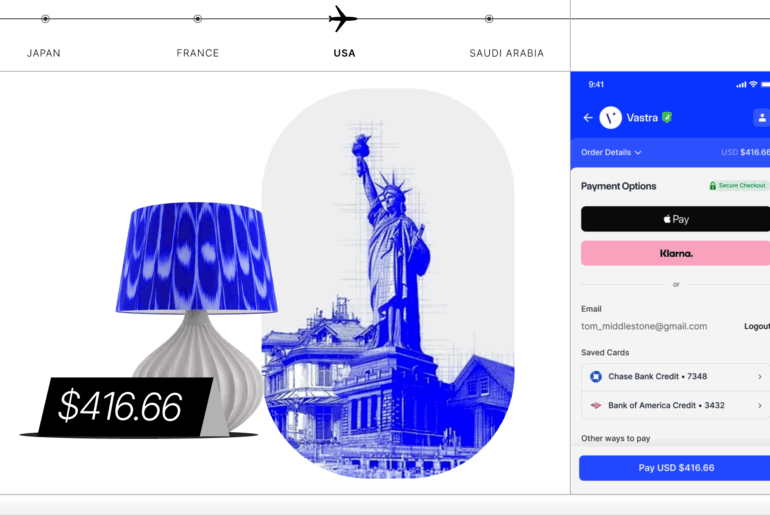
Customers expect fast, seamless, and secure transactions whether they are shopping on a website, using a mobile app, or subscribing to a digital service. At the heart of this shift lies payment gateway API integration, which allows companies to connect their platforms directly to a payment processing network using code rather than relying on rigid, third-party checkout pages.
In simple terms, payment gateway API integration is the process of connecting your website or application directly to a payment processing network through an Application Programming Interface (API). Instead of redirecting customers to an external page to complete their purchase, the entire checkout can happen within your own branded environment. This enables a fully customised checkout experience, where you control the design, flow, and behaviour of the payment journey.
For developers, this means flexibility and deep system control. For product owners and business leaders, it means improved conversion rates, stronger brand consistency, better reporting, and smoother operational workflows. Although API integration requires technical planning and coordination between teams, the long-term payoff includes higher customer trust, improved data visibility, and the ability to support advanced use cases such as subscriptions and marketplace payouts.
Key takeaways
- Core Definition: A Payment Gateway API is the software bridge that connects your application directly to banking networks, allowing for a fully customized checkout experience without redirecting users to external pages.
- Security Requirement: Direct API integration significantly increases your security responsibility, making PCI DSS compliance and the use of tokenization non-negotiable prerequisites to protect sensitive cardholder data.
- Process Overview: The integration lifecycle involves obtaining API keys, setting up a secure sandbox environment for testing, and managing the request-response cycle to authorize and capture funds.
- Business Impact: While technically demanding, API integrations offer superior control over the user interface and transaction data, leading to higher conversion rates and enabling complex business models like recurring billing.
What Is a Payment Gateway API?
A payment gateway API is an interface that allows your system to communicate directly with a payment processor and banking networks. Think of an API as a messenger: it receives a request from your website or app, carries that request to the payment system, and then returns the response. In payments, this request might be “charge this card ₹1,000” or “create a subscription for this user.”
When customers enter their card details on your checkout page, the API securely sends that information to the payment gateway. The gateway then talks to the card network and the issuing bank to check whether the transaction can be approved. The result, success or decline, is sent back to your system almost instantly.
API vs Hosted Payment Page
The main difference between direct API integration and a hosted payment page lies in control and responsibility.
A hosted payment page redirects the customer to a secure page managed entirely by the payment provider. This approach is simple and reduces compliance scope, but limits how much you can customise the experience.
By contrast, direct API integration allows you to design the entire checkout flow yourself. This approach supports what is often called headless payments, where the frontend user interface is completely separate from backend payment processing. Your design team controls the look and feel, while the gateway handles secure transaction processing behind the scenes.
Primary users of payment gateway APIs include:
- Developers building fully custom checkout flows
- Mobile app teams needing native payment screens
- SaaS platforms offering recurring subscriptions
- Marketplaces managing split payments and payouts
Direct API Integration vs Hosted Payment Pages
| Criteria | Direct API Integration | Hosted Payment Page |
| Customization Level | Full control over design and flow | Limited to provider templates |
| PCI Compliance Burden | Higher (SAQ D or SAQ A-EP) | Lower (SAQ A) |
| Development Effort | Significant backend and frontend work | Minimal coding required |
| User Experience | Seamless, on-site checkout | Redirect to external page |
Explore Razorpay’s Payment Solutions
How Do Payment Gateway APIs Work?
Payment APIs operate using a request-response cycle, commonly based on RESTful API standards. In simple language, your system sends a structured request to the gateway’s server, and the gateway sends back a structured response.
Here is how the flow works in practice:
- A customer submits payment details.
- Your server sends a secure API request.
- The gateway forwards the request to the banking network.
- The issuing bank approves or declines the transaction.
- The response is returned to your system.
Authentication Phase
Before any transaction is processed, your system must prove its identity using API keys. These usually include:
- A publishable key for client-side use.
- A secret key for secure backend requests.
The gateway verifies these credentials before allowing any transaction.
Data Transmission Phase
Payment data is transmitted using strong encryption (TLS). In most modern implementations, raw card details never directly touch your server. Instead, tokenisation ensures sensitive data is replaced with a secure token before further processing.
Processing & Response Phase
The gateway communicates with card networks and issuing banks to verify funds. A response—approved or declined—is sent back within seconds.
For delayed payment methods or subscription renewals, webhooks are used. Webhooks are automated notifications sent from the gateway to your server, updating you about events such as payment.success or payment.failed.
Payment Flow Sequence
Customer
↓
Merchant Server
↓
Payment Gateway API
↓
Banking Network
↓
Authorisation Response
↑
Webhook Notification to Merchant
The Authentication Layer:
- API Keys: Two keys are issued—a publishable key for frontend operations and a secret key for backend calls. The secret key must never appear in client-side code.
- OAuth Support: Platforms managing multiple merchants use OAuth to securely connect and process payments on behalf of others.
- Key Security: Store secret keys in environment variables or secure vaults. Rotate keys periodically.
- Access Control: Limit API permissions where possible to reduce risk exposure.
The Transaction Lifecycle:
- Authorisation: The bank verifies funds and places a temporary hold on the amount.
- Capture: The held amount is officially charged and marked as completed.
- Settlement: Funds are transferred to the merchant’s bank account within a few business days.
- Refund/Void: A void cancels an uncaptured transaction; a refund returns money after capture.
Core Types of Payment APIs:
Transaction APIs
These handle one-time payments, authorisations, captures, and refunds. They are used in most ecommerce checkouts.
Subscription APIs
Designed for recurring billing models. They manage plans, billing cycles, free trials, and automated retries for failed charges.
Reporting & Reconciliation APIs
Provide access to transaction data for accounting systems, analytics dashboards, and financial reporting.
Payout APIs
Used by marketplaces and service platforms to send money to vendors, freelancers, or partners.
Step-by-Step Guide to Payment Gateway API Integration:
A successful integration follows a clear integration roadmap, from setup to go-live. This process requires coordination between frontend and backend teams, along with security oversight.
Integration Roadmap
Get Credentials
↓
Sandbox Testing
↓
Error Handling Setup
↓
UI Integration
↓
Production Launch
Step 1: Obtain API Credentials and Review Documentation:
- Create a developer or merchant account.
- Access test mode and live mode API keys.
- Review API documentation for endpoints, parameters, and rate limits.
Step 2: Set Up the Sandbox Environment:
- Configure your local environment to connect to sandbox endpoints.
- Ensure test transactions do not move real funds.
- Use provided test card numbers to simulate approvals, declines, and failures.
Step 3: Implement Tokenisation:
- Avoid storing or handling raw card data on your servers.
- Frontend sends card details directly to the gateway.
- Gateway returns a secure token.
- Backend uses the token to initiate the charge.
Step 4: Handle Webhooks and Idempotency:
- Create webhook endpoints for asynchronous updates.
- Use idempotency keys to prevent double charges.
- Verify webhook signatures to confirm authenticity.
Critical Features to Evaluate in a Payment API
- Reliability & Uptime: Look for providers offering 99.99% availability.
- Developer Experience: Strong SDKs, documentation, and support.
- Global Support: Multi-currency support and alternative payment methods.
- Security Standards: Built-in fraud detection and 3D Secure support.
- Reporting Granularity: Detailed metadata for reconciliation and audits.
Security and Compliance Prerequisites:
Security is non-negotiable in payment gateway API integration. If you handle cardholder data directly, you must comply with PCI DSS compliance standards.
The compliance burden depends on how you implement payments:
- SAQ A: Lowest scope (hosted pages or iFrames).
- SAQ A-EP: Medium scope (tokenisation with some frontend control).
- SAQ D: Highest scope (direct API integration handling card data).
An active SSL certificate is mandatory for encrypting data in transit. TLS 1.2 or higher should be enforced.
Client-side encryption libraries further reduce compliance scope by encrypting sensitive details before transmission.
PCI Scope Scale
Low Scope (SAQ A)
Hosted Pages / iFrames
Medium Scope (SAQ A-EP)
Direct Post / Tokenization
High Scope (SAQ D)
Raw API Integration
Common Integration Challenges and Solutions
Even with careful planning, integration challenges can arise. Proactively addressing them reduces failed payments and customer frustration.
Handling Network Timeouts and Latency:
- Problem: API does not respond within expected time.
- Solution: Implement timeout logic and check transaction status before retrying.
- Solution: Treat webhooks as the final source of truth for transaction state.
Managing Declined Transactions:
- Problem: High decline rates due to unclear error messages.
- Solution: Map gateway error codes to clear user-friendly explanations.
- Solution: Retry only soft declines; avoid retrying hard declines.
Simplifying Complex Integrations with Razorpay
- Developer-Centric Architecture: Razorpay offers robust, RESTful APIs and SDKs that allow you to build a completely custom checkout experience (Custom UI) or use the Standard Checkout for faster deployment, all while maintaining full control over the user journey.
- Advanced Security & Compliance: With built-in PCI DSS Level 1 compliance and TokenHQ for card tokenisation, Razorpay handles the heavy lifting of data security, ensuring you can accept payments safely without expanding your compliance scope.
- Smart Routing & Reliability: The platform utilises intelligent routing algorithms to switch between gateways during downtime, ensuring high transaction success rates, while automated webhooks keep your system synchronised with real-time payment statuses.
Conclusion
Payment gateway API integration offers unmatched control, flexibility, and scalability. By keeping customers on your own platform, you can design a fully custom checkout experience that aligns with your brand and improves conversion rates.
Although the technical setup requires effort, covering authentication, tokenisation, webhooks, and compliance, the long-term benefits are significant. Businesses gain better reporting, improved fraud protection, and the ability to support subscriptions, multi-currency payments, and payouts.
Prioritise strong security standards and developer experience when selecting a payment partner. Start with a sandbox integration, validate your workflow thoroughly, and only then move to production. A well-planned go-live process ensures stable, secure, and scalable payment operations for years to come.
Ready to streamline your payments?
Scale your business with a gateway that supports 100+ payment methods, including UPI, Credit Cards, and Netbanking. Transition to a reliable infrastructure designed to improve transaction success rates and automate your daily reconciliation.
FAQs
1. What is the main difference between a payment gateway API and a hosted payment page?
A payment gateway API allows you to build a fully customized checkout form directly on your website. In contrast, a hosted payment page redirects customers to a third-party secure site to enter their details.
2. Is it mandatory to be PCI DSS compliant when using a payment gateway API?
Yes, if you collect card data directly on your server via an API, you must meet strict PCI DSS requirements; however, using tokenization significantly reduces this compliance burden.
3. How does tokenisation improve security in API integrations?
Tokenisation replaces sensitive card information with a unique string of characters, or token, before it touches your server, ensuring that actual card details are never exposed to potential breaches.
4. What are webhooks, and why are they important for payment APIs?
Webhooks are automated notifications sent by the payment gateway to your server, such as payment.success, ensuring your database is updated in real time even if the user closes their browser immediately after paying.
5. Can I use a payment gateway API for recurring subscription billing?
Yes, most modern payment APIs offer specific endpoints to create subscription plans, manage billing cycles, and automatically charge customers at set intervals without manual intervention.
6. How do I handle failed transactions when using an API?
You should implement logic to catch error codes returned by the API, such as insufficient funds, and display user-friendly messages, while also setting up soft retry mechanisms for temporary network issues.
7. Do payment gateway APIs support multiple currencies?
Many leading providers offer multi-currency support, allowing you to accept payments in various global currencies while often settling the funds in your local currency.
8. How long does it take to integrate a payment gateway API?
A basic integration using standard libraries can take a few days, but building a fully custom, PCI-compliant checkout flow from scratch may require several weeks of development and testing.