Building an app has never been faster. With AI coding tools, what used to take weeks now takes hours, making it significantly easier to build AI apps. But shipping an app and earning from it are still two separate problems. Usually, once the product is built, developers have to figure out payment infrastructure, like setting up gateway setup, checkout flows, and subscription logic, all before they can charge a single user.
That’s the gap Razorpay is closing.
Starting today, developers building AI apps on Codex, OpenAI’s AI coding platform used by over a million developers every week, can connect Razorpay directly inside the agent and start accepting payments without leaving their workflow.
From Idea to Earning in a Single Prompt
By enabling the Razorpay MCP integration on Codex, developers can describe what they want to build and how they want to charge for it in one go.
For example, a prompt like “Build me an AI-powered fitness coaching app and help me collect payments from my users via Razorpay,” can generate the app while also automatically setting up the payment gateway checkout flows, and payment collection included. This removes the need for separate integration work or switching between multiple tools..
For student builders, solo founders, and early-stage startups, one of the biggest blockers to launching has always been the time and effort required to set up payments before a single rupee comes in, and this helps reduce that overhead.
India is already one of the fastest-growing markets for AI-powered apps and processes over 20 billion UPI transactions every month. This integration gives builders a direct path to monetise Indian users at scale, aligned with how the market already pays.
Manage Payments Through Conversation
Beyond Codex, Razorpay is also available as an app inside ChatGPT.
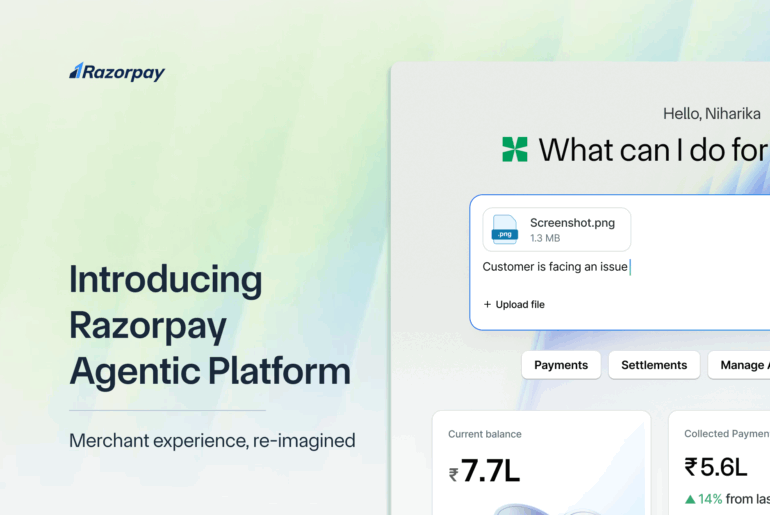
Businesses can install the Razorpay App from the ChatGPT directory and connect their live payment dashboard directly into the conversation. Instead of exporting CSVs or switching between tabs to find transaction data, you ask questions and get answers directly.
You can ask questions like “Why did my payment conversion dip in Mumbai last week?” “Find all refunds raised by customers in the last 30 days.” “Match my settlements against this bank statement.”
The idea is to move from raw data to business decisions without the manual work in between, reducing the need for spreadsheets or constant dashboard navigation. Just your payments data, accessible wherever you already are.
Try the Razorpay App on ChatGPT
Infrastructure That Scales With You
What works for a prototype needs to also work at scale. As apps gain users and revenue, Razorpay handles the reliability, compliance, and payment infrastructure required to support that growth without builders needing to re-architect how they monetise.
This launch builds on Razorpay’s broader work in agentic payments, introduced at the Global Fintech Fest last year in collaboration with OpenAI and the National Payments Corporation of India — enabling AI systems to securely initiate and complete financial transactions on behalf of users.
The direction is consistent: as AI makes it easier to build, Razorpay makes it just as easy to earn.
The next wave of builders in India won’t spend weeks setting up payment infrastructure before they can earn from the AI apps they build. They’ll describe what they want to build, ship it, and start charging for it within the same workflow. That’s what this integration makes possible.