The way people pay has changed more in the last decade than in the previous fifty years. For a long time, credit cards were the default choice for anything beyond cash. Today, that dominance is fading. Shoppers now look for flexible payments that feel clear, controlled, and manageable. They want options that fit their monthly budgets rather than adding open-ended debt.
We are living in an era of instant gratification. Customers discover a product on social media, compare reviews within minutes, and expect fast delivery. Technology has closed the gap between desire and affordability. Instead of waiting to save the full amount, customers can split payments and enjoy their purchase right away.
Across both retail stores and e-commerce websites, flexible payments at checkout are growing rapidly. From electronics and furniture to fashion and healthcare services, businesses are embedding financing directly into the buying journey. This shift has given rise to POS financing: a modern alternative to traditional credit cards and old-fashioned layaway plans.
Although many people connect POS financing with Buy Now, Pay Later (BNPL), the term covers a much wider ecosystem. It includes short-term split payments, long-term instalment loans, 0% promotional plans, and even lease-to-own options. All of these fall under the broader umbrella of embedded lending: where credit becomes a natural part of the checkout experience.
The goal of this guide is simple: to clearly explain what POS financing is, how it works, the different models available, and why it has become a powerful growth tool for businesses.
Key takeaways
- POS financing is a modern embedded lending tool that pays merchants upfront while allowing customers to repay in instalments, bridging the gap between desire and affordability.
- Offering flexible payment options at checkout is proven to increase Average Order Value (AOV) and reduce cart abandonment by mitigating sticker shock for high-ticket items.
- The ecosystem encompasses various models beyond just BNPL, including long-term instalment loans, 0% APR promotional plans, and lease-to-own options for different credit profiles.
- For merchants, the process is low-risk as third-party lenders assume the liability for missed payments, ensuring the business retains its revenue regardless of customer default.
What Is Point-of-Sale (POS) Financing?
POS financing is a financial solution that allows customers to purchase goods or services immediately and pay for them over time in structured instalments. Instead of paying the full amount upfront, the buyer spreads the cost across weeks or months.
At its core, the system involves three parties:
- The customer, who receives the product or service instantly
- The merchant, who receives payment upfront
- The lender, who funds the purchase and collects repayments
Here’s the basic idea: a third-party lender pays the merchant almost immediately (minus a small fee). The customer then repays the lender according to an agreed repayment schedule.
This happens seamlessly at the point of sale: whether that’s an online checkout page or a physical store counter. Customers simply select the financing option, complete a quick approval process, and confirm the terms.
POS financing acts as a bridge between immediate desire and financial ability. Instead of delaying purchases or abandoning carts, customers gain structured access to goods without draining savings or relying on revolving credit.
It is important to understand that POS financing is a broad term. It includes:
- Buy Now, Pay Later (BNPL)
- Traditional instalment loans
- 0% APR promotional financing
- Lease-to-own models
The Evolution: From Layaway to Instant Gratification
Before modern POS financing, many retailers offered layaway plans. Under layaway, customers selected an item and paid in small amounts over time. However, they only received the product after the full payment was completed.
That model represented deferred gratification. You had to wait weeks or months before taking the item home.
POS financing completely reversed that experience. Now, customers get the product immediately and repay later. This change reflects modern consumer behaviour shaped by digital services, quick delivery, and on-demand access.
Technology made this shift possible. Real-time underwriting systems can assess eligibility in seconds. APIs connect merchants and lenders instantly. Mobile-friendly interfaces allow customers to apply and get approved during checkout without leaving the purchase flow.
Instead of waiting, customers experience instant ownership, which significantly improves conversion rates.
The Role of Embedded Finance
Embedded finance refers to financial services integrated directly into non-financial platforms. Instead of sending customers to a bank or separate loan website, financing becomes part of the checkout process itself.
POS financing is a perfect example of embedded lending. It appears as a built-in option next to debit cards, credit cards, and UPI.
Behind the scenes, advanced systems perform real-time eligibility checks. Traditional manual credit approvals that once took days are replaced by automated decisions made in seconds.
APIs connect payment systems, credit bureaus, identity verification tools, and lenders. The result is friction-free financing.
The concept is also expanding into B2B embedded lending. Businesses can now access working capital or equipment financing directly within procurement platforms: applying the same principles to commercial transactions.
How Does POS Financing Work?
Here is the standard 4-step flow:
- Customer Selects Financing
At checkout, the customer chooses a financing option instead of paying the full amount. - Instant Soft Credit Check
The lender performs a quick eligibility check, often using a soft credit inquiry that does not initially impact the customer’s credit score. - Merchant Paid Upfront (minus fees)
Once approved and accepted, the lender pays the merchant the full transaction amount, less a merchant discount rate. - Customer Repays Lender Over Time
The customer follows a fixed repayment schedule, paying instalments monthly or bi-weekly.
The entire POS financing process typically takes under a minute.
The Customer Journey
From a shopper’s perspective, the journey is smooth and intuitive. The customer selects financing at checkout and enters basic details such as name, phone number, and date of birth. The system performs a soft credit check. This means the customer can explore approval without affecting their credit score in most short-term models.
If approved, the platform displays clear repayment terms:
- Monthly payment amount
- Interest rate (if applicable)
- Total payable amount
- Due dates
Many platforms offer one-click confirmation and mobile OTP verification, making the application nearly frictionless. Customers appreciate the clarity. They know exactly how much they will pay and for how long.
Explore Razorpay’s Payment Solutions
The Merchant Experience
For merchants, POS financing is operationally simple and financially secure. In most third-party models:
- The merchant bears zero credit risk
- The lender assumes responsibility for missed payments
- The merchant receives payment almost immediately
The merchant pays a small fee (merchant discount rate) for each financed transaction. However, this cost is often offset by increased sales and higher average order value.
Integration is straightforward. Online stores use plugins or APIs. Physical stores use POS terminals that support EMI or Pay Later options.
From an accounting standpoint, settlement works similarly to card payments, making reconciliation manageable.
Types of Point-of-Sale Financing Models
POS financing includes multiple models tailored to different ticket sizes and customer profiles.
| Model | Typical Use | Interest | Credit Check | Best For |
| Split Pay / BNPL | Low ticket retail | 0% | Soft | Fashion, beauty |
| Instalment Loans | High ticket | Interest-bearing | Hard | Furniture, electronics |
| 0% APR Plans | Promotional | 0% if paid on time | Hard | Appliances |
| Lease-to-Own | Credit challenged | Higher total cost | None/Soft | Underbanked customers |
Buy Now, Pay Later (BNPL)
BNPL is usually short-term and interest-free. The common format is “Pay in 4”: four equal instalments spread across weeks. It works best for smaller retail purchases such as clothing or beauty products. Approvals rely mostly on soft credit checks and alternative data, which means high approval rates.
Long-Term Instalment Loans
These are structured loans offered at checkout for higher-value items. They may run from 6 to 60 months and usually include an interest rate (APR). Common industries include:
- Furniture
- Electronics
- Medical procedures
Because of the longer tenure and higher risk, lenders may conduct more detailed credit assessments.
0% APR and Deferred Interest Plans
True 0% APR means no interest is charged if payments are made within the promotional period. Deferred interest plans are different. If the balance is not cleared within the offer period, interest may be charged retroactively. These plans are popular for expensive appliances and premium goods.
Lease-to-Own Options
Lease-to-own helps customers with poor or limited credit history. Instead of a traditional loan, the customer rents the product and gradually pays towards ownership. While this increases accessibility, the total cost is typically higher than standard financing.
POS Financing vs. Credit Cards
Credit cards operate on revolving credit. Customers can borrow repeatedly and make minimum payments, which may lead to compound interest accumulation.
POS financing uses closed-end instalment loans:
- Fixed tenure
- Fixed monthly payments
- Clear repayment schedule
Unlike revolving credit, instalments eliminate uncertainty. Customers know when their debt ends. POS financing also tends to be more accessible for customers who may not qualify for premium credit cards.
Why Merchants Are Adopting POS Financing
Increasing Average Order Value (AOV)
Breaking ₹60,000 into ₹5,000 monthly payments makes the purchase feel manageable.
Customers often upgrade to premium models when financing is available. Instead of choosing a basic version, they select higher-end options because the monthly difference feels small.
This directly increases average order value.
Reducing Cart Abandonment
Sticker shock is a major cause of cart abandonment.
Displaying financing options early, even on product pages, reduces this shock. When customers see “₹3,000 per month” instead of “₹36,000 upfront,” they feel more confident proceeding.
Smooth applications prevent friction that might otherwise disrupt checkout.
Attracting New Customer Segments
Younger consumers often avoid credit cards but prefer structured payments.
Financing options also attract budget-conscious shoppers who want predictable expenses.
By offering POS financing, merchants expand their addressable market.
Potential Drawbacks and Considerations
Despite advantages, merchants must consider:
- POS financing fees (merchant discount rates).
- Provider compatibility with target customers.
- Transparent communication to prevent confusion.
- Compliance with responsible lending regulations.
Implementation costs are typically offset by revenue gains, but provider selection matters.
How Razorpay POS Streamlines In-Store Affordability
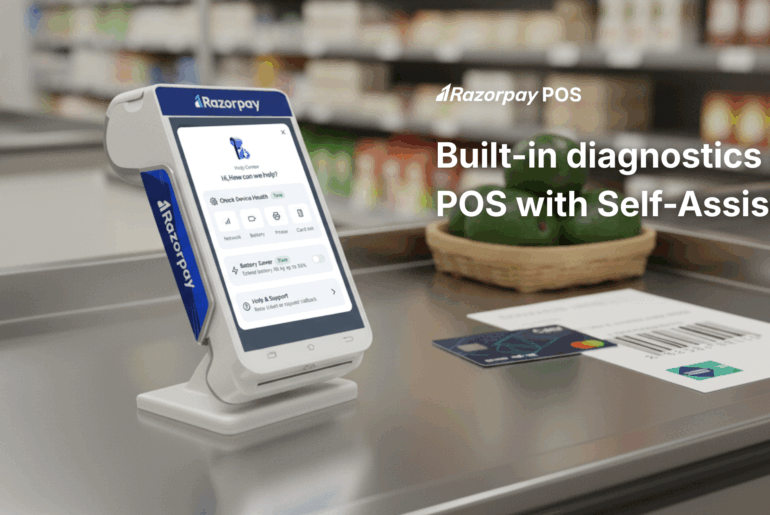
Razorpay POS terminals empower brick-and-mortar merchants to offer instant financing options, such as Debit and Credit Card EMIs, directly at the counter. This integration allows walk-in customers to access the same flexible payment plans available online, effectively reducing price friction for high-value purchases.
By consolidating various EMI partners and Pay Later options onto a single device, Razorpay POS simplifies the reconciliation process and ensures a smooth, paperless checkout experience that boosts conversion rates without adding operational complexity.
Ready to streamline your payments?
Scale your business with a gateway that supports 100+ payment methods, including UPI, Credit Cards, and Netbanking. Transition to a reliable infrastructure designed to improve transaction success rates and automate your daily reconciliation.
Conclusion:
POS financing has evolved into a powerful driver of modern retail growth. It helps merchants close more sales while giving customers the freedom to pay in manageable instalments.
By introducing structured payment plans at checkout, businesses can lift conversion rates, increase average order value, and attract shoppers who may otherwise delay or abandon purchases.
Before choosing a POS financing partner, merchants should carefully assess their average ticket size, customer profile, risk appetite, and competitive positioning to ensure the solution aligns with their commercial goals.