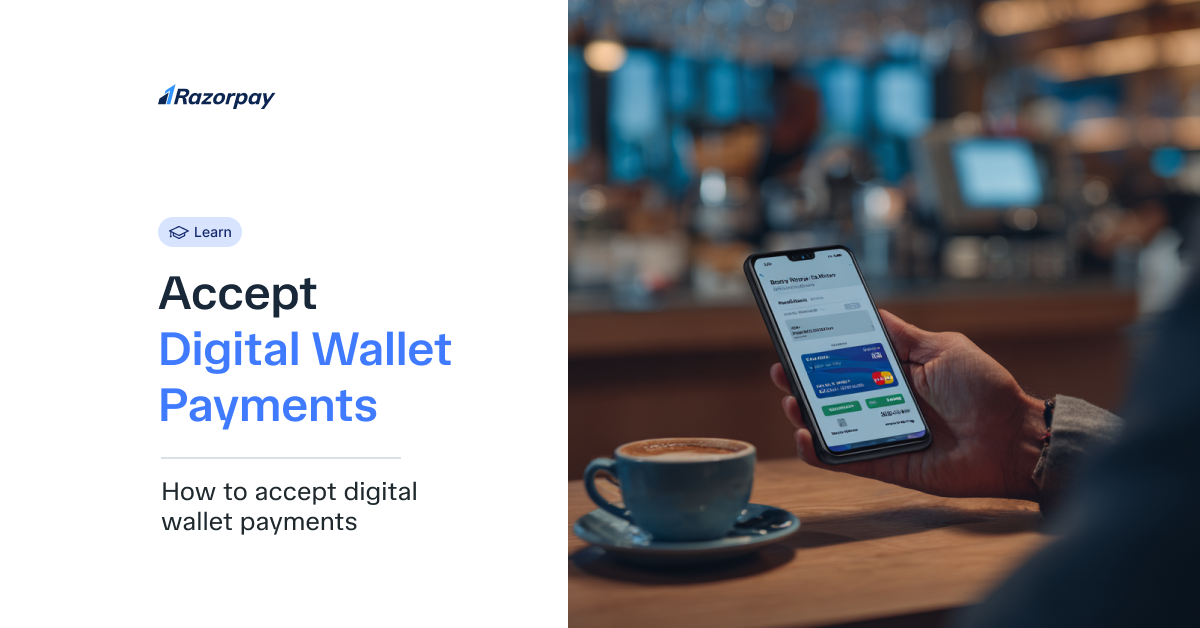
Digital wallet payments have changed the way businesses collect money from customers across India. As smartphone penetration reaches new heights and internet connectivity improves in tier 2 and tier 3 cities, accepting digital wallets has become essential for businesses aiming to capture a growing segment of tech-savvy consumers.
This comprehensive guide will walk you through everything you need to know about accepting digital wallet payments. You’ll discover practical steps to enable wallet acceptance and understand how digital wallet has changed the face of e-payments across various industries.
Key Takeaways
- Digital wallets offer fast and secure payments with minimal friction for customers.
- They help improve checkout conversion rates and enhance the overall customer experience.
- Multiple setup methods are available depending on your business platform and technical capabilities.
- Choosing the right payment partner simplifies wallet acceptance and provides unified reporting.
What are Digital Wallet Payments?
Digital wallet payments represent a modern payment method where customers store their financial credentials electronically in mobile applications or online platforms. These wallets securely hold payment information such as debit cards, credit cards, or bank account details, enabling users to complete transactions without repeatedly entering their payment information. Think of them as virtual versions of your physical wallet, but with enhanced security features and convenience.
When customers use digital wallet payments, they simply select their preferred wallet at checkout, authenticate themselves through PIN, password, or biometric verification, and complete the transaction within seconds. This streamlined process eliminates the need to carry physical cards or remember complex card numbers, making purchases faster and more convenient.
The technology uses advanced encryption and tokenisation to protect sensitive financial data, ensuring that actual card details are never exposed during transactions.
For businesses, accepting digital wallets means catering to customers who prioritise speed and security in their payment experiences. Whether it’s a customer paying school fees, purchasing groceries, or buying fashion items, digital wallets have become integral to daily financial transactions across India.
Types of Digital Wallets
- Mobile wallets
• UPI-linked wallets
• Browser or app-based wallets
• Cross-border wallets
Why Accept Digital Wallet Payments?
The decision to accept digital wallet payments is about meeting customer expectations and capitalising on the fundamental shift in payment preferences.
Benefits for Customers
- Faster checkout with one-tap payments
• Contactless experience for safety and hygiene
• Enhanced security through tokenisation and biometric authentication
Benefits for Businesses
- Higher conversion rates due to simplified checkout
• Reduced abandoned carts as customers avoid manual data entry
• Support for mobile-first customers who prefer app-based transactions
How Digital Wallet Payments Work
Understanding how digital wallets have changed the face of e-payments is important appreciate the technology’s efficiency. When a customer initiates a wallet payment, several sophisticated processes are executed in milliseconds to ensure secure fund transfer.
The journey begins when your customer selects their preferred wallet option at your checkout page, triggering a series of secure communications between multiple parties.
The payment flow involves authentication protocols that verify the customer’s identity through various methods like OTP, biometric scans, or PIN entry.
Once authenticated, the wallet communicates with your payment gateway to authorise the transaction. The gateway then processes this authorisation request through the appropriate payment networks, confirming fund availability and initiating the transfer.
What makes this process particularly secure is the use of tokenisation technology. Instead of transmitting actual card or bank details, the system uses unique tokens for each transaction.
Backend Flow Simplified
- User selects wallet option at checkout
• Wallet app authenticates user through PIN/biometric/OTP
• Payment authorisation request sent to the gateway
• Funds settlement via payment gateway
How to Enable Digital Wallet Payments for Your Business
Implementing digital wallet payments for your business requires choosing the right approach based on your technical capabilities, business model, and customer preferences.
The good news is that modern payment solutions have made this process significantly easier than it was even two years ago. You don’t need extensive technical knowledge or large development teams to start accepting wallet payments.
Your implementation journey begins with assessing your current payment infrastructure and identifying the most suitable integration method. Whether you operate a sophisticated e-commerce platform, run a simple website, or manage transactions through a mobile application, there’s an appropriate solution available.
The key lies in selecting an approach that aligns with your business operations while providing the flexibility to scale as you grow.
Option 1: Through an Online Payment Gateway
- Integrate gateway APIs/SDKs with comprehensive documentation support
• Wallet options enabled automatically through gateway partnerships
• Unified dashboard for reporting across all payment methods
Option 2: E-Commerce Platform Plugins
- Use pre-built platform extensions
• Wallet support configured through simple plugin settings
• No coding required for basic implementation
Option 3: Mobile App SDKs
- Native wallet SDK integrations for Android and iOS applications
• Customisable in-app wallet flows matching your brand
• Direct API access for advanced customisation needs
Explore Razorpay’s Global Payment Solutions
How Razorpay Supports Digital Wallet Payments
Razorpay Payment Gateway emerges as a comprehensive solution for businesses seeking to use digital wallets for e-payments. Their unified platform approach means you can activate new wallet options with simple dashboard toggles rather than complex technical integrations.
The platform’s intelligent routing system automatically directs transactions through the most efficient pathways, ensuring high success rates and minimal payment failures.
Security remains paramount in Razorpay’s wallet payment implementation. The platform adheres to PCI DSS Level 1 compliance standards and implements advanced fraud detection algorithms that protect both merchants and customers.
Real-time monitoring systems flag suspicious activities while allowing legitimate transactions to proceed smoothly, striking the perfect balance between security and user experience.
Key Features for Wallet Acceptance
- Built-in support for major wallets (UPI, Paytm, PhonePe, Google Pay, and more)
• Single integration point managing multiple wallet relationships
• Comprehensive dashboard reporting with detailed reconciliation tools
• Secure tokenisation with advanced risk controls and fraud prevention
Best Practices for Accepting Digital Wallet Payments
Here are a few key principles to consider:
- Display wallet options prominently at checkout with recognisable logos.
- Implement mobile-responsive designs optimising for smaller screens.
- Regularly update your supported wallet list based on customer preferences.
- Maintain secure payment authentication practices following RBI guidelines.
- Monitor transaction trends to optimise wallet option prioritisation.
Key Challenges
Despite the obvious advantages of wallet adoption, here are a few key challenges that you should bear in mind:
- Wallet fragmentation requiring support for multiple providers
• Varying settlement times across different wallet providers
• Authentication friction if the user experience isn’t properly streamlined
• Refund and dispute handling differences between wallet providers
Driving Growth with Digital Wallet Payments
Embracing digital wallet payments positions your business at the forefront of India’s digital payment revolution. However, accepting wallet payments isn’t merely about adding another payment option: it’s about fundamentally improving how customers interact with your business.
This transformation continues to accelerate, with innovations emerging regularly. By implementing wallet acceptance now, you’re not just meeting current customer expectations but preparing your business for future payment trends.
Simplify International Payments with Razorpay
Enable wallets fast with Razorpay—instant activation, detailed analytics, and 24/7 support to keep acceptance smooth, profitable, and reliable.
FAQs
1. What are the most popular digital wallets in India?
The most popular digital wallets in India include Paytm, PhonePe, Google Pay, Amazon Pay, and MobiKwik. These wallets collectively serve crores of users and are widely accepted across online and offline merchants. UPI-based wallets like Google Pay and PhonePe have seen exceptional growth due to their seamless bank account integration.
2. Do digital wallet payments incur extra fees?
Transaction fees for digital wallet payments vary by provider and payment gateway. Some wallets may offer promotional periods with reduced or zero fees to encourage adoption. It’s important to review fee structures with your payment gateway provider.
3. Can digital wallets be used for cross-border payments?
Yes, certain digital wallets support cross-border transactions, though availability depends on the specific wallet and countries involved. Wallets like PayPal, Payoneer, and Skrill specialise in international payments. However, domestic wallets like Paytm and PhonePe primarily focus on Indian transactions, with limited international capabilities.
4. How long does settlement take for wallet payments?
Some payment gateways offer instant settlement options for an additional fee. The exact timeline depends on your payment gateway agreement and the specific wallet provider.
5. Are digital wallet payments secure?
Digital wallet payments employ multiple security layers, including encryption, tokenisation, and multi-factor authentication. These measures make wallet payments often more secure than traditional card payments. The RBI mandates strict security standards for all digital payment providers, ensuring customer data protection and transaction safety.
6. Can I offer wallets alongside cards and UPI?
Offering wallets alongside cards and UPI gives customers choice and flexibility, improving conversion rates. A unified payment gateway like Razorpay enables all these options through a single integration, simplifying management and reporting across payment methods.