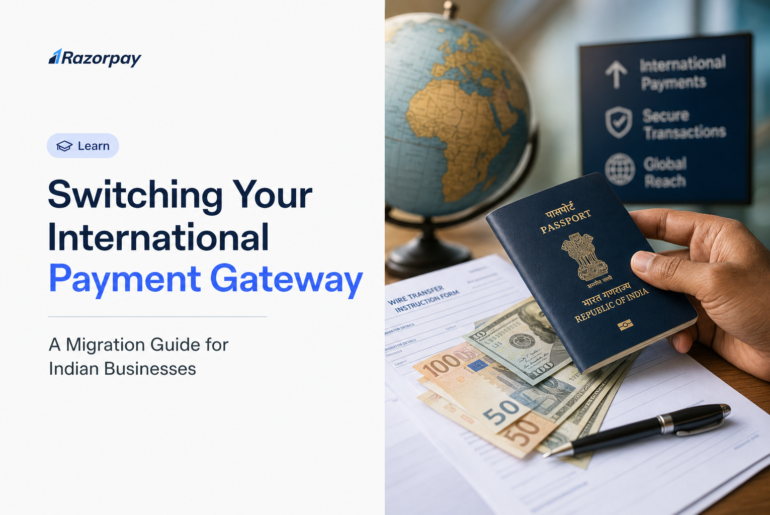
Indian exporters face strict regulatory requirements when receiving payments from overseas clients. The process involves two critical steps: realisation (receiving the payment) and repatriation (bringing it into India). These obligations form the backbone of India’s foreign exchange management system.
The Foreign Exchange Management Act (FEMA), 1999 mandates that exporters bring foreign currency earnings into India within specified timelines. This requirement ensures adequate foreign exchange reserves and prevents unauthorised currency holdings abroad. Non-compliance attracts severe penalties and can damage your business reputation with regulatory authorities.
Recent amendments in 2025 have significantly altered the compliance landscape for exporters. The Reserve Bank of India (RBI) extended the mandatory timeline from nine months to fifteen months, offering much-needed flexibility. Understanding these new rules is essential for maintaining FEMA compliance and avoiding penalties that can reach up to three times the unrepatriated amount.
Key Takeaways
- The 2025 FEMA amendment officially extended the mandatory realisation and repatriation of export proceeds period from 9 months to 15 months.
- Exporters now have a three-year window (previously one year) to ship goods after receiving advance payment, provided the advance is declared in export documentation.
- Failure to repatriate funds is a civil offence under FEMA Section 13, attracting penalties up to three times the sum involved or ₹2,00,000 if unquantifiable.
- Authorised Dealer (AD) Banks can grant extensions for delays and approve self-write-offs for bad debts, subject to specific limits and conditions.
- Modern payment platforms like Razorpay streamline compliance by offering automated Digital FIRC issuance, eliminating manual paperwork associated with traditional SWIFT transfers.
What Is Realisation and Repatriation of Export Proceeds?
Having established the regulatory importance, let’s examine what these terms actually mean for exporters. The distinction between realisation and repatriation often confuses new exporters, yet understanding both is crucial for compliance. Each represents a distinct stage in the export payment cycle.
- Realisation refers to:
• Collection of payment from the overseas buyer against goods or services exported - Receipt of funds in any form (wire transfer, collection, or a permitted multi-currency account)
- The point when payment reaches the exporter’s control
Repatriation involves:
• Converting foreign currency into Indian Rupees (INR) via an Authorised Dealer (AD) Bank
• Bringing the INR equivalent into India within prescribed timelines
• Crediting funds to the exporter’s Indian bank account
Simply holding foreign currency abroad does not count as repatriation unless specifically permitted, such as in Exchange Earners’ Foreign Currency (EEFC) accounts. Section 7 of FEMA requires exporters to declare the full export value, while Section 8 imposes the duty to repatriate foreign exchange within the prescribed period.
Pro Tip: Start tracking your export dates immediately after shipment. Create a simple spreadsheet with export date, invoice value, and the 15-month deadline to ensure timely repatriation.
Explore Razorpay’s Global Payment Solutions
What Is the Prescribed Period for Realisation and Repatriation?
The timeline for bringing export proceeds into India underwent a major change in November 2025. Prior to this amendment, exporters operated under significant time pressure with just nine months to complete the process. This often created cash flow challenges, especially when dealing with delayed payments from overseas buyers.
The Foreign Exchange Management (Export of Goods and Services) (Second Amendment) Regulations, 2025 extended this period of realisation and repatriation of export proceeds to fifteen months. This six-month extension provides breathing room for exporters facing payment delays. The change applies universally to goods, software, and services exports.
| Aspect | Previous Timeline | New Timeline (2025) | Applicability |
| Standard realisation period | 9 months from export date | 15 months from export date | All exports (goods, software, services) |
| Advance payment shipment | 1 year from receipt | 3 years from receipt | Subject to declaration |
| Extension requests | Case-by-case basis | More flexible approach | Through AD Banks |
| Penalty calculation | From 9-month expiry | From 15-month expiry | FEMA Section 13 |
What Are the Rules for Warehouses and SEZs?
The 2025 amendment harmonised timelines across different exporter categories. Previously, units in Special Economic Zones (SEZs), Export Oriented Units (EOUs), and Status Holders operated under varied realisation periods. Now, the fifteen-month timeline applies uniformly to:
- Units in Special Economic Zones (SEZs)
• 100% Export Oriented Units (EOUs)
• Software Technology Parks (STP) and Electronic Hardware Technology Parks (EHTP)
• Status Holder Exporters under DGFT schemes
Goods exported to overseas warehouses follow the same fifteen-month rule from the date of export. The warehouse location or ownership structure does not alter this timeline.
How Are Advance Payments Treated?
Export contracts often involve advance payments, particularly for custom manufacturing or long-term service agreements. The 2025 amendment brought significant relief here by extending the shipment timeline from one year to three years. This change recognises the reality of complex export transactions.
Key conditions for advance payment treatment include:
• The advance must be declared in export documentation
• Shipment must occur within three years of receiving the advance
• The three-year period can be extended further based on contract terms
• Any unutilised advance requires RBI approval for refund
Did You Know?
The three-year advance payment rule particularly benefits engineering and capital goods exporters, where production cycles often exceed twelve months.
How Can You Receive and Process Export Payments?
Understanding payment mechanics becomes crucial after grasping the regulatory timelines. Export proceeds can reach India through several channels, each with distinct documentation requirements. The choice of payment method affects both processing time and compliance paperwork.
Authorised Dealer (AD) Banks play a central role in monitoring these transactions. They issue critical documents like the Foreign Inward Remittance Certificate (FIRC) and Electronic Bank Realisation Certificate (e-BRC). These certificates prove compliance with FEMA regulations and support GST refund claims.
The payment journey typically follows this path:
Overseas Buyer → Payment Channel → Correspondent Bank → AD Bank in India → Exporter’s Account → FIRC/e-BRC Generation
Each stage involves specific charges and processing times that exporters must factor into their pricing and cash flow planning.
Direct Bank Transfers (SWIFT)
Traditional SWIFT transfers remain the most common method for receiving export proceeds. Banks charge FIRC fees of approximately ₹200 per certificate. However, the total cost includes forex markups ranging from 1.0% to 3.5% of the transaction value.
Processing typically takes 1-5 business days through SWIFT networks. Additional delays occur when correspondent banks deduct charges. Documentary collections for goods exports involve higher fees, typically ₹750-₹2,000 depending on complexity.
Online Payment Gateway Service Providers (OPGSP)
Digital tracking and automated compliance documentation reduce manual effort significantly.
Benefits include faster settlement cycles and integrated FIRC generation. OPGSPs partner with AD Banks to ensure regulatory compliance while offering better user experiences than traditional banking channels.
Razorpay International Payments
Razorpay addresses common exporter pain points through its international payment gateway and platform. The service supports over 100 currencies, enabling exporters to bill clients in local currencies while receiving INR. Automated FIRC issuance eliminates weeks of bank follow-ups.
What Are the Consequences of Failure to Realise Proceeds?
Despite extended timelines, missing the fifteen-month deadline triggers serious consequences. Non-realisation of export proceeds constitutes a civil offence under FEMA, with penalties designed to ensure compliance. The violation becomes a ‘continuing offence’ where penalties accumulate daily until regularisation.
The burden of proof rests entirely with the exporter. You must demonstrate reasonable efforts to collect payment, including follow-up communications and legal notices. Failure to maintain proper documentation compounds the compliance risk.
RBI maintains a ‘Caution List’ of exporters with pending realisations. Being listed affects future export transactions and banking relationships. Banks may refuse new export credit facilities or demand additional guarantees.
Monetary Penalties under FEMA
Section 13 of FEMA prescribes specific penalty structures for non-repatriation. The penalty calculation depends on whether the unrealised amount is quantifiable:
- Quantifiable contraventions: Up to three times the sum involved
• Non-quantifiable contraventions: Up to ₹2,00,000
• Continuing contraventions: Additional ₹5,000 per day after initial violation
For example, unrealised proceeds of ₹10,00,000 could attract penalties up to ₹30,00,000. The daily penalty adds ₹5,000 for each day beyond the deadline until regularisation.
Adjudication and Enforcement Actions
The Enforcement Directorate (ED) investigates serious FEMA violations. The process begins with a show-cause notice detailing alleged contraventions. Exporters receive opportunities for personal hearings to present their case.
Severe cases may result in asset seizure or account freezing. ED officers have powers similar to civil courts for summoning witnesses and examining documents. Criminal prosecution becomes possible if wilful violation is established.
How Can Exporters Handle Delays and Defaults?
Payment delays often stem from genuine business reasons beyond exporter control. Buyer insolvency, natural disasters, or geopolitical events can disrupt payment schedules. RBI provides mechanisms to regularise such delays without immediate penalty.
Maintaining robust documentation proves crucial when seeking regulatory relief. Every email, payment reminder, and legal notice strengthens your case. AD Banks evaluate these documents when processing extension or write-off requests.
Three primary remedial paths exist for managing unrealised proceeds:
Remedial Action Checklist:
☐ Document all payment follow-up attempts with timestamps
☐ Obtain buyer acknowledgment of debt wherever possible
☐ Apply for extension before the 15-month deadline expires
☐ Evaluate write-off eligibility if payment seems impossible
☐ Consider voluntary disclosure through compounding for past violations
How Do You Apply for an Extension of Time?
AD Banks possess delegated authority to grant extensions for valid commercial reasons. The application must reach your bank before the fifteen-month period expires. Late applications face additional scrutiny and possible rejection.
Required documentation includes:
• Formal request letter explaining the delay
• Original shipping bills and invoices
• Email trails showing follow-up efforts
• Buyer’s acknowledgment or explanation for delay
When Can You Write Off Unrealised Export Bills?
Write-off removes pending entries from the Export Data Processing and Monitoring System (EDPMS). This doesn’t absolve the exporter from collection efforts but regularises the regulatory position. Self-write-off limits apply based on past performance.
Valid grounds for write-off include:
• Buyer insolvency with court documentation
• Quality disputes settled through arbitration
• Force majeure events preventing payment
• Small amounts where collection costs exceed value
Exporters must surrender proportionate export incentives received earlier. DGFT may recover duty credit scrips or other benefits claimed against written-off exports.
What Is Compounding of Contraventions?
Compounding offers a path to regularise past violations through voluntary disclosure. Exporters pay a compounding fee to settle the contravention without lengthy litigation. The process requires admitting the violation and providing full disclosure.
How Razorpay International Payments Simplifies FEMA Compliance
Managing export compliance requires balancing regulatory requirements with business efficiency. Razorpay addresses the paper-heavy burden of traditional SWIFT transfers through Automated Digital FIRC generation. Exporters download compliance documents directly from the dashboard immediately after transactions, eliminating manual bank requests.
Real-time tracking provides visibility into payment status, reducing uncertainty during the period of repatriation of export proceeds.
Simplify FEMA Compliance for Exporters with Razorpay
Auto-generate digital FIRC, download instantly in-dashboard, and track payments
in real time for timely export proceeds repatriation FEMA-ready.
Conclusion
Timely realisation and repatriation of export proceeds remains fundamental to FEMA compliance for Indian exporters. The 2026 extension to fifteen months provides welcome relief, yet vigilance remains essential. Digital payment solutions reduce documentation burden while ensuring regulatory compliance.
Exporters should leverage the new timelines strategically while maintaining robust tracking systems. When delays occur, proactive engagement with AD Banks prevents penalty accumulation. Modern payment platforms offer the dual benefit of operational efficiency and automated compliance management.
FAQs:
1. What is the new time limit for the realisation of export proceeds in 2026?
Under the Foreign Exchange Management (Export of Goods and Services) (Second Amendment) Regulations, 2025 (FEMA 23(R)/(7)/2025-RB, effective 13 November 2025), the standard period for realising and repatriating export proceeds has been extended from 9 months to 15 months from the date of export.
2. What are the penalties for failing to realise export proceeds within the prescribed period?
Non-compliance is a civil offence under FEMA Section 13, punishable by a penalty of up to three times the sum involved if quantifiable, or up to ₹2,00,000 if not, along with an additional daily penalty of ₹5,000 for continuing contraventions.
3. Do the 15-month realisation rules apply to SEZ units and Status Holders?
Yes, the 2025 amendment harmonises the timelines, making the 15-month realisation period applicable uniformly to all categories, including units in Special Economic Zones (SEZs), Status Holder Exporters, and 100% Export Oriented Units (EOUs).
4. How can an exporter apply for an extension if payment is delayed beyond 15 months?
Exporters must submit a formal request letter along with shipping bills and proof of follow-up to their Authorised Dealer (AD) Bank before the expiry of the 15-month period to seek an extension.
5. What is the timeline for shipping goods after receiving an advance payment?
Exporters are now permitted to ship goods within three years from the date of receiving an advance payment, a significant increase from the previous one-year limit, provided the advance is properly declared.
6. When can an exporter write off unrealised export bills?
Exporters can self-write-off outstanding dues up to certain limits of their total export proceeds realised during the previous calendar year, provided the buyer is insolvent or there is a verifiable dispute.
7. How does FEMA distinguish between the realisation and repatriation of export proceeds?
Realisation refers to the actual collection of payment from the overseas buyer, while repatriation is the mandatory act of bringing those foreign funds into India and converting them into Indian Rupees (INR) through an AD Bank.