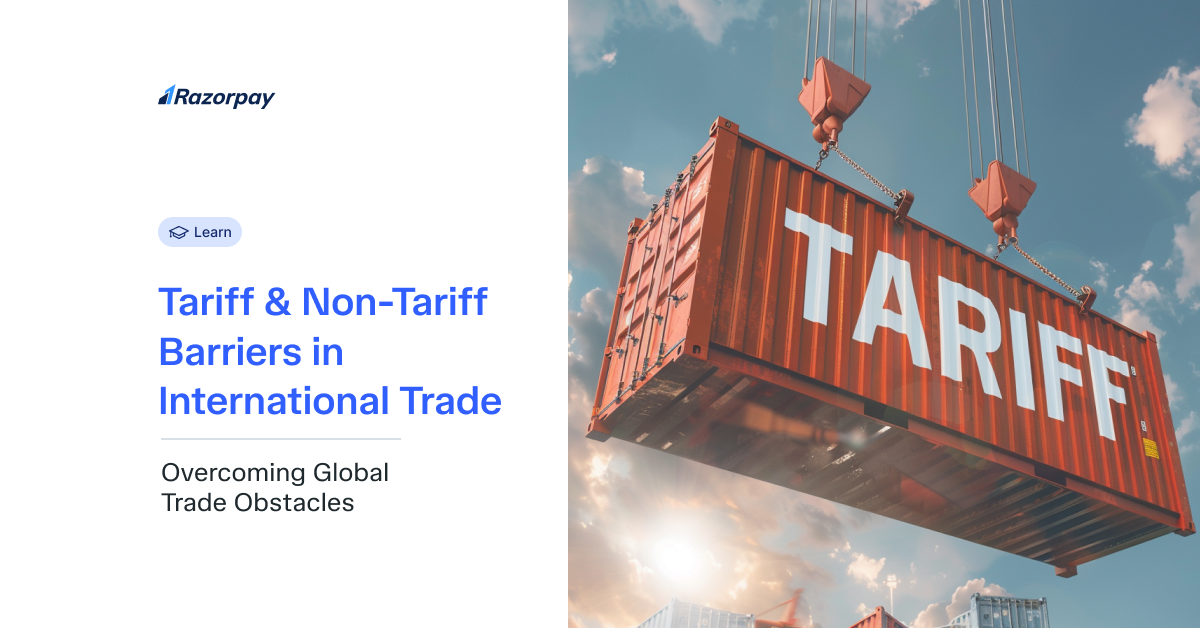
Doing business across borders opens up larger markets, but it also introduces layers of rules that do not exist in domestic trade. When you export software, services, or physical goods, these rules influence how you price contracts, plan deliveries, and stay compliant from day one.
These rules known as international trade barriers are measures set by governments to regulate the flow of goods and services between countries. Most nations rely on a mix of tariff barriers, such as customs duties, and non-tariff barriers (NTBs), including licences, standards, and documentation requirements, to safeguard local industries.
If you overlook these barriers, you may face unplanned costs, shipment delays, or regulatory action. Read on to understand how these barriers work and how you can manage them better.
Key Takeaways
- Trade barriers remain a core part of international trade, even as global markets become more connected. Understanding them is essential before entering or expanding into foreign markets.
- Tariff barriers increase the cost of exports directly, while non-tariff barriers often create delays, restrictions, and hidden compliance costs that are harder to predict.
- Non-tariff barriers have become more prominent in recent years as countries rely on regulations, standards, and procedures instead of higher tariffs.
- Trade barriers affect businesses operationally by raising landed costs, disrupting supply chains, and increasing the need for specialised compliance support.
- Governments use trade barriers to protect local industries, safeguard national interests, prevent unfair pricing practices, and generate revenue.
- Businesses that plan for trade barriers early are better positioned to protect margins, avoid disruptions, and maintain stable access to global markets.
What Are Tariff Barriers in International Trade?
Tariff barriers are customs duties or taxes that a country charges on imported goods. You pay these charges at the border, usually before the goods enter the domestic market. Governments apply tariffs to raise the landed cost of foreign products, which makes locally made alternatives more competitive.
These charges are the most visible and measurable form of trade protection. Beyond protection, tariffs also act as a reliable source of government revenue, especially in import-heavy economies.
Specific Tariffs
Specific tariffs apply a fixed monetary charge per physical unit of goods imported. For example, a country may impose USD 10 per tonne of steel or USD 2 per litre of oil. This method is easy to administer and predict, but it does not adjust when prices rise due to inflation or market changes.
Ad Valorem Tariffs
Ad valorem is a Latin term meaning “according to value,”. Under this method tariffs are calculated as a percentage of the product’s value, usually based on CIF (Cost, Insurance and Freight) or FOB (Free on Board).
For instance, a 20% duty on a car valued at USD 30,000 results in USD 6,000 as customs duty. This is the most widely used tariff type globally because it scales automatically with pricewhen the value of the goods increases, the tax burden rises in proportion.
Compound and Mixed Tariffs
Compound tariffs combine specific tariffs with an ad valorem duty. Mixed tariffs allow customs to apply either a fixed or percentage-based rate, usually whichever is higher. Authorities use these to curb under-invoicing and secure minimum revenue.
Tariff Rate Quotas (TRQs)
Tariff Rate Quotas work through a two-tier structure. Imports within a defined quantity attract a lower tariff, while volumes beyond that limit face a higher rate. Governments commonly use TRQs in agriculture to balance farmer protection with minimum market access.
Pro Tip: Before you finalise pricing or sign overseas contracts, always check the exact tariff structure that applies to your product. A shift from a specific tariff to an ad valorem or compound tariff can significantly change your landed cost. Running tariff checks early helps you avoid underpricing, margin erosion, and last-minute renegotiations with buyers.
What Are Non-Tariff Barriers?
Non-tariff barriers, or NTBs, are trade restrictions that do not involve customs duties. Instead of raising taxes at the border, governments use rules, procedures, and controls to regulate what enters their market and under what conditions. These measures often sit quietly within policies, making them less visible but equally impactful for exporters.
Over the past decade, NTBs have become more prominent as global tariff rates declined under WTO commitments. Rather than changing the sticker price, non-tariff barriers influence how much you can sell, how long clearance takes, or how costly compliance becomes. For Indian exporters, this can mean higher operational costs or restricted market access even when tariffs appear low.
Quantitative Restrictions
Quantitative restrictions control trade by limiting supply rather than increasing cost. Governments use quotas to set strict caps on the volume or value of goods that can be imported within a specific period. In some situations, exporting countries agree to Voluntary Export Restraints (VERs), where they limit shipments themselves to avoid stricter penalties. These measures directly reduce availability in the market and limit consumer choice, regardless of demand.
Technical and Regulatory Barriers (TBT & SPS)
Technical and regulatory barriers focus on how a product is made, presented, and tested. Technical Barriers to Trade (TBT) cover requirements such as labelling, packaging standards, and mandatory testing or certification. Sanitary and Phytosanitary (SPS) measures address food safety, plant health, and animal hygiene. While these rules serve legitimate safety goals, countries sometimes apply them selectively to restrict foreign goods.
Administrative and Financial Barriers
Administrative and financial barriers work by slowing trade and increasing friction. Complex import licensing, repeated inspections, and prolonged customs procedures can delay clearance and disrupt supply chains. Financial controls, such as foreign exchange restrictions or currency regulations, further complicate payments and settlements.
In addition, local content requirements force businesses to source or manufacture part of their product domestically, increasing costs and reducing flexibility for foreign exporters.
Difference Between Tariff and Non-Tariff Barriers in International Trade
When you trade across borders, not all barriers work the same way. Some hit your pricing directly, while others slow you down through rules and paperwork. Understanding the difference helps you plan costs, timelines, and compliance more accurately.
At a basic level, tariff barriers are fiscal in nature. Governments charge them as taxes at the border, and you can see the impact clearly in your landed cost. Non-tariff barriers work through regulations. They control how much, how, or whether goods can enter a country, often without a clear price tag upfront.
While tariffs bring revenue to the government, NTBs usually do not. In fact, they often cost money to enforce and manage. For businesses, NTBs tend to create uncertainty through approvals, standards, and delays.
Tariff Vs Non-Tariff Barriers
| Basis | Tariff Barriers | Non-Tariff Barriers | |
| Meaning | Taxes on imported goods | Regulatory restrictions on trade | |
| Form | Fiscal (customs duty, import tax) | Rules, standards, quotas, licences | |
| Revenue Generation | Yes, direct government income | No direct revenue | |
| Transparency | Clearly published rates | Often implicit and complex | |
| Impact | Directly increases price | Affects quantity, availability, and administration cost |
Why Do Governments Impose Trade Barriers?
Governments do not impose trade barriers at random. In most cases, they use them to balance economic growth, domestic stability, and long-term policy goals. While these measures can disrupt cross-border trade, policymakers often view them as necessary tools to manage risk and protect national interests.
- Protecting Young Industries: Governments often shield new or emerging sectors from global competition until they gain scale, efficiency, and technical capability. This approach, known as the infant industry argument, gives local firms time to mature without being undercut by established foreign players.
- Safeguarding National Security: Countries restrict dependence on overseas suppliers for critical goods such as defence equipment, energy inputs, or sensitive technology. This reduces exposure during geopolitical tensions or supply disruptions.
- Preventing Unfair Pricing: Anti-dumping measures stop foreign companies from selling goods below cost to eliminate local competitors and later raise prices.
- Raising Government Revenue: In many developing economies, trade barriers also serve as a practical way to generate revenue where direct tax systems remain limited.
How Do Trade Barriers Impact International Business?
Trade barriers affect international business at an operational level, shaping how you price, deliver, and scale across markets. Their impact often becomes visible only after you start exporting, when costs and delays begin to add up.
- Increase in Landed Cost: Trade barriers raise the actual cost of delivering a product or service to a foreign customer. Customs duties, compliance charges, testing fees, and clearance delays all form part of the landed cost. When this cost rises, you must either absorb the impact through lower margins or increase prices, which can weaken your competitiveness.
- Supply Chain Disruptions: Non-tariff barriers frequently lead to customs holds, repeated inspections, or shipment rejections due to regulatory or documentation gaps. These interruptions delay deliveries, disrupt production planning, and strain relationships with overseas buyers.
- Higher Compliance Burden: Navigating trade barriers requires ongoing compliance with local rules and documentation standards. This often means engaging legal advisors, specialised logistics partners, and compliance teams, increasing both administrative effort and operating expenses.
- Risk of Trade Retaliation: Trade barriers can also trigger countermeasures between countries. When trade tensions escalate, export markets that were previously accessible can close suddenly, exposing businesses to sudden market access and cash flow risks.
Strategies to Navigate Tariff and Non-Tariff Barriers
You cannot remove trade barriers, but you can plan around them. A structured approach helps you protect margins and avoid compliance surprises.
- Start With the Correct HS Code Classification: Correct Harmonised System (HS) code classification decides the applicable customs duties, import taxes, and regulatory requirements. Even a small error can trigger penalties, reassessments, or shipment holds.
- Use Free Trade Agreements (FTAs): India has trade agreements with certain countries that allow lower or zero customs duty on specific products. If your goods meet the required origin conditions, you can claim these benefits and pay lessor sometimes notariff on imports or exports.
- Run a Landed Cost Analysis Early: Before entering a new market, calculate the full landed costproduct value, freight, insurance, tariff barriers, and local charges. This ensures your pricing stays profitable after duties.
- Work With Local Experts: Partnering with local distributors or an experienced Importer of Record helps you manage non-tariff barriers such as licences, product standards, and documentation.
Pro Tip: Treat compliance planning as part of pricing, not an afterthought. It saves far more than it costs.
How Razorpay Simplifies International Trade Payments
When you expand into global markets, getting paid quickly and compliantly is as important as selling your product or service. Razorpay offers a structured payment setup that simplifies how Indian businesses accept international payments and manage cross-border collections with confidence.
- Accept Payments from Global Buyers in 130+ Currencies: You can support major currencies like USD, GBP, EUR and more through a single integration, which removes the need to set up multiple foreign accounts or a complex multi-currency account manually. Razorpay’s international payment gateway allows you to take international payments via cards, wallets, and bank transfers from customers in over 180 countries.
- Lower Transaction Costs and Better Success Rates: Razorpay’s international payments stack is designed with optimised routing and retry logic that improves approval rates and reduces failed transactions helping you convert more sales without hefty hidden charges.
- Simple International Bank Transfers: Using Razorpay’s international bank transfer options, you can receive money directly from foreign clients via SWIFT or local transfer methods. Funds are settled into your INR account without extra paperwork, and often at lower bank charges compared with traditional SWIFT flows.
- Simplify Settlement and Reconciliation: All international transactions, settlements, and payment statuses are managed within the Razorpay dashboard, giving you clear visibility into incoming funds and settlement timelines, making reconciliation easier and more predictable.
- Reduce Operational and Compliance Effort: By handling currency conversion and settlement centrally, Razorpay helps minimise manual tracking and coordination with banks, allowing you to focus on core business operations instead of payment administration.
Start streamlining your international payment collection
Collect from global buyers, reduce failed transactions, simplify bank transfers, and cut manual tracking with centralised conversion and settlement-built for Indian businesses scaling globally.
Conclusion
Tariffs and non-tariff barriers shape every cross-border transaction you make. While tariff barriers appear as clear taxes on imports, non-tariff barriers operate through layered regulations that demand constant attention. Together, they increase both the cost and the operational effort involved in international trade.
The key lies in proactive planning. Using accurate classification, reliable digital tools, and experienced partners helps you stay compliant and avoid last-minute surprises. Trade policies also change regularly, so staying updated is essential. When you do this well, you avoid delays, control costs, and stay competitive in global markets.
FAQs
1. What is the main difference between tariff and non-tariff barriers?
Tariffs are direct taxes charged on imported goods. Non-tariff barriers are rules or controls, such as quotas or standards, that restrict trade without charging a tax.
2. What are common types of tariff barriers?
The most common types are ad valorem tariffs (a percentage of value), specific tariffs (a fixed charge per unit), and compound tariffs (a mix of both).
3. How do non-tariff barriers affect international business?
They add extra steps like approvals, certifications, and checks. This can delay shipments and increase paperwork and compliance costs.
4. Why do governments impose trade barriers?
Governments use them to protect local industries, earn revenue, ensure safety standards, and address national security concerns.
5. What is a Tariff Rate Quota (TRQ)?
A TRQ allows a fixed quantity of imports at a lower or zero duty. Imports beyond that limit attract a much higher tariff.
6. How can businesses overcome non-tariff barriers?
You can prepare by researching local rules, getting required certifications, working with local partners, and using applicable free trade agreements.