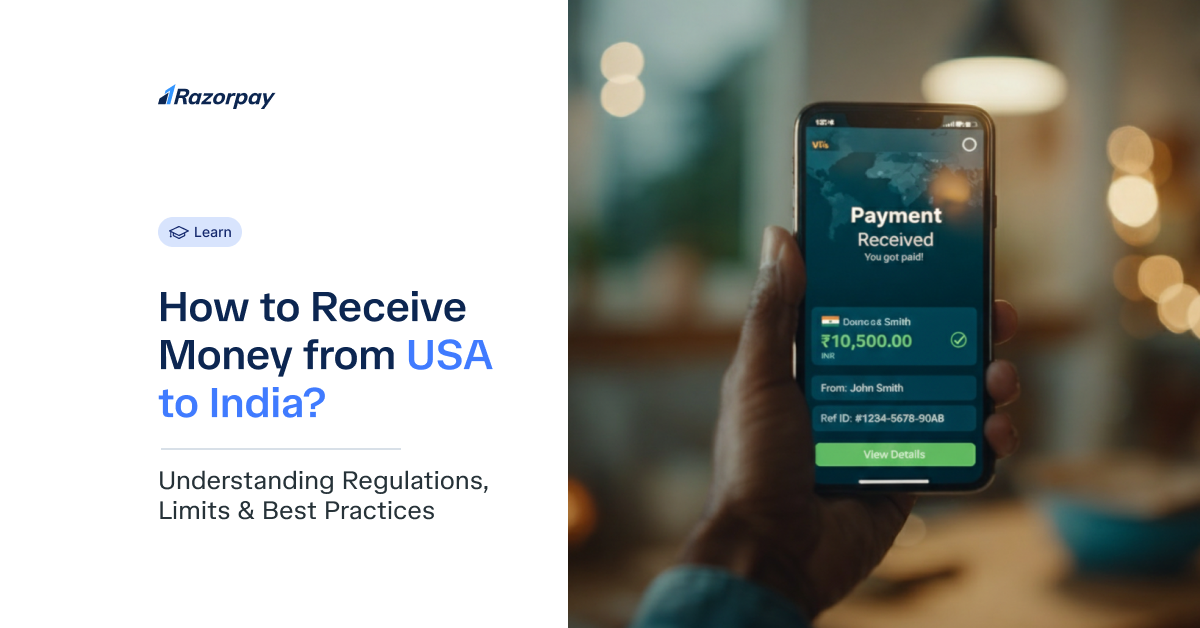
India received around $129 billion in remittances in 2024, the highest in the world. What was once mostly family support has now evolved—today, a growing share of this money comes from clients and companies in the US paying Indian freelancers, exporters, SaaS providers, and service professionals.
As global work increases and more Indians earn from international clients, the need for faster and more efficient ways to receive money has grown sharply. Smooth payments via an international payment gateway are now essential—not just for families, but also for freelancers, exporters, SaaS providers, and service-led businesses.
This guide walks you through the most effective methods to receive money from the USA to India and helps you do it securely, quickly, and at a lower cost.
Key takeaways
- India is witnessing a steady rise in foreign payments as more professionals and businesses work with clients abroad.
- Knowing how to receive money from the USA to India the right way can help you save time, reduce costs, and avoid compliance issues.
- Each transfer method offers different benefits in terms of speed, fees, security, and convenience.
- Virtual account platforms can significantly lower expenses by bypassing SWIFT and providing live exchange rates with no markup.
- Always check the effective amount credited after fees and conversion—not just the advertised transfer cost.
- Staying informed about documentation and regulatory requirements ensures smooth and compliant international transactions.
Understand Key Factors for Receiving Funds from the USA to India
Before selecting a method to receive money from abroad, it helps to understand the factors that influence speed, cost, and safety. Families, freelancers, and exporters often face delays or unexpected deductions simply because the transfer route wasn’t chosen carefully. A small difference in fees or exchange rate can make a noticeable impact on what finally reaches your account in India.
Each provider offers different levels of convenience, transfer speed, and customer support. Instead of focusing only on the advertised fee, it’s important to look at the complete picture. This avoids surprises and helps you choose the best method for your needs.
Here are the key points to compare before receiving money from the US to India:
- Evaluate Transfer Speed: Think about how fast you need the money. If it’s for something urgent—like fees, medical needs, or business payments—choose a service that sends money quickly, even if it costs a little more. Some cheaper services take 3–5 days, which is fine only when there is no rush.
- Compare Total Costs: Do not focus only on the fee shown on the website. The real cost also includes the exchange rate and any deductions made by banks in between. A service with a slightly higher fee but a better exchange rate can still give you more money in the end.
- Prioritise Security: Always make sure the transfer service is regulated and has strong fraud protection. Choosing a secure money transfer route helps you avoid delays, account freezes, and cyber risks. It’s always better to pick a safe option rather than face problems later—convenience should never come at the cost of security.
- Ensure Convenience: Choose a platform that is easy to use and lets you transfer money online. Features like tracking the payment, simple payout, and a clear dashboard make the process much smoother. This is very helpful for freelancers, exporters, and families receiving regular support from abroad.
Common Methods for Receiving Money from the USA to India
There are several ways to receive money from the USA to India, and each method works differently in terms of speed, fees, and payout options. The best method depends on why you are receiving the funds and how quickly you need them.
So, before making a choice, it’s important to understand how these methods work. Some methods use the traditional banking system, while others use modern digital routes that reduce cost and time. Knowing the difference ensures that you don’t overpay or wait longer than necessary.
Here are the most commonly used methods to get money from the USA to India:
- Bank Wire Transfers (SWIFT): This is the traditional way to transfer money internationally. It is dependable but usually slower, taking anywhere between 1 to 5 business days. Fees are often higher because intermediary banks take deductions, and exchange rate markups may apply.
- Online Remittance Services: Providers offer online transfers with competitive rates and different speed options. Money is transferred directly to an Indian bank account, and the process is often much simpler than traditional banking methods. Faster transfers are usually available, but they may cost a little more than standard options.
- Virtual Account Platforms: Platforms like Razorpay offer solutions such as the MoneySaver Export Account, which gives you a local USD receiving account in the US. This bypasses the SWIFT network, helping you reduce transfer costs and receive payments much faster—often within 24 hours. It’s a highly efficient option for freelancers, SaaS exporters, and online businesses that receive payments from international clients regularly.
- Digital Wallets and Cross-Border UPI: Some platforms now allow direct transfers to UPI IDs or Indian mobile wallets, making it possible to receive money almost instantly. This method is convenient for smaller or frequent transfers, though it may not be available on every sender’s platform. In most cases, the fees are lower than traditional bank transfers, but you should still check the exchange rate applied, as that can affect the final amount you receive.
- Money Transfer Operators (MTOs): MTOs allow you to receive money as cash pickup, bank deposit, or through a mobile wallet—often within minutes. This option is helpful when someone needs funds urgently or doesn’t have access to a bank account. Transfers can arrive within minutes, but the cost is usually higher—especially when choosing the fastest delivery option.
Comparison of Money Transfer Options
| Transfer Method | Typical Speed | Fees & Charges | Exchange Rate Transparency | Receiving Options |
| Bank Wire Transfer | 1–5 business days | ₹500–2,000 + forex fees | Low; markups are often not clearly shown | Bank account only |
| Online Remittance Services | Minutes to several business days | Varies, often includes forex markup | High; rates are shown upfront | Bank account or digital wallet |
| Virtual Account Platforms | Varies by platforms: Razorpay typically settles within 24 hours | Varies by platforms: Razorpay charges 1% transaction fee. | Clear, real-time rates | Bank account |
| Digital Wallets / Cross-Border UPI | Instant to 2 days | Around 0–5% of the amount | Moderate – depends on platform | UPI ID or wallet |
| Money Transfer Operators | Minutes to few days | Varies (High for urgent pickups) | Low – often unclear | Cash pickup or bank account |
Explore Razorpay’s Global Payment Solutions
Understanding and Minimising Costs for Inward Remittances
The amount credited to your account is not always the same as the amount sent from overseas. This difference usually comes from various fees, exchange rate margins, and charges deducted during the transfer process. If you understand these money transfer costs clearly, you can take practical steps to receive better value every time money comes in. Here are the major cost components you should be aware of, along with ways to manage them:
- Fixed Transfer Fees: Most platforms charge a flat fee before processing your transfer, and this can vary widely from one provider to another. If you receive money often, these charges can add up quickly. Always compare fees before choosing a service, especially for high-value or regular transfers. Even saving a few dollars per transaction can make a big difference over time.
- Exchange Rate Markups: Banks often offer exchange rates lower than the actual market rate, which reduces the final amount you receive. A 2–3% difference in the rate may not seem large, but it can result in noticeable losses on bigger transfers. To get a clear picture, compare the rate offered with the live market rate. Knowing the real exchange rate helps you decide whether the transfer is truly cost-effective.
- Intermediary Bank Charges: In SWIFT transfers, multiple banks may be involved in routing the money. Each bank can deduct its own fee, reducing the final amount that reaches your account. This can make the transfer slower and more expensive. You can avoid this by choosing services that use direct transfer routes with fewer banks involved.
- Foreign Currency Account Considerations: Most Indian bank accounts convert USD to INR immediately. If you want to hold funds in dollars and convert when rates are favourable, you may need a specialised account such as an Exchange Earners’ Foreign Currency (EEFC) Account. It helps you manage currency fluctuations and gives you better control over when to convert.
- Calculate the Effective Rate: Instead of looking only at fees, check how much INR actually reaches your account for every USD sent. This is your real earnings after all deductions. A quick calculation of the effective rate helps you compare platforms and choose the most cost-efficient option.
Essential Documentation and Compliance for Receiving Funds in India
When money arrives from overseas, you should receive it without delays or confusion. That becomes easier when compliance rules are followed carefully. The Reserve Bank of India (RBI) has set clear guidelines for inward remittances, and having the right documents to receive money ensures smoother transfers and full clarity during tax assessments. Here are the essential requirements to keep in mind:
- Recipient Identification: To receive money from abroad, your identity must be verified as part of standard compliance checks. This helps prevent misuse and ensures the transfer follows RBI guidelines. You can provide any government-approved document, such as:
- Aadhaar Card
- PAN Card
- Passport
- Voter ID
- Indian Bank Account Details: Accurate bank information is essential for smooth credit of funds. You must provide your account number, bank name, IFSC code, and branch details correctly. Even a small error—such as one wrong digit—can delay the transfer or result in rejection. Double-checking these details before initiating a transfer can save time and prevent unnecessary complications.
- Purpose Code: Under RBI guidelines, every inward remittance must be tagged with a purpose code. It explains why the money is being sent — such as for exports, freelancing income, or family maintenance. Selecting the correct code ensures compliance and smooth processing.
- Foreign Inward Remittance Certificate (FIRC): It serves as proof that the funds received are foreign earnings. It is important for tax filings, incentives, export benefits, and regulatory clearance. You can request it from your bank or payment platform once the transfer is completed.
- RBI Guidelines and KYC: All transfers must follow RBI regulations and fulfil Know Your Customer (KYC) requirements. Keeping your KYC documents updated with your bank or payment provider helps prevent delays and account restrictions.
Optimising Your Receipt: Tips for Better International Transfers
A few smart steps can help you receive more value from every transfer and reduce unnecessary delays or deductions. Whether you’re getting paid for services, exports, or personal support, optimising the way money comes to India can make a significant difference over time. Here are some practical strategies you can follow to optimise international money transfers and improve the overall experience.
- Compare Exchange Rates Regularly: Exchange rates change throughout the day, and even a small shift can affect how much money finally reaches your account. By checking rates regularly or using simple comparison tools, you can pick the right moment to receive payments and get better value in INR. If you receive payments frequently, tracking trends over a few days can also help you make smarter decisions.
- Choose the Right Payment Network: Every transfer route works differently, and depending on the network you choose, costs and speed can vary. For example, virtual USD accounts use local payment rails, which skip extra steps and are usually faster than traditional SWIFT transfers. Understanding how the money travels from the sender to your bank account helps you choose the most efficient route. A better network can save both time and cost.
- Prefer Direct Bank Deposits: Whenever possible, choose to receive funds directly into your bank account instead of opting for cash pickup. This gives you better security, clear tracking, and a proper transaction record. It’s especially useful when the payments are large or received on a regular basis. Direct deposits keep every detail on record, which is useful for tax documentation and financial planning. It also reduces the chances of delays or miscommunication.
- Use Virtual Account Platforms: These platforms allow the sender to pay locally in the US and then transfer the money to your Indian account. This helps reduce fees, avoids SWIFT charges, and often gives better exchange rates. It’s a useful option for online businesses and freelancers receiving frequent payments. Better exchange rates and lower deductions make this method more value-driven over time.
- Check NRI Account Benefits: If you are a non-resident Indian, consider using a Non-Resident External (NRE) account. Money received in this account is generally exempt from tax in India, which helps you retain more of your earnings. The funds are also fully repatriable, meaning you can transfer them back abroad without restrictions.
Pro Tip: Don’t rely only on the fee shown by the platform. Always check how much INR actually reaches your account after conversion and deductions. This final amount tells you the true cost of the transfer and helps you pick the most cost-efficient method every time.
Simplify Receiving Payments with Razorpay MoneySaver Export Account
The Razorpay MoneySaver Export Account is built to make international payments easier for Indian freelancers and businesses.
Here’s how it helps you receive money smoothly from the USA to India:
- Open a Smart Local USD Account: Instead of asking your client to send an international wire transfer, you can share a local US-based account that gets opened instantly. Your client pays as if they are sending money within the US, while you receive it in India. This avoids SWIFT transfers and eliminates intermediary bank charges, making the payment process smoother for both sides.
- Save Significantly on Transfer Costs: Traditional wire transfers often carry hidden deductions and forex markups. With the MoneySaver Export Account, these costs can drop by up to 75%. You receive the live exchange rate with no markup and benefit from transparent pricing, helping you retain more of what you earn.
- Receive Funds Faster: Since the transfer happens through a local account, settlements are much quicker than traditional bank transfers. Faster access to payments improves cash flow, making it easier to meet project timelines, pay vendors, or reinvest in business growth.
- Automated FIRC Support for Compliance: With Razorpay MoneySaver Export Account, compliance becomes much simpler. FIRC and other export-related documents can be generated automatically with just a few clicks, making record-keeping faster and audit-friendly. This helps you stay export-ready without delays or paperwork stress.
- Works Across Business Models: The MoneySaver Export Account is suitable for a wide range of businesses—whether you offer services, digital products, SaaS solutions, or export goods. It allows you to receive international payments in a simple, consistent way, regardless of your business model. This makes it useful for freelancers, agencies, startups, and established exporters alike.
Conclusion
Choosing the right way to receive money from the USA to India can make a major difference to how much you finally get and how quickly it reaches your account. Whether you’re a freelancer, exporter, or service provider, understanding each method helps you avoid delays, hidden costs, and compliance issues.
Always weigh the key factors—speed, cost, security, and regulatory requirements—before selecting a platform. Modern solutions such as virtual accounts and digital transfer methods can help you receive payments faster and retain more of what you earn.
Staying informed and comparing your options is the simplest way to keep international payments smooth, compliant, and predictable.
Receive Payments Easily with Razorpay MoneySaver
FAQs
1. What is the fastest way to receive money from the USA to India?
Virtual account platforms can settle funds within 24 hours, making them one of the quickest options for freelancers and exporters.
2. What documents are required to receive payments from the USA in India?
You generally need identity proof, your Indian bank account details, and a valid Purpose Code based on the nature of the payment. After receiving the money, a Foreign Inward Remittance Advice (FIRA/FIRC) serves as proof of receipt and is important for compliance.
3. Can I receive USD directly into my Indian bank account?
Yes, but most standard savings accounts automatically convert USD to INR using the bank’s exchange rate. To hold USD, you’ll need a Foreign Currency Account, such as an EEFC account or a virtual USD account provided by specialised platforms.
4. How can I avoid hidden fees when receiving money from the USA?
Razorpay helps you avoid hidden fees by offering live exchange rates with zero forex markup and no intermediary bank deductions. Its transparent pricing ensures you receive a higher final amount in your Indian bank account.
5. Are there limits on how much money I can receive from the USA to India?
There is no fixed upper limit on inward remittances under current regulations. However, very large amounts may trigger additional checks from your bank or payment platform.