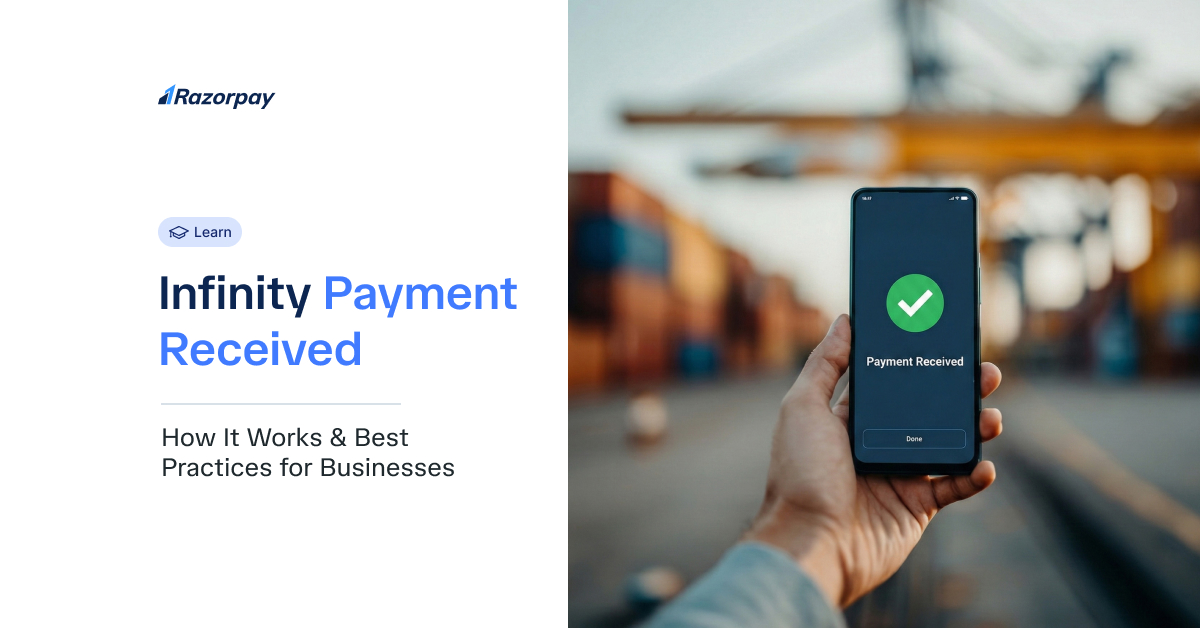
If you run an export business or work with international clients, you’ve probably seen the phrase infinity payment received in your bank alerts or transaction logs. It simply indicates that an international payment has been credited to your account.
For Indian exporters, understanding how this payment process works is vital. It helps you track incoming funds, stay compliant with RBI guidelines, and avoid unnecessary delays or conversion losses.
Read this guide to understand the meaning of an infinity payment, why it appears in your account, and how you can manage such cross-border transactions more efficiently.
Key Takeaways
An Infinity payment received indicates a successful international transaction, helping Indian businesses track and manage foreign income efficiently.
Digital platforms offer faster settlements, transparent pricing, and easier compliance compared to traditional bank transfers.
Staying compliant with RBI and FEMA regulations—including FIRC generation and KYC checks—is vital for smooth cross-border operations.
Choosing a trusted, RBI-approved payment partner with multi-currency support and strong security can simplify and optimise global transactions
What Does ‘Infinity Payment Received’ Truly Mean?
The term ‘infinity payment received’ refers to the successful receipt of money from a client or organisation based outside India. It usually happens through digital payment platforms designed for cross-border payments, which make it easier to manage international transactions securely and efficiently.
In some cases, the phrase may point to a specific platform such as the Infinity App. This app helps Indian businesses, freelancers, and exporters receive funds from global clients in multiple currencies. It offers features like transparent transaction fees, quick processing, and the option to hold money in multi-currency accounts.
In a broader sense, an infinity payment means any digital system that allows you to receive international payments, convert them into Indian Rupees, and stay compliant with Reserve Bank of India (RBI) rules, like automatic Foreign Inward Remittance Advice (FIRA) generation.
Traditional Channels vs. Modern Digital Platforms for International Payments in India
For decades, Indian exporters and freelancers have depended on traditional banking systems like SWIFT transfers to receive payments from overseas. These channels are reliable and secure, making them suitable for large-value transactions. However, they involve high fees, hidden exchange rate markups, and processing times that can take 1-5 business days.
In contrast, modern digital payment platforms like Razorpay have simplified international payments in India by offering faster settlements, transparent fees, and real-time exchange rates—all managed conveniently through easy-to-use dashboards and instant notifications.
They also support compliance by offering virtual multi-currency accounts, automatic FIRA generation, and built-in RBI and Foreign Exchange Management Act (FEMA) adherence tools—making them well-suited for freelancers, SaaS businesses, and exporters managing frequent cross-border payments.
Comparison: Traditional Channels vs. Modern Digital Platforms
| Feature | Traditional Channels | Modern Digital Platforms |
| Fees | High transfer and intermediary bank fees | Lower, transparent fees |
| Typical Speed | 1-5 business days | 0–2 business days |
| Exchange Rates | Often unfavourable, with hidden markups | Real-time competitive rates |
| Ease of Use | Requires manual documentation and bank visits | Fully digital with app-based management |
| Compliance | Manual FIRA collection and reporting | Automated FIRA generation and RBI-compliant tools |
| Best For | Large corporate or one-time transactions | Freelancers, SMEs, SaaS exporters, and e-commerce sellers |
Pro Tip: Choose a digital payment platform that offers RBI compliance, e-FIRC generation, and real-time exchange rates. It keeps your international payments quick, low-cost, and fully compliant.
Key Challenges in Receiving International Payments for Indian Businesses
- High Costs and Hidden Fees: One of the biggest challenges in international payments is the high cost involved. Every cross-border transaction attracts forex markups, SWIFT charges, and intermediary bank fees. Together, these can eat into your earnings and make it difficult to predict the actual amount you’ll receive.
- Processing Delays: International payments often take anywhere between one to five business days to settle. The delay usually happens because funds move through several intermediary banks before reaching your account. This lack of a unified global payment network disrupts cash flow and makes financial planning harder—especially for freelancers and small exporters.
- Navigating Regulatory Compliance: Adhering to RBI regulations and FEMA can be complex. Businesses must complete KYC and Anti-Money Laundering (AML) checks, obtain a FIRC, and, for large-value B2B transfers, secure a Legal Entity Identifier (LEI). Missing these steps can lead to compliance issues or payment holds.
- Currency Fluctuations: Exchange rate volatility is another major concern. Sharp currency fluctuations can shrink your profits or even result in losses if not managed well. Without proper hedging or forward contracts, predicting your final receivable amount becomes a challenge—especially when payments are delayed.
- Security and Fraud Risks: Global transactions are vulnerable to cyber threats and fraudulent activity. Choosing a trusted payment partner, using verified platforms, and implementing robust authentication measures are crucial for ensuring that your funds and data remain secure.
Mastering RBI Regulations for Seamless Cross-Border Payments
RBI’s primary objective is to ensure that all foreign exchange transactions comply with the FEMA. This legal framework governs how money moves in and out of the country, promoting an organised and secure environment for external trade and payments. Understanding RBI regulations for international payments is crucial for businesses and freelancers receiving funds from abroad. Here are the key requirements to keep in mind:
- Follow FEMA rules: Every cross-border payment must follow the FEMA guidelines. This law regulates how foreign money moves in and out of India to ensure payments are made only for genuine trade and services.
- Use an Authorised Dealer (AD) Bank: All foreign remittances must be routed through AD Banks licensed by the RBI. These banks handle foreign exchange transactions, check your documents, and make sure every transfer follows RBI guidelines.
- Get a Foreign Inward Remittance Certificate: Whenever you receive money from overseas, you must obtain a FIRC. It confirms that the payment was received in foreign currency and is needed for tax filing, audits, and FEMA compliance.
- Use an LEI for Large Payments: If your business receives or sends B2B cross-border payments above ₹50 crores, you must have a Legal Entity Identifier. This helps the RBI track large transactions and maintain transparency.
- Know your Transaction Type: It’s important to identify whether your payment is a capital account transaction (like an investment) or a current account transaction (like trade or service income). Each type has separate approval and reporting rules under RBI regulations.
Choosing the Optimal Platform for Your International Payments
- Transaction Fees and Exchange Rates: Evaluate the total cost of using a platform—including fixed charges, percentage-based fees, and hidden forex markups. Transparent pricing helps you understand exactly how much you’ll receive. Leading providers like Razorpay are known for clear fee structures and competitive rates, making them among the best cross-border payment providers for Indian businesses.
- Processing Time and Settlement Speed: Timely settlements are critical for healthy cash flow. Check how quickly funds are credited to your account—some platforms offer same-day or 1–2 business day settlements, while others may take longer. Faster turnaround times help you plan expenses and manage client relationships more effectively.
- Currency Support and Global Reach: Choose an international payment gateway that supports the currencies and regions your clients operate in. Broad currency support allows you to receive payments in USD, EUR, GBP, and other major currencies without conversion issues. Providers offering multi-currency accounts give you greater flexibility to manage global transactions with ease.
- Regulatory Compliance and Security: Always prioritise platforms that ensure compliance and security. Opt for RBI-compliant providers that facilitate FIRA generation, maintain AD-1 certified banking partnerships, and use robust encryption to protect your data. Compliance with local and international standards safeguards your business from regulatory risks.
- Ease of Use and Customer Support: A smooth onboarding process, intuitive dashboard, and prompt customer support—preferably based in India—make all the difference. Efficient platforms provide responsive assistance for issues like transaction delays, FIRC generation, or account verification.
Best Practices for Optimising International Payment Receipts
- Partner with a Trusted Payment Provider: Choose a reliable payment platform that offers transparent fees, competitive exchange rates, and meets all regulatory requirements. Fintech platforms often provide more agile and cost-effective solutions than traditional banks, making them ideal for faster and smoother international transfers.
- Negotiate Clear Payment Terms: Set transparent agreements with your overseas clients regarding payment methods, currencies, and timelines. This helps reduce confusion, avoid delays, and ensure both parties are aligned on expectations before initiating any transaction.
- Implement Hedging Strategies: Currency volatility can impact your final receipts. To hedge currency risk, consider using forward contracts or similar financial instruments that lock in exchange rates. This protects your earnings and helps stabilise your income against sudden market movements.
- Stay Informed on Regulatory Changes: Keep track of updates from the RBI and the FEMA. Regulations evolve frequently, and staying informed ensures compliance, avoids penalties, and keeps your cross-border operations running smoothly.
- Utilise Multi-Currency Accounts: Opening accounts that hold multiple currencies can help you manage global collections more efficiently. By retaining funds in their original currency, you can reduce conversion costs and convert them to INR when exchange rates are most favourable.
Simplify Your Global Transactions with Razorpay International Payments
- Multi-Currency Support: Accept payments from clients worldwide in over 130 currencies through credit and debit cards, PayPal, and local bank transfers. This flexibility allows you to expand your global customer base without worrying about compatibility or conversion issues.
- MoneySaver Export Account: Open virtual international bank accounts to receive local payments from multiple countries—ideal for freelancers, SaaS providers, and exporters. With zero withdrawal fees, competitive forex rates, and automatic FIRA generation, Razorpay’s MoneySaver account makes cross-border collections seamless and fully compliant.
- Regulatory Compliance & Security: Razorpay adheres to RBI regulations and global security standards, ensuring your funds and data remain protected. Transparent pricing and advanced fraud protection provide peace of mind at every transaction stage.
Conclusion
Managing international payments in India goes beyond just receiving money—it’s about doing it the right way. As global transactions become more frequent, understanding modern payment platforms and complying with RBI and FEMA guidelines are key to staying ahead. By choosing the right payment partner, you can reduce costs, avoid delays, and keep your business fully compliant.
With informed strategies and trusted tools, your business can manage cross-border payments confidently and grow stronger in the global market.
Ready to streamline your payments?
FAQs
1. What does infinity payment received imply for Indian businesses?
It means that an Indian business has successfully received money from a foreign client through a secure digital platform.
2. Are there specific RBI regulations for receiving international payments in India?
Yes, RBI governs all foreign exchange transactions under the FEMA. Payments must be routed through Authorised Dealer Banks, and businesses must obtain a FIRC as proof of payment.
3. What are the common challenges with international payment processing in India?
Indian businesses often face high transaction fees, processing delays, and strict RBI compliance requirements, making cross-border payments complex.
4. How do digital payment platforms compare to traditional banks for cross-border payments?
Digital payment platforms offer faster settlements, lower fees, and better transparency than traditional banks. Banks, though secure, often involve higher charges, slower transfers, and more documentation for cross-border transactions.
5. What is a Foreign Inward Remittance Certificate, and why is it important?
A FIRC is an official document issued by banks as proof that you’ve received foreign payments in India. It’s crucial for export compliance, claiming tax benefits, and verifying legitimate foreign income under RBI and FEMA regulations.
6. How can I ensure compliance when receiving international payments in India?
Ensure compliance by using RBI-approved payment platforms, completing KYC/AML verification, and maintaining records like FIRCs for every foreign payment.