Whether you’re a SaaS startup exporting software, a D2C brand selling globally, or a freelance consultant receiving payments from abroad, this guide is designed to help you navigate purpose codes and achieve seamless international payments with Razorpay.
In the vast landscape of global transactions, purpose codes ensure the smooth flow of currency across borders, especially for Indian businesses of all sizes and sectors. Razorpay empowers businesses to master every step of the global payment journey-including purpose codes. Within this complex system lies the essence of efficient international payment gateways, where precision is paramount and compliance is king.
Key takeaways
- Purpose codes are mandatory identifiers for all international transactions, ensuring regulatory compliance
- Export purpose codes start with ‘P’, import codes start with ‘S’, and incorrect selection can delay payments by 5-21 days
- You must choose codes based on transaction type: goods, services, capital transactions, or personal remittances
- Razorpay simplifies purpose code implementation with automated compliance checks and dedicated support
- Professional advice and regular regulatory updates are essential for maintaining compliance
What is a Purpose Code?
A purpose code is a unique identifier issued by a country’s central bank that is necessary for the successful execution of international payments. These codes specify the exact nature and purpose of foreign currency transactions, ensuring regulatory compliance and proper categorisation.
They are issued by the Reserve Bank of India (RBI) to specify the nature of foreign currency transactions. Every payment requires the assignment of a purpose code, distinguishing between import and export transactions. Export purpose codes start with ‘P’, whereas import purpose codes start with ‘S’. For Indian businesses, receiving payments from foreign customers is an inward remittance, and sending payments abroad for goods or services is an outward remittance.
Common Use Cases for Purpose Codes
Cross-Border Payments
When initiating or receiving a cross-border payment, it’s necessary to furnish a purpose code. This code aids financial institutions in accurately handling the payment and ensures adherence to global regulations.
Trade in Goods
Customs authorities mandate a purpose code for categorising transactions during the importation or exportation of goods. This code assists in determining tariff rates and may be utilised for statistical analysis purposes.
Trade in Services
Transactions involving providing or receiving services across borders necessitate a purpose code for classification. This classification is pivotal for monitoring service flow and analysing economic trends.
Capital Transactions
Purpose codes categorise capital transactions like foreign direct investments, portfolio investments, and other capital inflows. This categorisation facilitates the tracking of capital flow and identifies investment avenues.
Personal Remittances
When transferring money to another country for personal purposes, such as supporting family members, a purpose code denotes the transaction’s nature. This is essential for monitoring remittance flow and assessing its economic ramifications.
List of Purpose Codes and Their Descriptions
Understanding the specific purpose codes relevant to your business is crucial for compliance. Here are the most commonly used codes for Indian businesses:
| Purpose Code | Description | Typical Use Case |
| P0802 | Export of computer software | SaaS companies, software licenses |
| P0807 | Off-site software development | IT services, custom development |
| P0101 | Export of goods | Physical product exports |
| P0803 | Business and management consultancy | Consulting services, advisory |
| S0101 | Import of goods | Raw materials, finished goods |
India’s P0807 code addresses off-site software exports, a category that has grown exponentially with the global tech services industry, accounting for approximately $180 billion in annual software exports from India alone. This highlights the critical importance of accurate code selection for high-value export sectors.
Countries Requiring Purpose Codes
Purpose codes are mandatory in several countries with strict foreign exchange regulations. Understanding which jurisdictions require these codes helps you prepare for compliance:
Primary Countries with Mandatory Purpose Codes:
- India: All cross-border transactions require RBI-specified purpose codes
- China: State Administration of Foreign Exchange (SAFE) codes required
- South Korea: Bank of Korea transaction codes mandatory
- Brazil: Central Bank of Brazil purpose codes for all international transfers
- Russia: Central Bank transaction purpose codes required
- Malaysia: Bank Negara Malaysia codes for foreign exchange transactions
Did You Know?
Approximately 85% of Indian technology companies initially select incorrect purpose codes, causing payment delays of 5-10 business days.
Each country has its own classification system and regulatory requirements. For Indian businesses, focusing on RBI guidelines is essential, but understanding international requirements helps when dealing with correspondent banks or international partners.
Why are Purpose Codes Important?
For Indian businesses trading internationally, picking the right purpose code isn’t just a routine step, it’s a must-follow rule. Ignoring this can cause problems with following regulations and make transactions difficult. So, it’s crucial to understand and use purpose codes correctly.
Real-world compliance failures demonstrate the serious consequences of incorrect purpose code usage. For instance, a Mumbai-based SaaS company faced a three-week payment delay and ₹50,000 in additional compliance costs when they mistakenly used P0101 (goods export) instead of P0802 (software export) for their subscription revenue.
Incorrect Purpose Codes lead to:
Compliance and Regulatory Issues
Incorrectly labelling transaction purposes can violate Foreign Exchange Management Act (FEMA) regulations and trigger reporting problems to regulatory authorities. For instance, if a transaction’s nature doesn’t match its assigned purpose code, it can lead to inaccurate reports submitted to regulators.
Financial Errors
Misusing purpose codes in financial transactions can cause accounting, billing, or reporting mistakes. This may result in financial discrepancies, inaccurate statements, and difficulties in reconciling accounts.
Operational Inefficiencies
Misusing purpose codes can lead to operational delays, resource misallocation, and challenges in monitoring activities.
Transaction Failures
Selecting an incorrect purpose code can lead to transaction failures, especially with larger sums, increasing the risk of financial loss.
Purpose Code Selection Best Practices
Choosing the correct purpose code requires careful consideration and systematic approach. Follow these best practices to ensure compliance and avoid costly delays:
Essential Guidelines for Code Selection:
- Match Transaction Nature: Ensure the code precisely reflects your business activity
- Document Everything: Maintain detailed records of code selection rationale
- Regular Reviews: Periodically audit your code usage for accuracy
- Stay Updated: Monitor RBI circulars for code changes or new requirements
- Professional Consultation: Engage with compliance experts for complex transactions
Common Mistakes to Avoid:
- Using generic codes when specific ones exist
- Mixing up import (S) and export (P) prefixes
- Failing to update codes when business activities change
- Not maintaining supporting documentation
Payment platforms incorporating AI-powered purpose code suggestion engines analyze transaction characteristics to automatically recommend appropriate codes, reducing manual selection errors by approximately 85%. This technology advancement significantly improves compliance accuracy.
What are the guidelines one must follow to choose the right Purpose Code?
Seek Professional Advice
Engage with financial advisors or Chartered Accountants who possess expertise in regulatory compliance and international transactions. Their insights can help navigate the complexities of purpose code selection and ensure alignment with regulatory requirements.
Verify RBI’s Purpose Code List
Consult the extensive list provided by the RBI, which includes purpose codes and their respective descriptions, to ensure the selection of the appropriate code. Alternatively, you can inquire with your bank for access to the purpose code list.
Stay Updated
Regularly review regulatory updates and changes to purpose code lists to ensure compliance with evolving regulations. Maintain vigilance to adapt purpose code selections to any regulatory amendments promptly.
How Can Merchants Seamlessly Implement Purpose Codes with Razorpay?
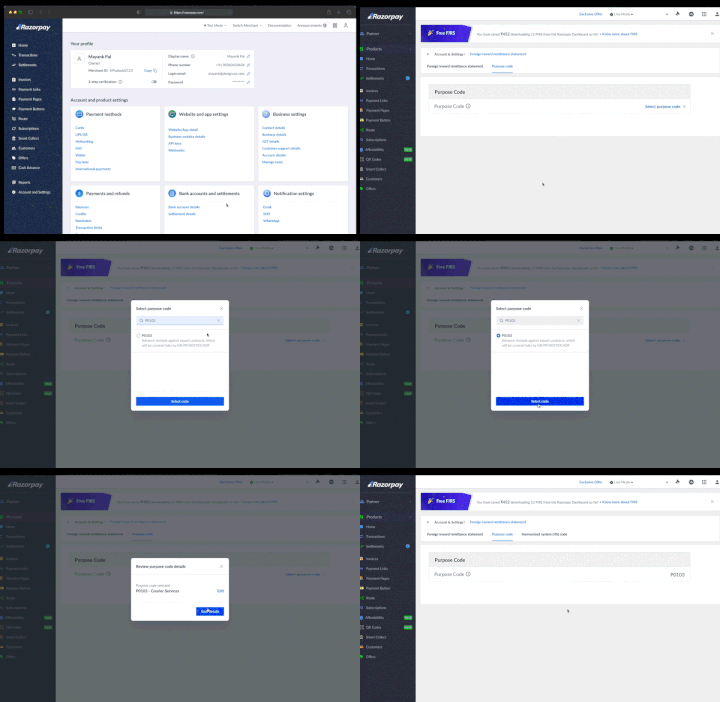
You can easily implement Purpose Codes with Razorpay, whether you’re new to the platform or an established user. Here’s a step-by-step guide for both new and existing merchants:
For New Merchants
- Log in to the Razorpay Dashboard.
- Navigate to Account & Settings, then click on International Payments under Payment Methods.
- Click on the Fill activation form to enable international payments.
- Enter all business details as required on the International Payments activation page and click Continue.
- Select the correct purpose code from the list provided on the Purpose code page and click Continue.
- Enter all supporting details on the Supporting details page and click Submit details.
- Await verification by the Razorpay Activation/Operations team.
- Once verified, you can start accepting payments from international customers through Razorpay.
For Existing Merchants
- Log in to the Razorpay Dashboard.
- Go to International Payment Settings and click on International Payment Codes.
- Update your purpose code under the International Payment Codes section.
- Select the appropriate Purpose Code based on your business requirements.
- If necessary, provide additional details like HS or IEC codes.
- Follow the provided guidelines for adding these codes accurately.
- Review the information and click Confirm.
- Await verification by the Razorpay Activation/Operations team.
- Once verified, you can continue accepting payments from international customers through Razorpay.
How Razorpay Makes Purpose Codes Effortless
Razorpay understands the complexities of international payment compliance. Razorpay’s platform is designed to simplify purpose code management while ensuring full regulatory adherence.
Unique Features for Purpose Code Management:
- Purpose Code Collection & Recommendations: Systematic collection during onboarding with smart recommendations that map purpose codes to merchant business categories for RBI compliance
- Dedicated Support Team: Specialised assistance for exporters, freelancers, and D2C brands
- Seamless Platform Integration: Works with your existing business tools and workflows
- Quick Onboarding: Quick setup for businesses of all sizes
- Automated Regulatory Updates: Stay compliant with changing regulations automatically
Effortless Purpose code Management via Razorpay International Payments
With Razorpay’s user-friendly interface, updating purpose codes becomes a seamless process, empowering businesses to tap into global markets with confidence. By staying informed, seeking professional advice, and diligently following the outlined procedures, merchants can unlock the gateway to international trade and propel their businesses towards greater success. Update your purpose code today!
Ready to streamline your payments?
Scale your business with a gateway that supports 100+ payment methods, including UPI, Credit Cards, and Netbanking. Transition to a reliable infrastructure designed to improve transaction success rates and automate your daily reconciliation.
Already a merchant? Log in to update your purpose code
Frequently Asked Questions
1. What is a purpose code?
A purpose code is a unique identifier issued by the Reserve Bank of India (RBI) that specifies the nature and purpose of international currency transactions. You must include this code with every cross-border payment to ensure regulatory compliance.
2. Are purpose codes mandatory for all international transactions?
Yes, purpose codes are mandatory for all international transactions involving Indian businesses. Whether you’re receiving payments from abroad or sending money internationally, you must specify the appropriate purpose code.
3. Which countries require a purpose code for cross-border payments?
Several countries require purpose codes, including India, China, South Korea, Brazil, Russia, and Malaysia. Each country has its own regulatory framework and classification system for international transactions.
4. What documents are required to support a purpose code?
You typically need invoices, contracts, export-import documentation, and business registration certificates. The specific documents depend on your transaction type and the purpose code selected.
5. What happens when an incorrect or missing purpose code is used?
Incorrect purpose codes can result in significant delays and compliance issues. You may face payment rejections, regulatory scrutiny, and additional documentation requirements.
6. How often should I review my purpose code selections?
You should review your purpose codes quarterly or whenever your business activities change. Regular audits help ensure continued compliance and identify any necessary updates to your code selections.